Living on the land: New Mexico Architectural Artistry Captured

I have a deep interest in exploring architectural pursuits. 

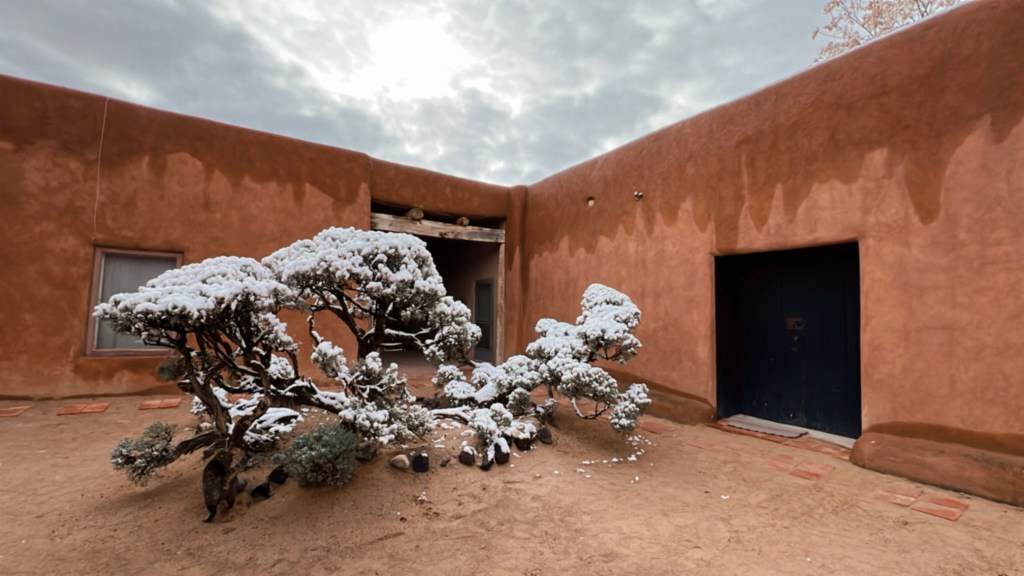
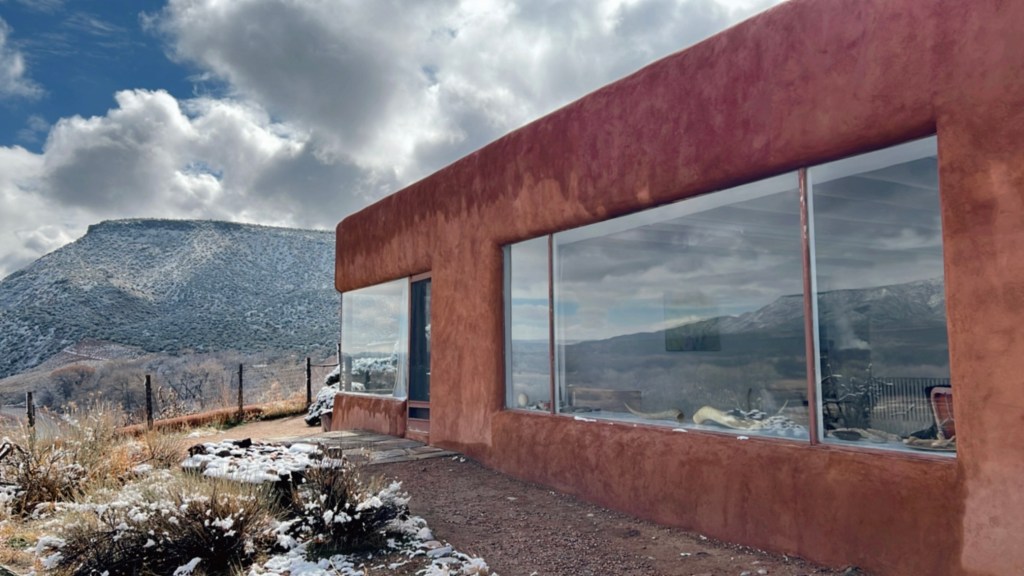
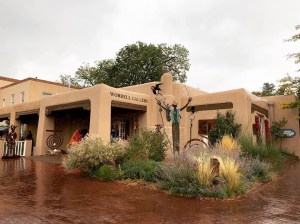
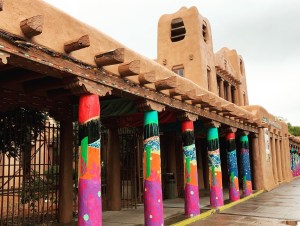
My keen eyes and lens have captured Northern New Mexico buildings, art, tradition, modernism as well as photography itself. New Mexico architecture pays homage to its rich soulful cultural history by integrating classic adobe brick building styles with Spanish and Native American-influenced architectural styles. The thick walls offer tales of centuries past, providing both sanctuary from the desert’s extremities and a tangible connection to history. The profoundly artistic expression invited me to pause and admire the timeless architectural artistry of a home that is cradled by the land. 

Cherished 1610 chapel of San Miguel: Adobe architecture

In the Barrio de Analco Historic District of Santa Fe lies the preserved adobe architecture, the San Miguel Mission, framed as the oldest church in the continental United States. The earliest documentation of the church was in 1628, however oral history holds that it was built around 1610 and has been rebuilt and restored several times over the past 400 years. It is constructed from adobe, with a single rectangular nave and a trapezoidal apse. The church faces west and has central bell tower with a single small window and a larger open void directly above the main entrance. I was impressed by the valued structures of centuries of mudding have added mass to the walls, which were thick when the building was originally constructed, and of sunbaked earthen bricks on stone, expressing its rich history and timely preservation, restoration and maintenance. 

I glimpsed this 400 years old mission, where every material plays an important role. 

Loretto Chapel in Santa Fe: Gothic Revival style

I took a glimpse of the Gothic Revival-style cathedral that was built with an impressive blend of French and Southwestern influences. Even though I did not witness its miraculous helix-shaped spiral staircase inside, the history and construction of the Loretto Chapel were considered miraculous by the Sisters of Loretto. In 1873, Jean Baptiste Lamy brought architect Antoine Mouly and his son, Projectus Mouly, from Paris, France to Santa Fe, to work on the St. Francis Cathedral project, completing it with spires, buttresses and stained glass windows imported from France over the Old Santa Fe Trail. The Chapel was completed in 1878 and has since seen many additions and renovations such as the introduction of the Stations of the Cross, the Gothic altar and the frescos during the 1890s. 

This Gothic structure shows the aesthetics of early French immigrants to Santa Fe, who brought Parisian architecture to New Mexico. 

The Cathedral Basilica of St. Francis of Assisi: Romanesque Revival Style

I observed each detail of Cathedral Basilica of St. Francis of Assisi in downtown Santa Fe twice. It was built by Archbishop Jean Baptiste Lamy between 1869 and 1888 on the site of an older adobe church. It was designed in the Romanesque Revival style, influenced by French-born Archbishop, and in contrast to the surrounding adobe structures, features characteristic round arches separated by Corinthian columns and truncated square towers, along with a large rose window in front. The lateral nave windows imported from France featuring the twelve apostles are highly detailed and ornate. Built of yellow limestone bricks, it blends in with the sand and dirt of the surrounding landscape. I also noticed the small dove window and more stunning stained glass are featured throughout the cathedral. 
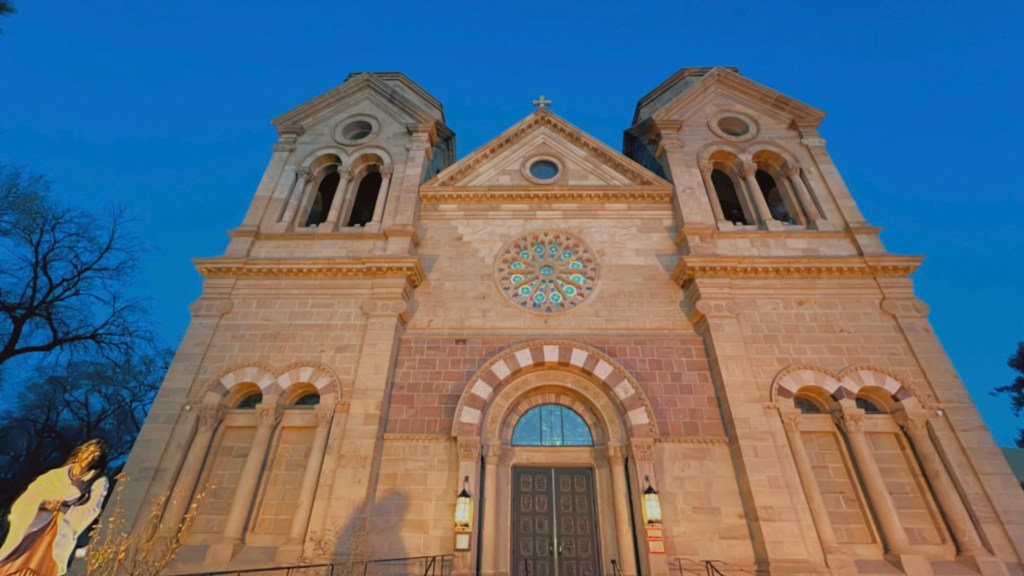
I carefully appreciated its design in the Santa Fe evening. 
 

El Santuario de Chimayo: Spanish Colonial architecture

The transition from Pueblo architecture to Spanish Colonial architecture maintains the essential elements of the adobe’s massive minimalist walls and restrained window and door openings. I witnessed the historical El Santuario de Chimayo on the High Road to Taos. Nicknamed “the Lourdes of North America”, the famed monument to an annual pilgrimage site that was first used by Tewa people for its healing powers, was built in Chimayo in 1813. It features a walled courtyard, two charmingly askew pointed towers, wooden doors and a metal pitched roof. The interior is a colorful mixture of Spanish and Indian decorations and styles. The nave of the church is decorated with original astonishing examples of 19th century Hispanic religious folk art. The discarded canes, wheelchairs, braces hanging from the walls, are all proof of the miracles of El Santuario; the other small prayer room leads to a place called el pocito, which contains a small pit filled with the “holy dirt” that has been known to heal. The silence came to mind naturally. 

A timeless ode to Spanish Colonial architecture. 

I realize New Mexico architecture is inhabited by the land rather than simply built atop it, reflecting the diverse cultures that left their influences on the region. Spiritual seekers of all kinds, disillusioned with the material world and looking for something else, come here and find freedom to be authentic. It pulls you into the land of enchantment, compelling you to stay until its intensity sends some packing, fleeing from the brightly polished mirror of self-reflection that is its surface, back on the journey of life somewhere else. 

An ode to the classic doorways in Santa Fe 

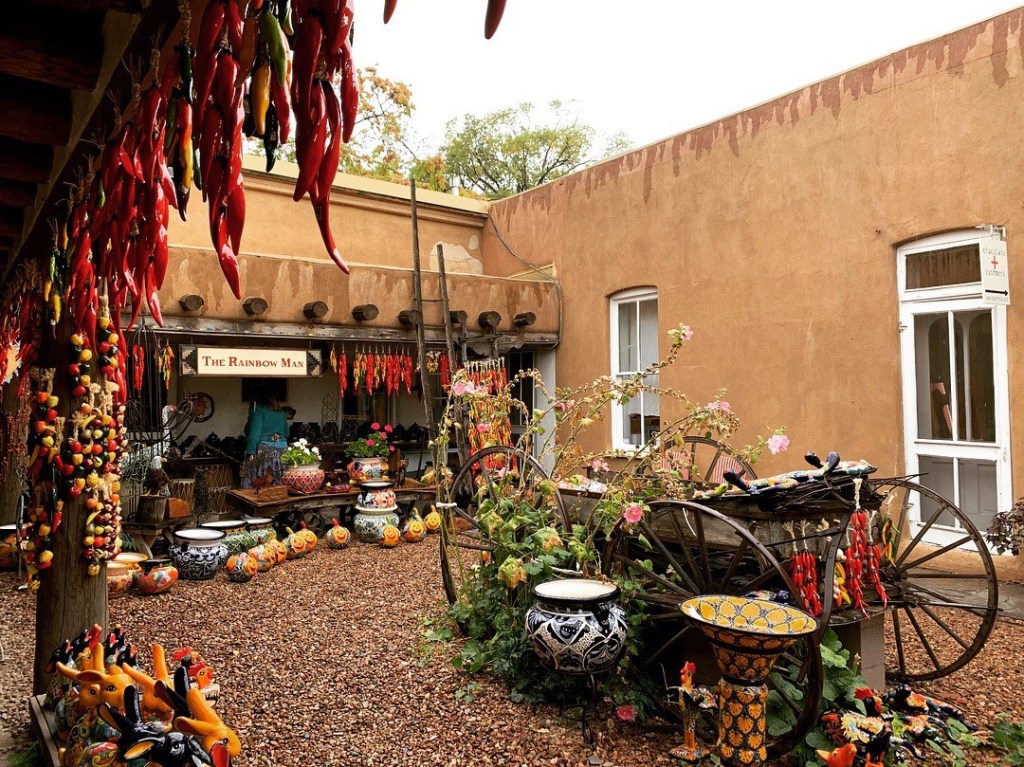
As a tradition, chile ristras adorn the doors, balcony, on patios and in portals all over New Mexico, bring health and good fortunate, and is also a symbol of welcoming. I walked to Canyon Road in Santa Fe with curiosity, a half-mile ramble packed with art galleries in historic adobe residence, my eyes always capturing those charming and characterful doors which have rich history and wondrous stories behind them. 

It demonstrates many of the influences of Spanish architecture with the interior courtyard, rustic door and detailing. 

I breathed in the high desert air and took in the fantastic light, with color and brightness around every corner: some unique doors to the fine art galleries, some doors to the spiritual, some wooden doors formed under rounded archways usher me into the gardens, some hanging with ristras, some with a hand-shaped doorknocker. 

The long bench along with doorway and window creates a delicate, timeless destination that would stand out for its unique take on Southwest style. 

It is a place to live in where life is everywhere. I was touched by a vast array of elements and that is what has put it on the map as a thriving art. 
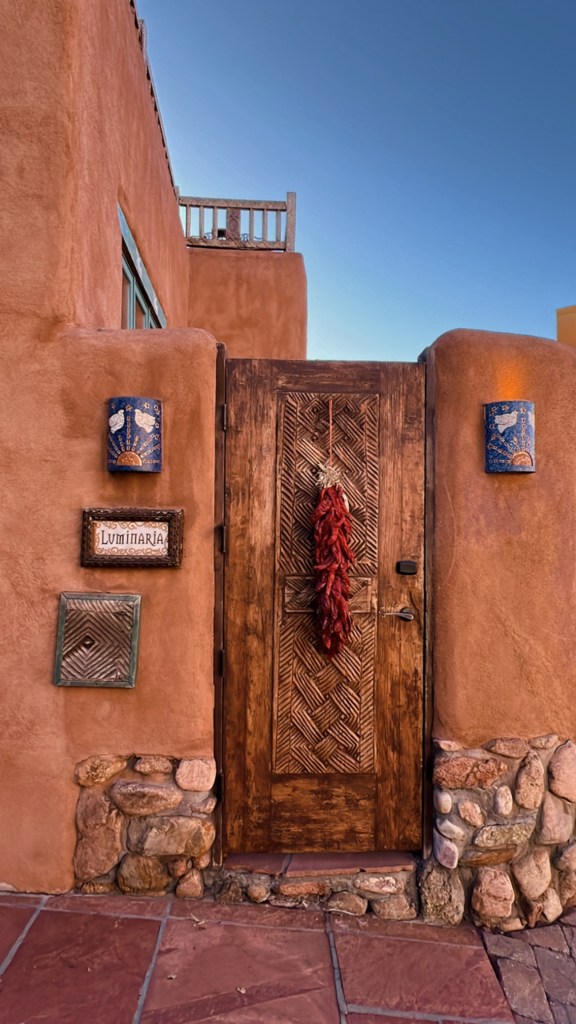
A long ristra tucked on the door. 
I enjoyed seeing the shadow play, echoing stories of time. 
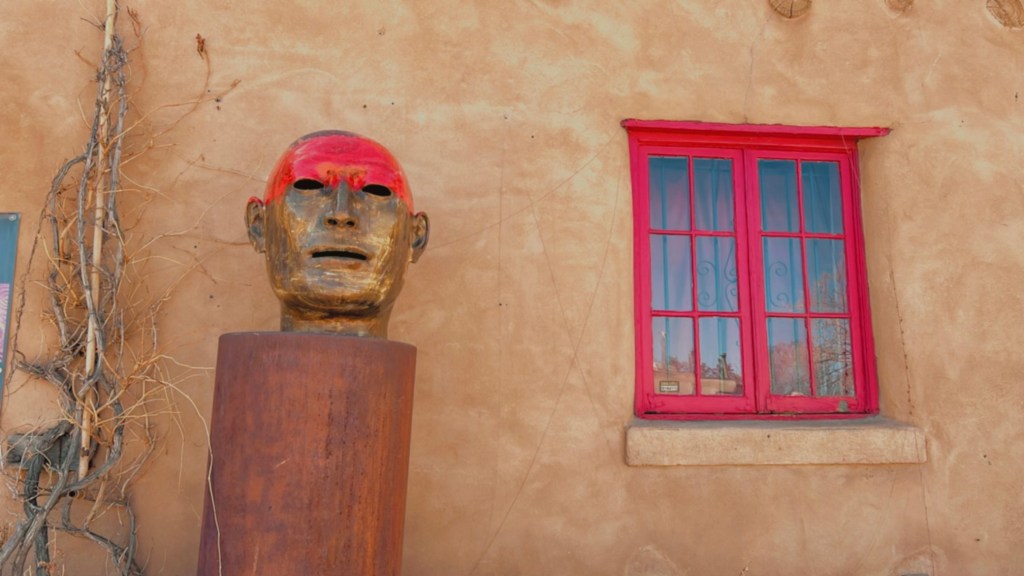
The red stripe on the head sculpture that echoes a painted red window frame. 
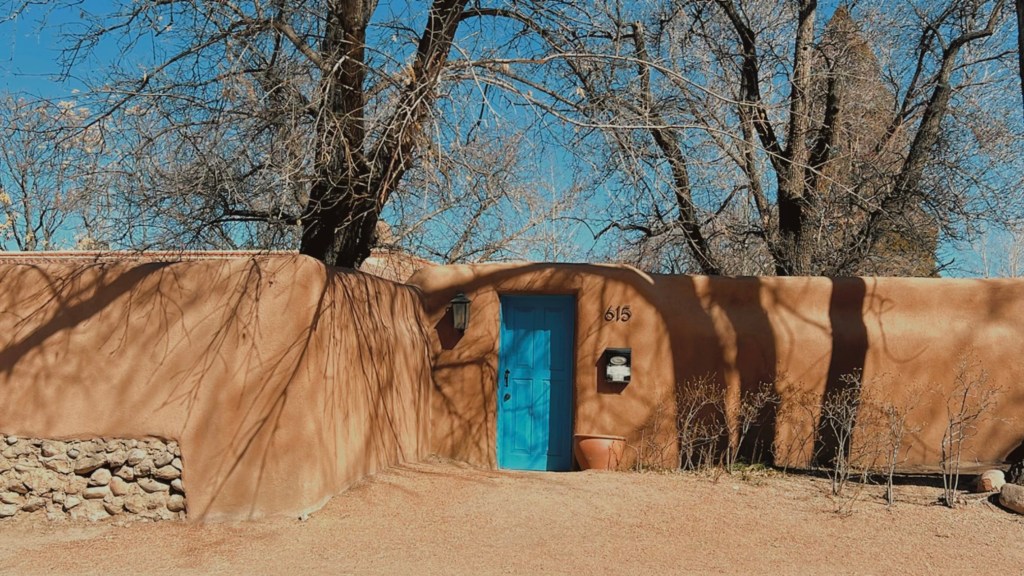
Turquoise is a large part of the state’s history, the blue is a classic Santa Fe color scheme. 
My lens was fixed on this unique door without a house. 

Besides adobe, rubble-stone masonry was utilized to monumental effect by Ancestral Puebloan builders at sites such as Chaco Canyon. The rustic rubble masonry vernacular style is also common in Norther New Mexico, especially in utility buildings such as barns and stables. 

A reflection of vibrant and eclectic taste: Maximalism

I was deeply attracted by the design aesthetic of the Inn of the Five Graces, nestled beside the oldest house and oldest church in the U.S., references to the past or the building’s heritage are hinted at, reflecting eclectic taste. Whilst indisputably au courant, this place harks back to the past in respect of artistry and an inherent appreciation of noble materials, warm adobe earthen hues, a stone exterior, rich textiles, and well-appointed furnishing, all brought together by a quietly confident color palette of rich, enveloping design artistry.

The extraordinary artistic experience awakens my imagination.  

Step through its door, its sumptuous interiors transport me from the Southwest to Central Asia immediately. Designers Ira and Sylvia Seret create a truly seamless aesthetic experience and beyond: millions of tiles made of broken pottery pieces from India, Uzbekistan, Afghanistan and Mexico are intricately assembled to form colorful murals throughout the bathrooms. The room features handwoven Kazak rugs, antique Tibetan cabinets, plush Kazak armchairs, ikat needlepoint tapestries and a historic river rock kiva fireplace, each theme design to inspire creative passion. Time stands still. 

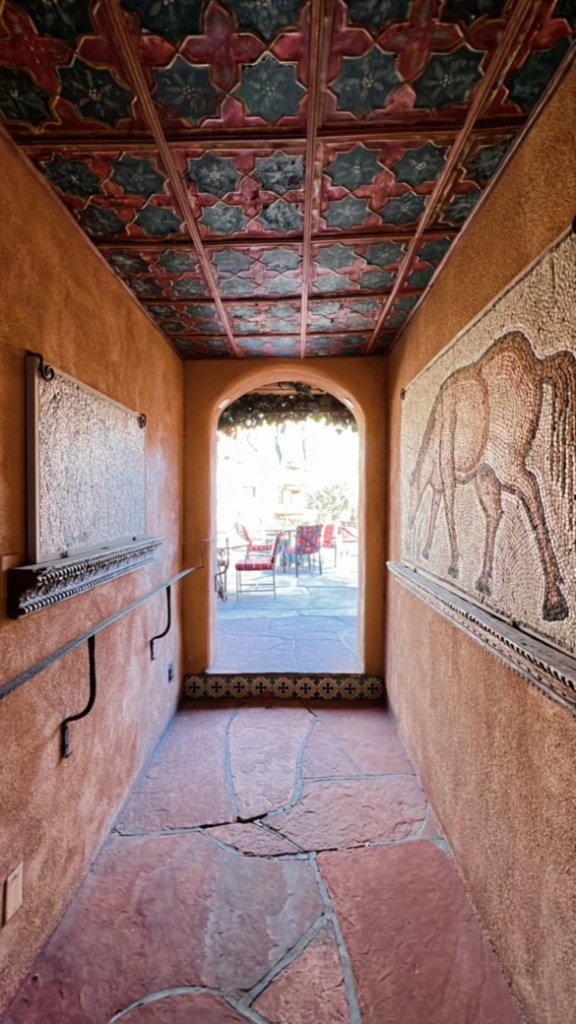
Inspired by nature and using semi-precious stone, ancient marvel remnants, and Mexican ceramics, these intricate mosaics that adorn the space are “Seret aesthetic”. 
It showcases Maximalism, an artistic expression in an otherwise disciplined design statement. 
I appreciate the creativity that went into each mosaic. 
In every corner and nook, unique objects offer countless stories for those curious enough to explore. 

Earthships: An innovative way to thrive in harmony with the Earth 

An Earthship, which Lonely Planet describes as “equal parts Gaudi masterpiece and Dr. Seuss whimsy”, offers accommodations that are completely off-grid. Built from recycled materials, the home is powered by solar panels, rain and snow-collecting cisterns and a greenhouse for self-sufficiency. It is a style of architecture developed in the late 20th century to early 21st century by architect Michael Reynolds. 
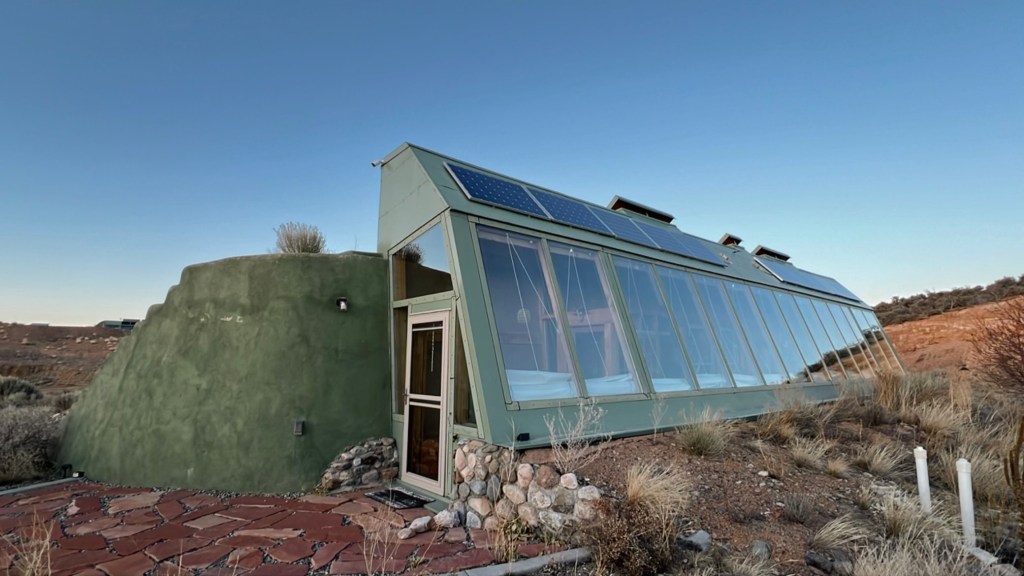
Breaking free from the ordinary, one Earthship at a time. 
 

I stayed in an Earthship at Tres Piedras, New Mexico. It was like stepping into a new world, a completely different cool experience, and it changed my mind of how people can live on the planet. The structure effortlessly blends into nature with its generous expansive windows on the southside, provides sunlight for the indoor greenhouse, a testament to sustainable living, allowing nature to become part of the environment. Rainwater and melted snow are caught on the roof, filtered, and then piped to the skinks and a solar-heated shower. Gray water from the shower and sinks hydrates greenhouse plants and then is used to flush the toilet, while sewage is treated and waters an outdoor planter. I learned how the entire system worked, I was drawn to the concept of off-grid living and its practical, Zen-like ambience inside. 
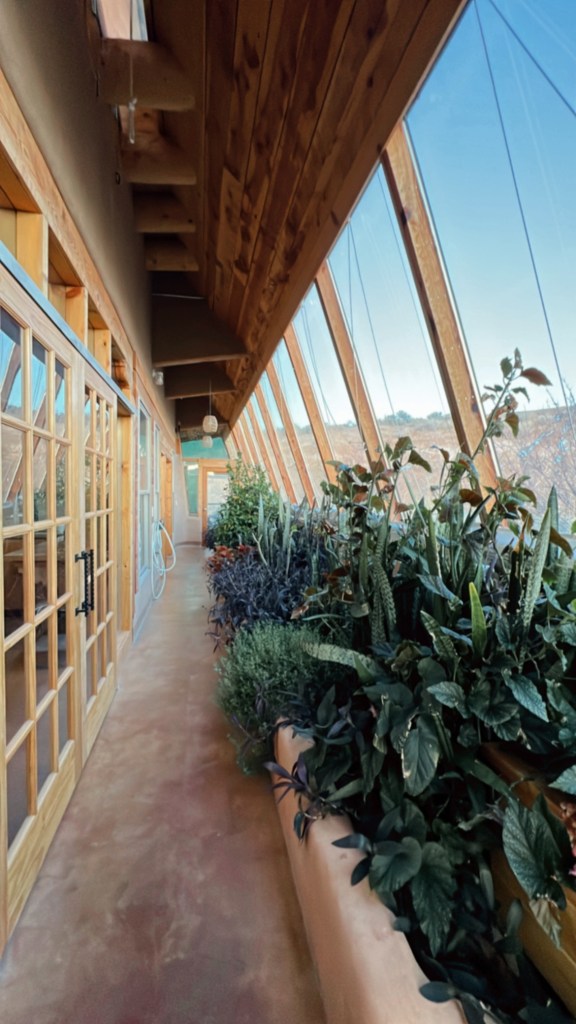
I loved how the windows were angled in such a way that allowed sunlight to stream into the greenhouse to sustain the plants. 
The home’s ambient temperature is regulated by the building’s thermal wrap and passive solar design, as well as natural ventilation throughout.
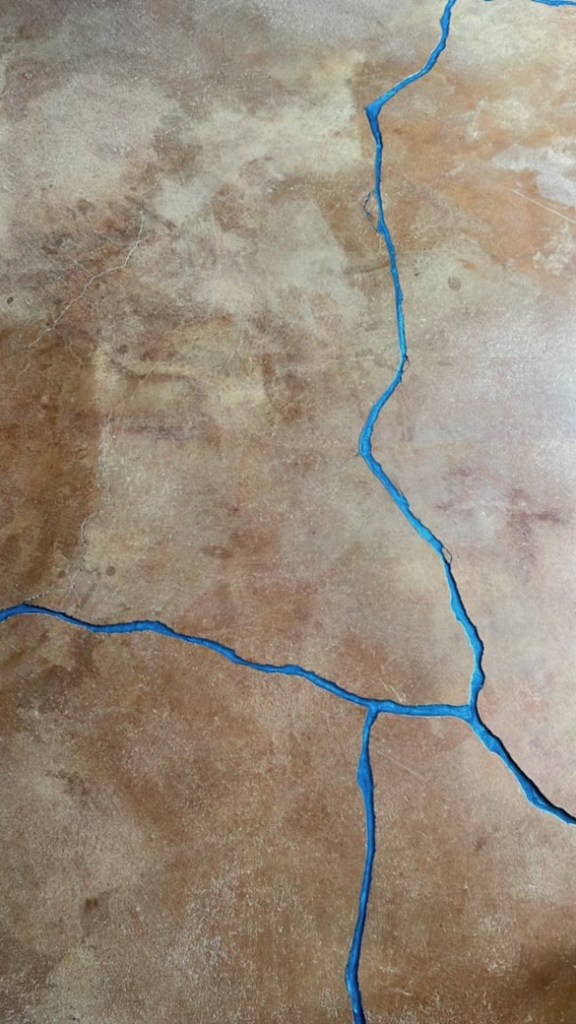
I was addicted to this beautiful natural blemish on the ground, like a lighting, touching the deepest part of a heart. 

Engaging in the Earthship is a transformative experience. I learned to open and close skylines, it was so fun, also to take brief showers and shut off the faucet while doing dishes. I woke up in an Earthship when it was freezing temperature outside the next morning, but it was warm and comfortable enough to get “lost” in the plants blossoming again. 

I was in a nature, also in a home. 

I left Earthship’s community with inspiration for my future imaginary home. 

Through my lens I captured the essence of New Mexican buildings art in its dramatic juxtaposition of home and majestic mountain, earth, culture, art, history, faith and indigo sky.  It was like time travel, my heart sang, the magical light, the thick-walled adobe, the open skies, ancient songs and dance, and the unique architecture behind it spoke to my heart in the most powerful way. New Mexico is an eclectic mix of artistry and imagination. 

After a bit of architectural artistry captures, heart-filling consideration, I define it all comes down to this: living on the land, a value precious to all New Mexicans. 

The conversation within art 

“I had to create an equivalent for what I felt about what I was looking at – not copy it.”- Georgia O’Keeffe

I personally believe the best way to appreciate art is to visit ateliers/studios, creatively inspiring me to start a recent New Mexico journey. In art history, Georgia O’Keeffe is one of the most significant Modernist artists in the United States, and one of its most celebrated icons, best known for her large format paintings of natural subjects, especially flowers and bones, and for her depictions of New York City skyscrapers and architectural and landscape forms unique to northern New Mexico. I visited Georgia O’Keeffe Museum in Santa Fe and witnessed her paintings and a significant archive of documents and photographs relating to her life and times, opening a wonderful “conversation” with her naturally. 

I saw the world with O’Keeffe! 

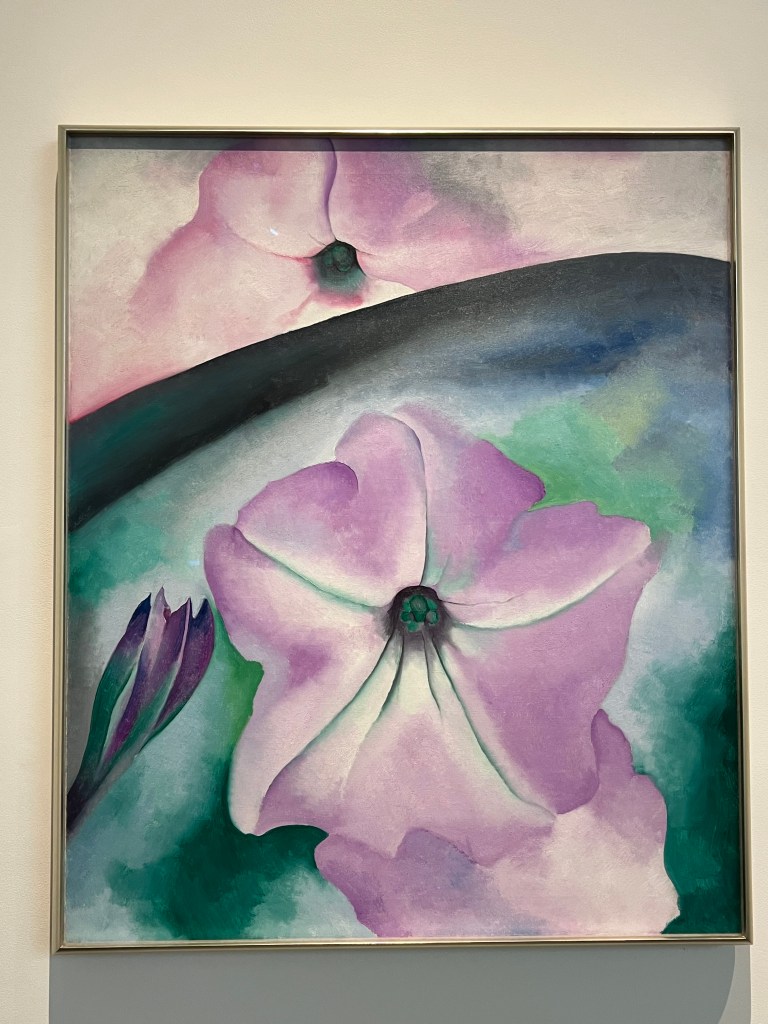
My eyes were fixed on a nature portrayal of an enlarged purple-lavender color dropping flower leaning towards the painting’s center, a sloping darker arch is slightly obscuring a similarly styled petunia. I looked closer, the subtle shades of lavender, inter-mixed with the tones of the lily-pad leaf, accentuate the maturing petunia buds on the painting’s lower-left part. My lens zooms in closer again, I could capture their frills and fleshy folds, the smallest pistils so clearly. I was transported to a natural scene, abounded in stillness and calmness. 

She depicted their natural beauty in her familiar, close-up style, painting their textures, symmetry and delicate structures in vivid detail. “Petunia No.2(1924)”.

We shared deep interest in the design of nature. I continued to “walk” in nature and take time to carefully observe each detail of natural objects – flowers, trees, leaves, water, clouds, feathers, shells, from stripes, color, shade, texture to pattern. 

The flower was a tool through which O’Keeffe could explore varying language of abstraction and representation. “Pink Ornamental Banana, 1939”. 
I was like a tree, rooted in painting, also in the nature. “Gerald’s Tree I, 1937”.
She never ceases to amaze me with her life’s work. 
“Dark and Lavender Leaves,1931”.

O’Keeffe worked mostly in charcoal, using expressive and vibrant hues that presents its artistic expression. Another painting, Anything, 1916, caught my attention, through unique framing, magnification and simplification with a new perspective, three conical green trees rise from the base of the work and extend into the central and left portions of the pieces. In the center of the painting, a rounded tree with a yellowish center emerges above the green trees. The color against the evening sky, stretching out from the tree oscillate with movement and vitality, making the object alive and unfold the meaning of life. 

She embodied her artistic skill, but her intrinsic understanding of the beauty nature possess. 

The silent artistic language built a deep and thoughtful connection between us. We kept “communicating” in the room, I found some similarities with her, our passion and spirit of independence and adventurous, making a long journey alone, we observe and immerse ourselves outside and surrounding, return home with souvenirs – an experience or inspiration as a reference record in the books. 

Maybe that was me, in another life! 

We just choose our own unique vision for ourselves, as an independent thinker, with our own aesthetic! 

I saw myself from her. 
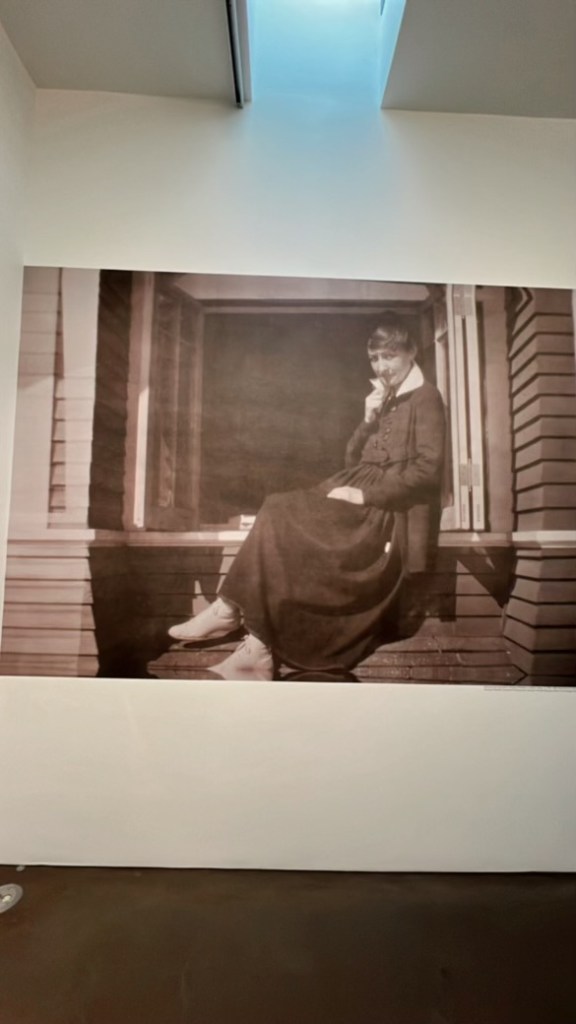
The iconic photographs taken of O’Keeffe by her husband, Alfred Stieglitz. 

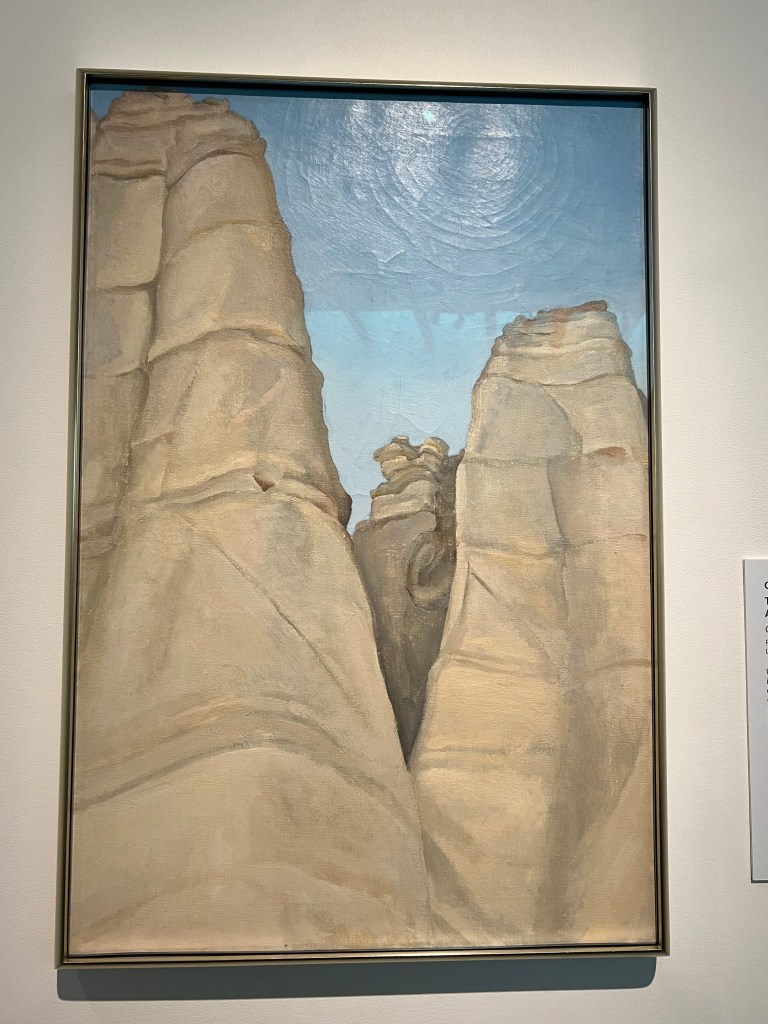
My artistic journey continued, heading to Abiquiu, to O’Keeffe’s Home and Studio, venturing a bit further afield, learning more about her. I did only one hike on this adventure –- Plaza Blanca, marveling at the massive rock towers composed of volcanic debris deposited over centuries. O’Keeffe referred it as “The White Place” due to the pastel white and grey sandstone, made even more dramatic offset against crystal clear, cobalt blue New Mexico skies. Just like her, to be hunting for something of myself out there, the wind blew, the sun was strong, I was surrounded and embraced by almost alien spires which deeply inspired me. My mind was totally freedom in the immense high desert horizons.  

In “The White Place”, she selected a view that emphasizes a deep cleft in the formation.
I hiked far out of discovering what unknown lay ahead. 

O’Keeffe lived her aesthetic. Her home and studio reflected a blend of Native American and Spanish Colonial building styles, with its natural light, open layout, midcentury modern furnishing, decorated with rocks and bones from her collection, showcased regional architectural features dating back centuries and into traditional adobe treatments.

I was fascinated by a different kind of color from anything I’d ever seen. 

I “walked” into her each room, from the garden, the salita (the room behind the famous black patio door where she prepared her canvases), sitting room, dining room, laundry room, to her bedroom and closet, got a glimpse of her way of living. 

I loved to see the ladders in NM, evoking the way into their world. The kitten always followed us. 
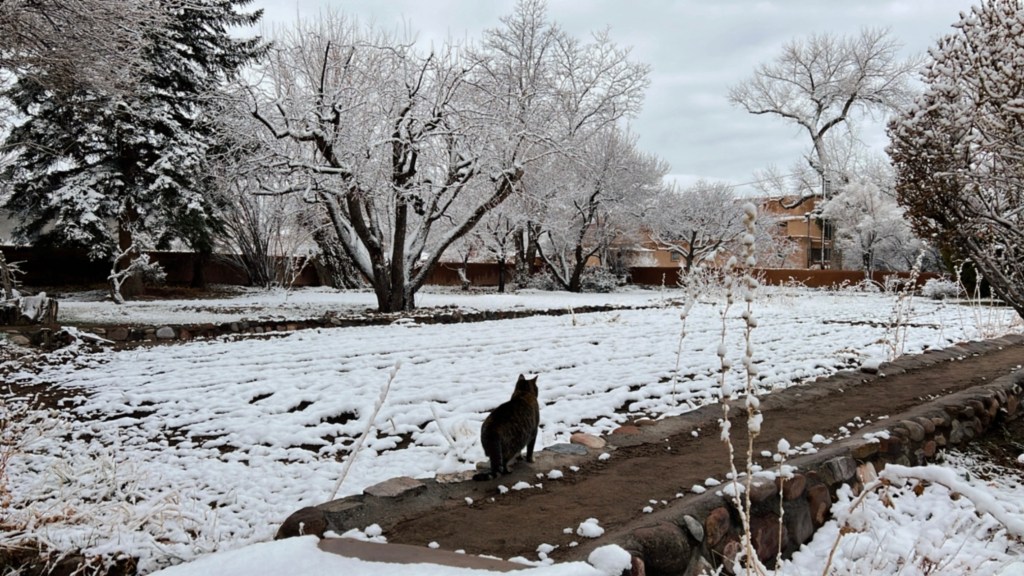
Hello, O’cat ! I followed his/her adventure too. 

She created timeless and restful spaces with her heart, that was from a real artist. She took the surrounding natural geography into account and reflected on their unique setting. She used shades of local earth to complement the surrounding nature-earth tones of sand, black, browns and beige, completed with a mud plaster floor, rough-hewn beams, and rich textures. 

In the dining room, traditional touches abound, including the original rafters, a mud plaster floor and a Navajo rug. I noticed a Noguchi lamp hangs above the table, as a contrast.
I enjoyed looking out the window: surmounted only by latillas, the roofless room provides a perfect backdrop to O’Keeffe’s sculpture, Abstraction, 1946, imbued with balance and harmony.   
“Abstraction, 1946” embraces her fascination with sinuous shapes, continuity, and organic forms. It reminds me of a seashell or wind. What do you see in this piece? 
A large window, with its abundant light and sweeping views of the Chama River Valley, became the inspiration for much of O’Keeffe’s greatest work. 
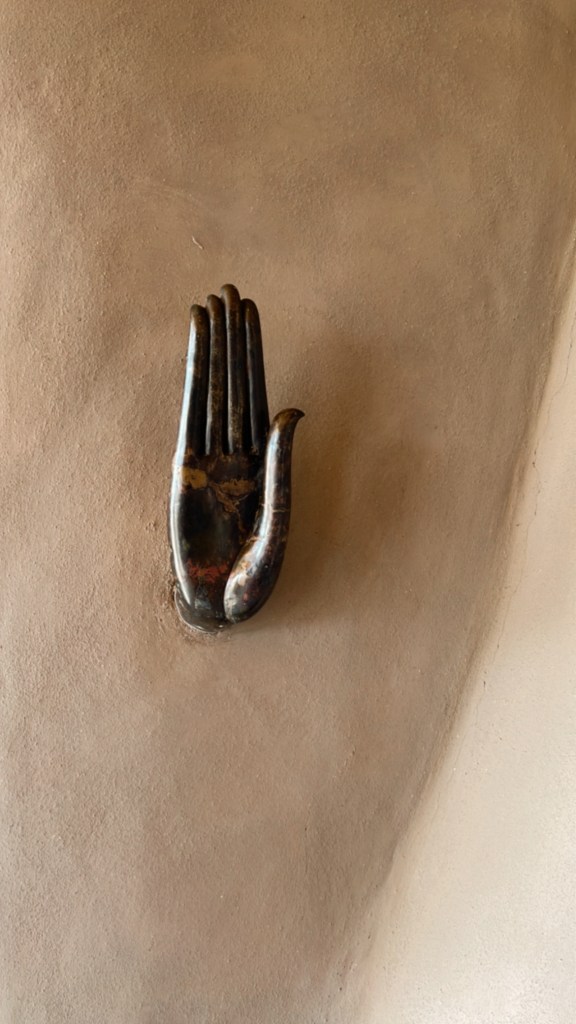
O’Keeffe purchased the hand of Buddha from her Thailand travel in 1959, and it now is mounted in her bedroom in Abiquiu. 
 

In her design vision, I sense that art doesn’t have to be purchased from a gallery. Sometimes, masterpieces are made merely by keeping our eyes open to the sculpture that surrounds us and relating to the natural world with a well-deserved awe. Please give every little detail a space that foster inspiration, contemplation and artistic innovation. 

A ram’s skull is placed atop a log, a simple yet powerful pairing that somehow recalls both O’Keeffe’s southwest-inspired canvases and the kind of classical sculpture we might see in other places.
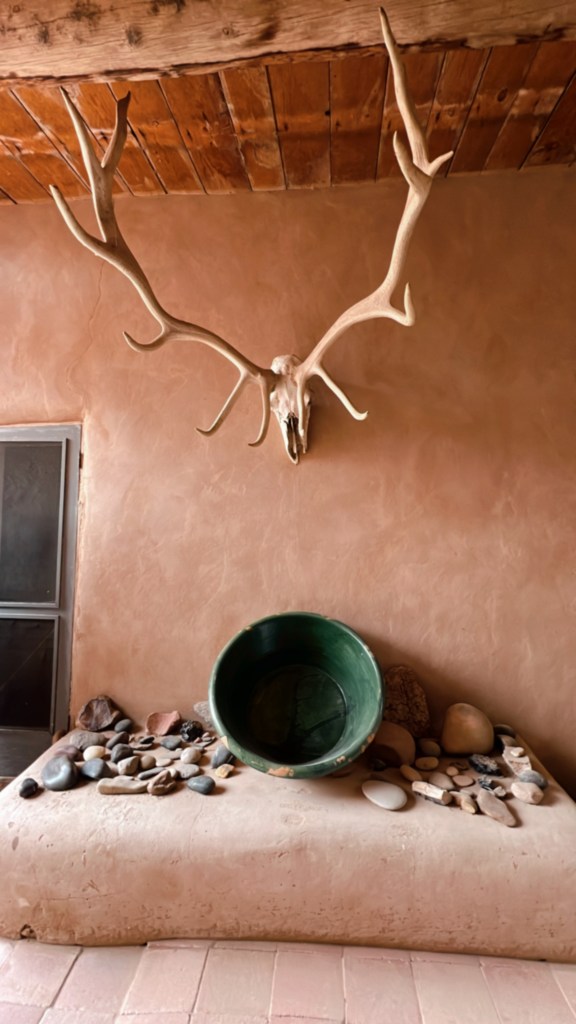
The zaguan’s eclectic décor includes a massive rack of elk antlers, an emerald-toned Mexican lebrillo, and a selection of rocks from her extensive collection. 
Something is in the air! 

Everyone interprets art based on their own experiences. People see what they see, and I am always encouraging people to look more deeply into each piece to find their own story”. – Artist Hebe Garcia 

On this adventure, I visited artist Hebe Garcia’s studio. Even though we met each other for the first time, it felt like an old friend naturally, as she stood there to wait for me. Garcia and her husband, both originally from Puerto Rico, moved to Abiquiu in 2015, now live on a seemingly endless mesa above Abiquiu, with expansive views from the Pedernal to Taos Mountain and on up to Colorado. “Just happened at the right time,” she said.  

For a glimpse of the artist Garcia’s creative process. 

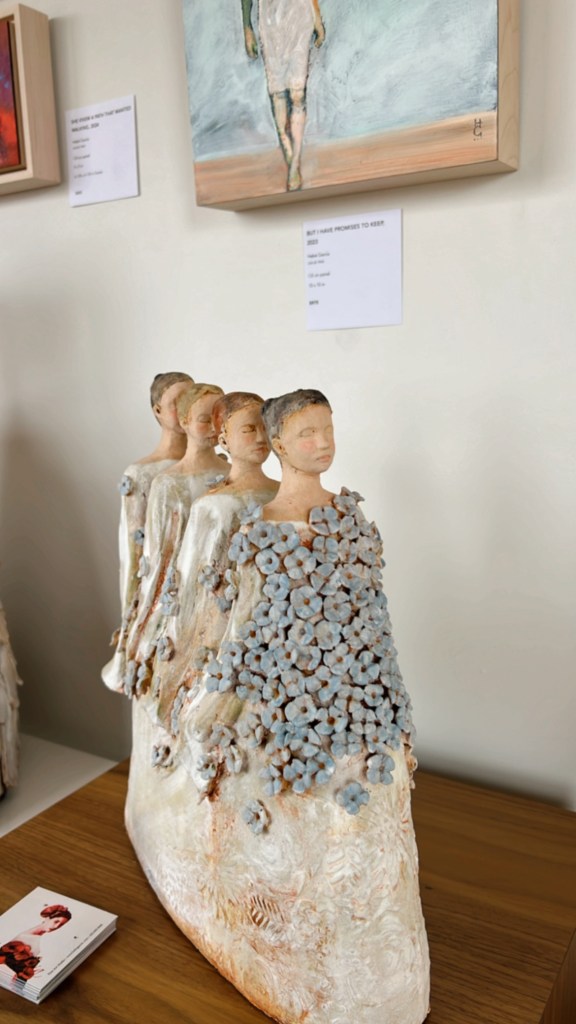
She specializes in figurative painting and ceramic sculpture, with narratives that weave mythology, feminism, culture, and history in a way that is both gentle and strong, deep and soulful. “I was born and grew up in mostly females’ family, I have three older sisters, and I have two daughters, and granddaughter as well.” Beautiful family photos hang on walls in the studio, the strong family connection is heartfelt. 

A group of four women represents herself and three sisters. 

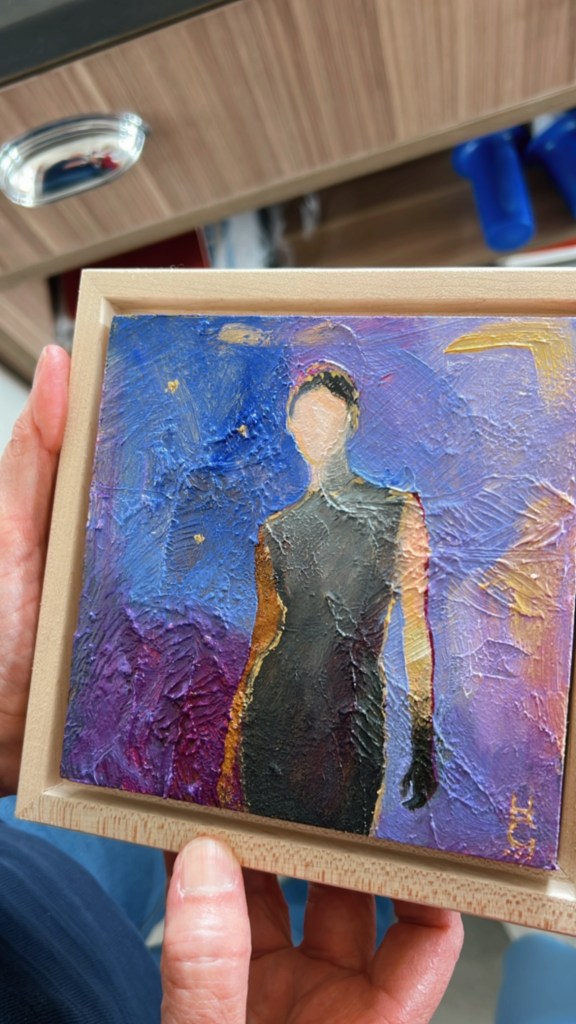
An impressive painting drew me in, a beautiful female figure with rich texture and seriality and vivid blue-purple colors integrated on panel, like a confident lady walking under the sky, I took a glimpse to see her inner world with curiosity. Garcia explained, “There is one man hidden standing next to her in the painting”, she showed the outline of that hidden man to me, “it’s the secret of this painting”. I replied, that is strength and love reflecting an independent woman on her path. 

“And you will always be with me.” Do you see the hidden man? 

I also noticed her artworks are full of bird elements, “The birds that I saw are always rooted in my memories, and life. I embody it into the creation. I found myself using the ravens and their feathers as a symbol of my thoughts and memories,” she explained. 

The artwork unfolds her memories in varying direction. 

I saw the “evolution” of females from the painting “Dreaming of past lives”, external and internal, fills with different experiences that shape her perspective and path, a symbol of newfound sense of freedom, independence and strength to keep forward in the female growth journey.

Dream within a dream.

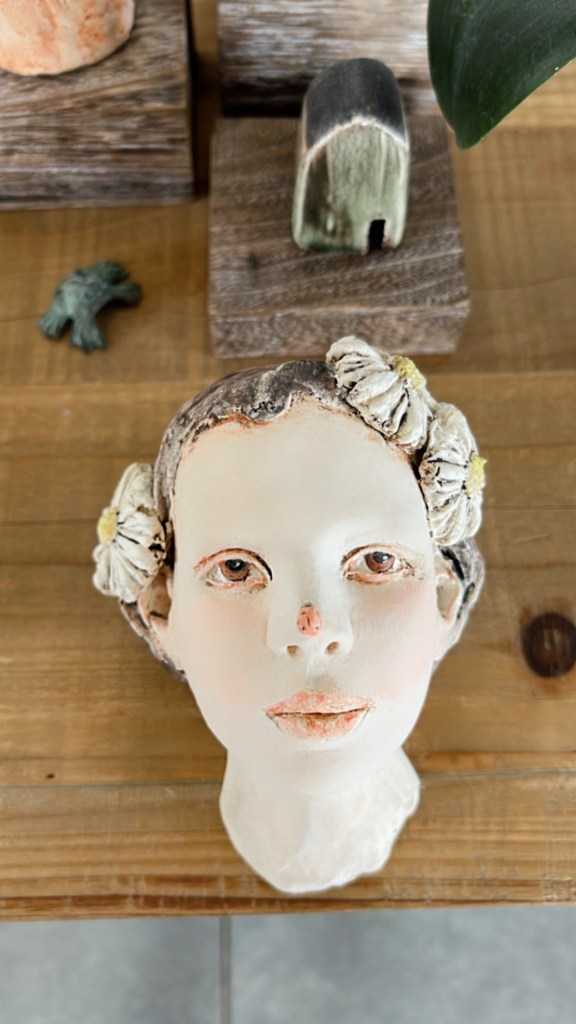
Each sculpture piece is made using slabs and coils of mid-fire red sculptural clay with engobe, oxide, glaze and some with gold luster, the artistic expression speaks volumes in its subtle way: it displays different facial expression, the loudest with their own narratives I could hear. A lively golden sun reflects on an innocent child’s face and eyes, the flowers are on the head, the ladybugs on the nose, drawing on memory to capture moments of celebration, joy and a meaningful bond. Garcia said the inspiration comes from her memory of her daughter’s face and those pollinators from her garden. 

She told me an interesting story. 
Her pieces hang here and there, seemingly in dialogue with one another, also with audience. I “talked” with each one, to discover their emotions, desires and fantasies. 

“Your eyes and minds are open,” she continued, “You are seeing the things, but you’re not just seeing the things you are in. My mind keeps working on other things, you’re seeing where you are going, and you are in another place”. I replied, same, that is creativity and juxtaposition. We connected and smiled at the same time. 

I captured her “Viajeros”(Travelers) series, reflecting our human journey naturally. We are all traveling through life, by self-discovery and searching for betterment, we are always curious to see where our journeys take us, like “Viajeros”, always ready for their new journeys and adventures, of course, new homes.

The tiny homes evoked my emotional instinct, it is about the hope, love, renewal, security. 
We had a profound conversation, exchanged the views of life, culture, family, adventure and art. 

We always have lots of conversations in life, with ourselves or others, with voices or without words. Perhaps the art and soul are holding it all together for us, speak of stories untold waiting to be drawn out by the innermost fancy of the observer, it is the relationship I find interesting and soulful. For a glimpse inside artists’ ever-curious minds, reveals evocative points of connection and dialogue; the artworks, even silence, but are the loudest and most powerful of our heart. I am fortunate enough to have both meaningful conversations with art and artist! 

I left my heart in Pueblo

People and community give a place its vitality and special character. This is certainly true of New Mexico. It is not only the home of scenic beauty and creatures, but also the home to many Native Americans, and this area rightfully celebrates their rich cultures and history. When I am in New Mexico, my heart lies within the adobe houses made by the indigenous people. I enjoy exploring the way Native Americans have lived there, finding many lessons from adobe houses and cultures. It makes me want to explore these cultures further. I will try to explain why this land calls to me. 

Bandelier climbed its way into my heart.  

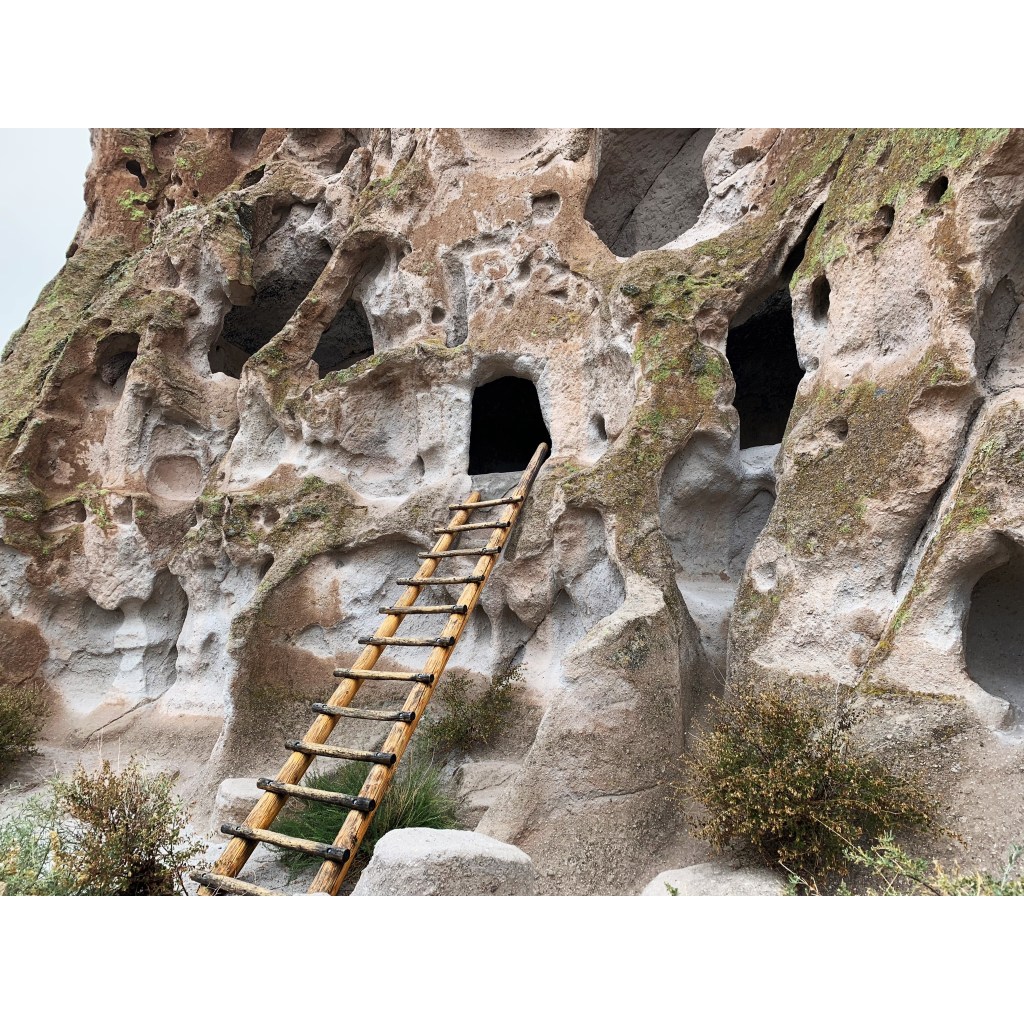
I take a trip to Bandelier National Monument. My curious mind takes me here to explore the ancestral Pueblo dwellings, to feel the way they were constructed and used. I notice many unique holes in the mountains. I wonder if these holes are entrances to homes of indigenous people? Yes! It adds a sense of mystery to this beautiful landscape.

IMG_9310
Hanging out in cliff dwellings is a beautiful thing. 

I am very excited to see ladders in the mountains, ladders that take me not only up, but back into history. It is an impressive adventure for me to climb 4 wooden ladders to the alcove house, 140 feet above the canyon floor. It is raining heavily and quite chilly, my hands are cold and almost numb, but I make the climb. The cold weather and great height do not scare me. When I reach the cave, I now see first-hand how Pueblo people lived and experienced their life so long ago. It is an amazing history lesson, hike and climb. I realize that for me this is the true New Mexico.

Climb the Bandelier, not so the ancient Pueblo people can see you, but so you can see them.       

Don’t miss: Let your feet wander!  

IMG_9315
Would you climb this ladder I did – in the rain and cold?

thumbnail_IMG_9737

Taos Pueblo: deep in my heart.  

“Each time I leave here it is like a death and each time that I return it is a birth”—Georgia O’ Keeffe 

I can’t agree more, it says what is in my heart.  

IMG_9687
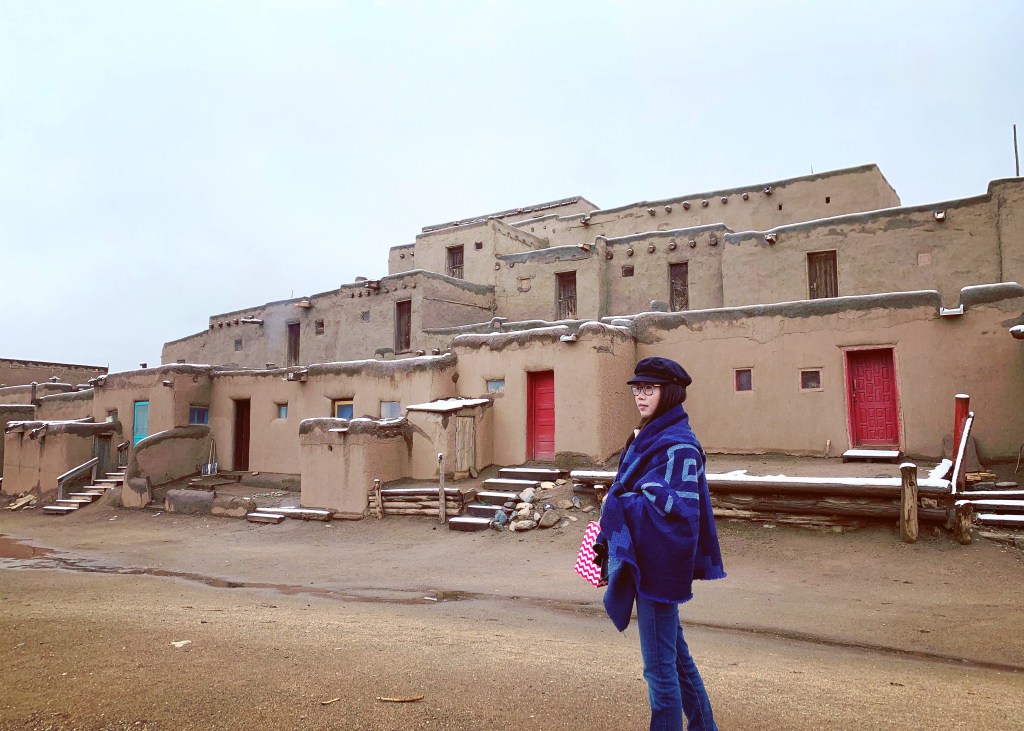
This is not the place of my birth, but I feel a deep sense of connection and belonging. 

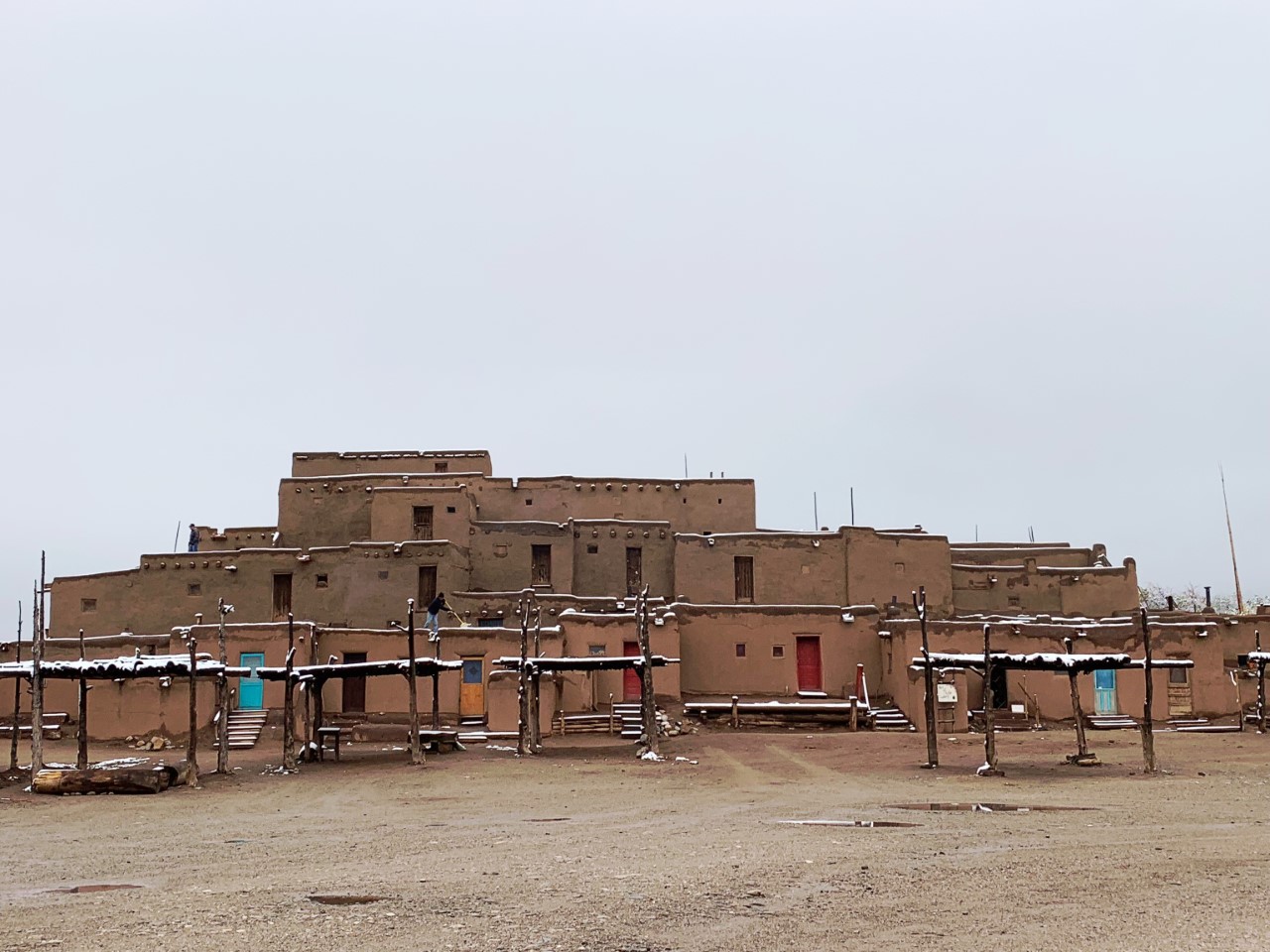
Ancient pueblos were constructed by the Native American tribe of Pueblo people, one of the world’s longest continuously inhabited communities. It is a special place for me, not only the adobe-style homes that I love, but also because I can see and imagine an ancient life that seems fantastic to me. 

thumbnail_IMG_9743
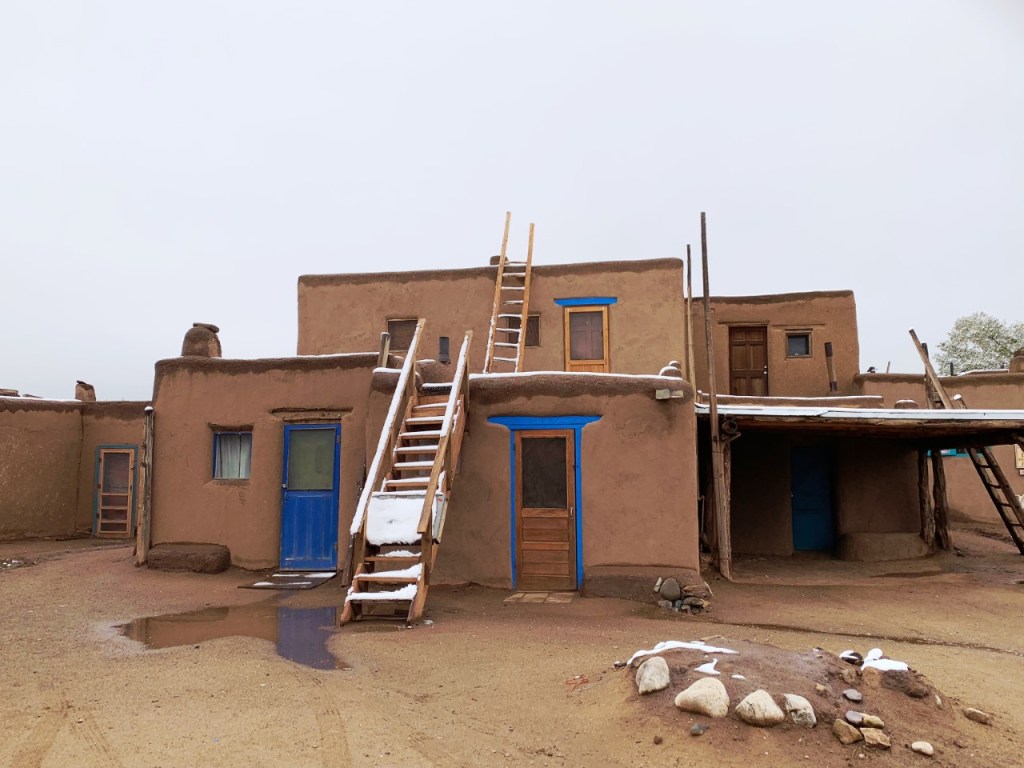
Taos Pueblo, New Mexico tells a good story. 

I am lucky to see snow at the adobe homes, snow that stays on the ladders and the roofs of the adobe houses, some with blue-colored doors, making this place more beautiful. I don’t why, but when I see glimpses into daily life here, the dogs roaming the area, the few remaining people still living here, shoveling snow and praying in church, my heart feels very warm. I know it is home for them, a simple and blessed life.

thumbnail_IMG_9742
My heart lives here.  

IMG_9695
Some views never get old: San Geronimo Church.  

Much time has passed since these homes were constructed. They are over 1,000 years old. All that time, these dwellings and this community have been given love and care to stand the test of time. Love makes a house a home. it is true. Yes, it is an old and small town, but it is full of love. Can you feel it? If not, go there and experience it yourself. This love inspires me to bring some of their handmade crafts back to my own home. 

thumbnail_IMG_9741
I’m trying to figure out how to get back to Taos ASAP. I miss it already.

thumbnail_IMG_9738
Bring home handmade pottery celebrating this native heritage. 

Don’t’ miss: Spend time on listening to the native people share their story. And try the fresh food made onsite.   

Fall in a desert diamond: Santa Fe 

What are your thoughts when diverse arts and a rich culture meet adobe architecture? It really gives Santa Fe its charm, a place in a league of its own. I stop shooting photos as a tourist and begin shooting what I feel, not just what I see. I feel this place’s vibrant colors, vitality and magic. The street artists share an artistic spirit, and it calls to me.

IMG_9156
Santa Fe is in a league of its own.  

Visit the wonderful art galleries and historic buildings with vast numbers of shops full of handmade art. Discover so many different giant paintings, antiques, potteries, jewelry and vintage art from around the world, much of which you will not find anywhere else in the world. I am in an artistic ocean.


IMG_9155
A lot of galleries showcase local art.  

thumbnail_IMG_9739
Art spirits are around me. I am forever exploring.

thumbnail_IMG_9744
Local artisans sell their handicrafts under this portico in the square.  


I would happily move here to nearly any corner of this city. Santa Fe is like a diamond: it sparkles in the desert as an incredible charm.  

thumbnail_IMG_9740
Santa Fe shows off my new favorite color.  

Don’t miss: Stop taking photos long enough to immerse yourself and absorb this artistic environment. If you can, visit Santa Fe at Christmas. The luminarias light the whole city and it is magical.

Nothing is better than the experiences found through travel. It exposes your body, mind and spirit to new places and allows you to discover new beauty in so many ways. This is true of New Mexico: the home to amazing landscapes, natural forces, beautiful creatures, fantastic art and many Native Americans.

This place calls to my body and my spirit. It truly is the Land of Enchantment!

The Land of Enchantment: it won’t disappoint you.

New Mexico calls itself the Land of Enchantment. This motto intrigued me the first time I read it. I was very curious and deeply wanted to explore this mysterious place.

My thoughts of this land before visiting: Desert, Cactus, Dry, Camel Color, Wild, Murals, Almost Mexico, Chile Ristras. But why is it the Land of Enchantment? I would not know until I visited and explored. So I did! Now, follow me, and find the answer with me in this adventure.

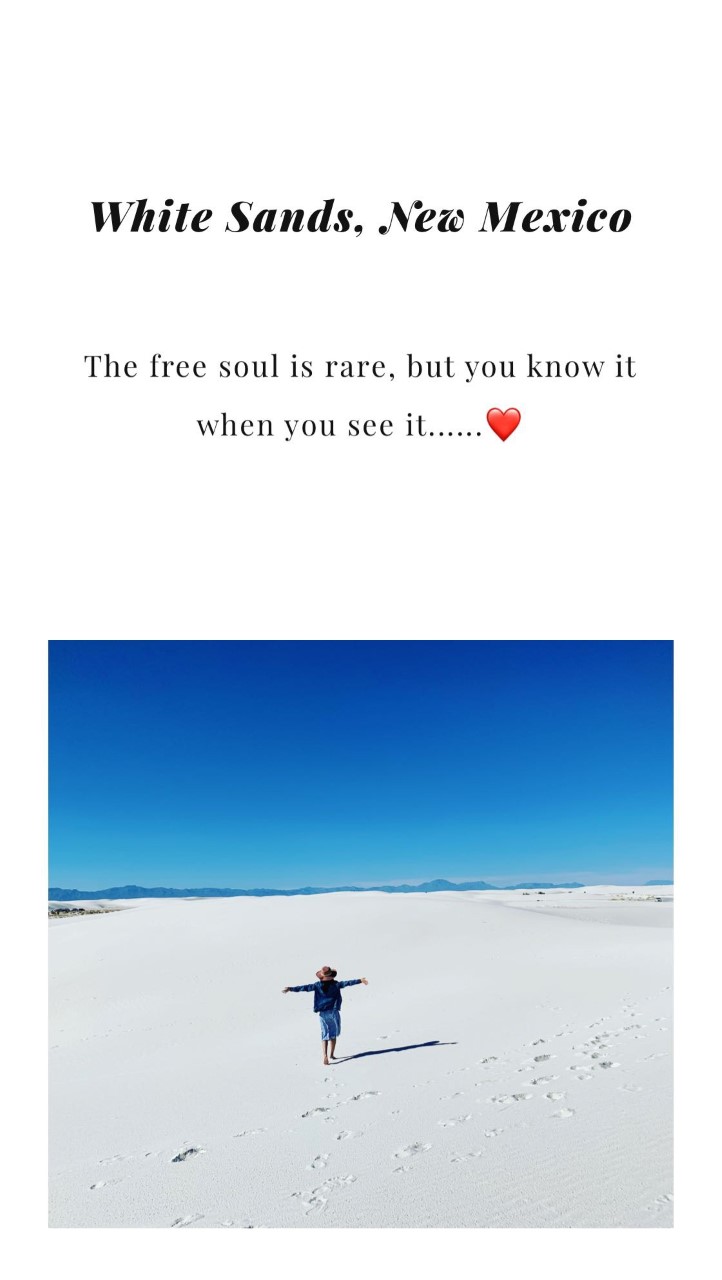
The free soul is rare, but you know it when you see it…

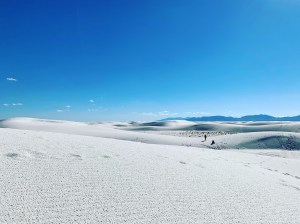
Most people are not familiar with New Mexico, but you might know of White Sands National Monument. I knew this place would be beautiful. Many people select it for their wedding photos. Until I actually saw it for myself, I had never experienced anything like it.

IMG_8381
White Sands National Monument, New Mexico

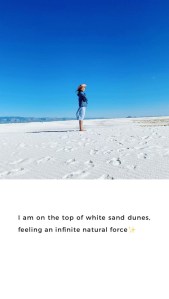
All glittering white sands are around me, it is better than a white winter wonderland. I climb to the top of the gypsum sand dunes and look quite far, but cannot see anyone, just the white sands, mountains and sky. I run fast on the white sands with different slopes, I feel alive, my brain empty of thought. The sand and its stillness surround me, and my whole soul feels free.

thumbnail_IMG_9726

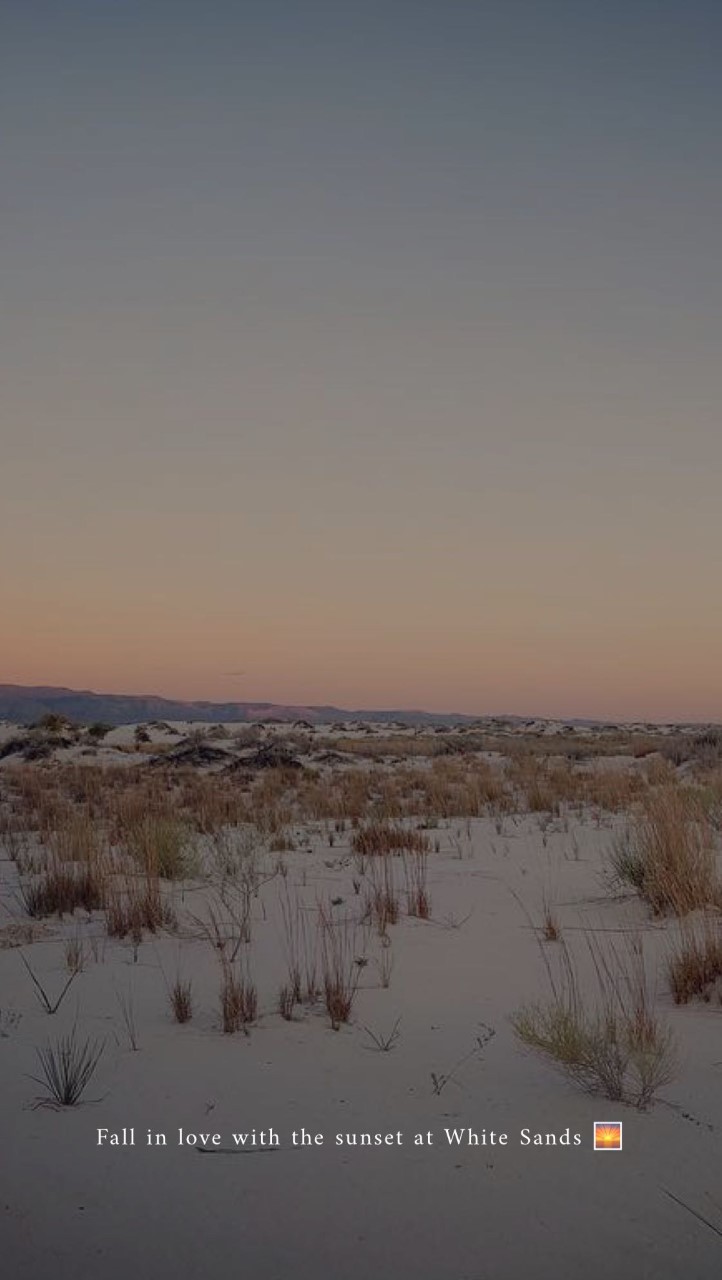
thumbnail_IMG_9727I’ve fallen in love with the sunsets here. Can you imagine a soft sunset color, with unique plants and mountains, along with the white sands, all on the same horizon? I am immersed in it, feel the charm of nature, smell the wind, listen to the heartbeat of nature here, wait to see the sunset, take a deep breath, and appreciate this very moment. I close my eyes, and I am now part of the white sands.

thumbnail_IMG_9728

Don’t miss: Sunset Tour at White Sands—Chase the sunset through the golden hour and enjoy the precious moment.

The moment when nature becomes home.

I never imagined that nature can become home, till I met you: Kasha-Katuwe Tent Rocks.

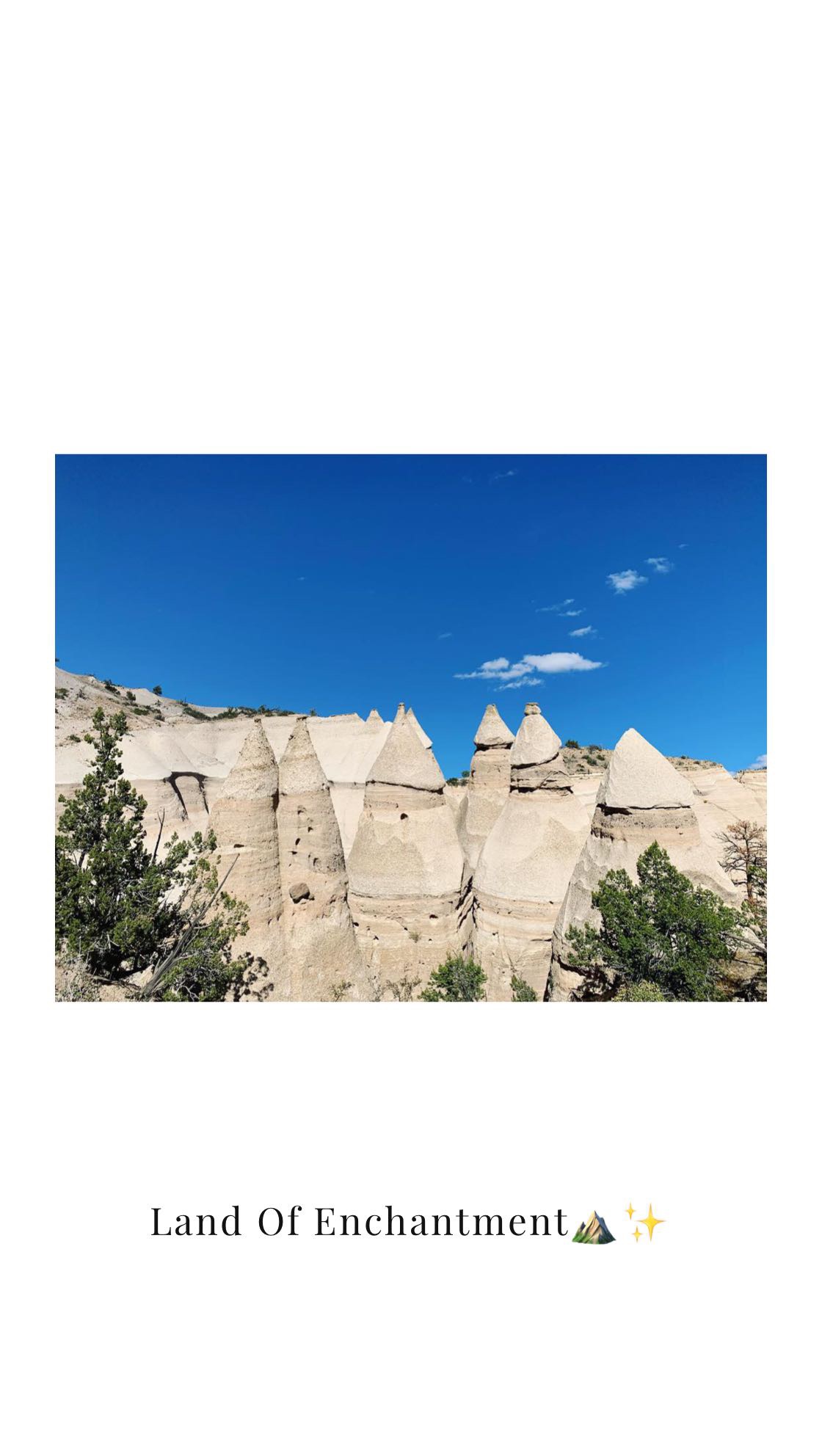
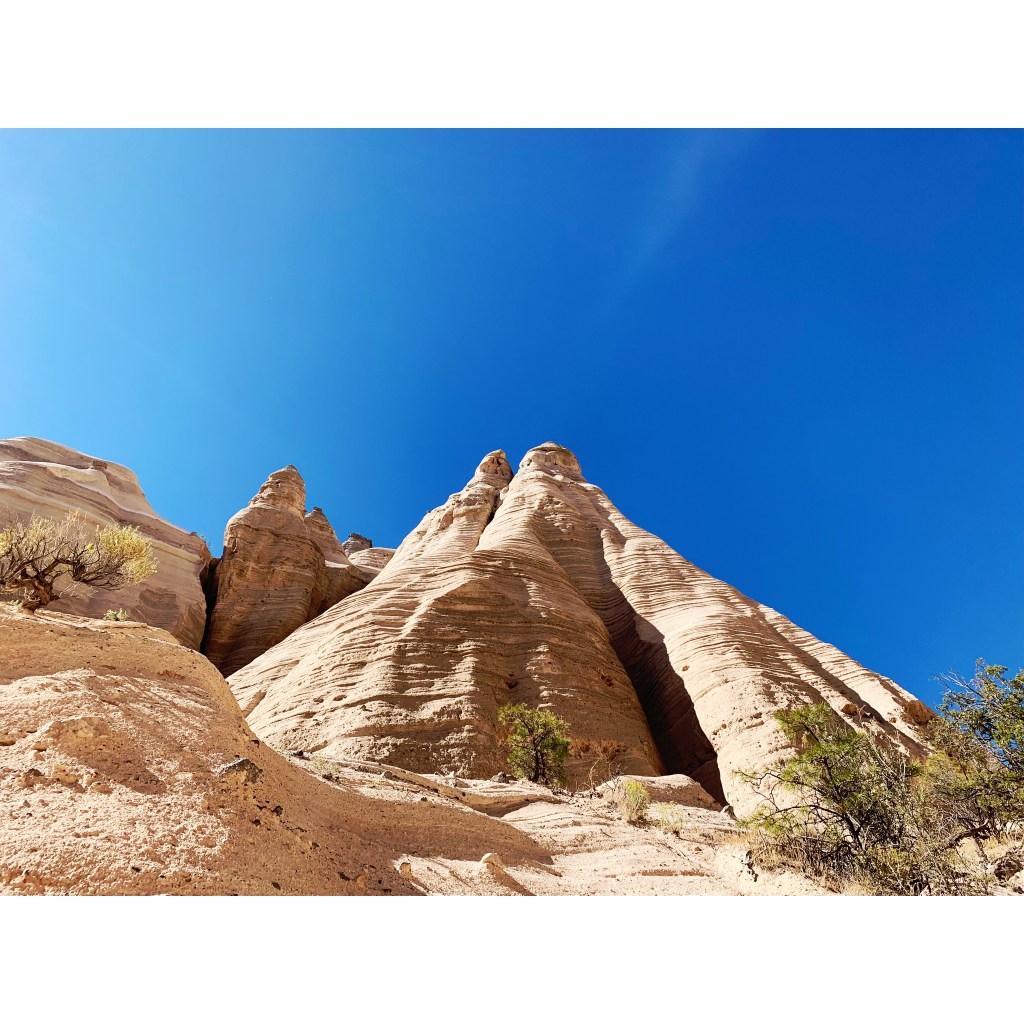
I am a natural and outdoor lover, and this hike was a profound experience to me. I hiked through the tent rocks, it reminds me of Antelope and Bryce Canyon (Utah). It was a bit harder to hike due to the inclines. I turn, looking up, and see the best perspective: unique rock structures and natural skylights. When I hike to the top, I can see the variation in height of white cone-shaped rocks, and I feel the wonder of nature. The breathtaking New Mexico landscapes and these natural, white tent-like structure look like homes to me, seemingly waiting for someone to move in to live. They have stolen my heart.

IMG_9103

There is no place like this: a natural white colored home 


Life is like an echo. I shout loudly, and I hear my sound repeat back to me clearly. When I am at the top of a climb, I feel as much as I see. Now I know why New Mexico is the Land of Enchantment: mysterious natural wonders in nature, combined with a rich cultural history in the surrounding area. It creates a special feeling inside me. It makes me think: my ideal wedding place will be in the white mountains, maybe here.

IMG_9100
The amazing New Mexico landscape is home to mysterious things in nature.

IMG_9102
Don’t’ forget to look up when you hike, the skylight is real, and you don’t need any filter.

Don’t miss: Say YES to the harder hike. New Mexico Rocks!

It is just a visit place for you, but for bats it is home: Carlsbad Caverns National Park.

The first sentence of an introductory video at this park touches my heart. I think that it makes sense that aliens or space creatures might have visited New Mexico, as some people believe, because it probably looks and feels a lot like home on an alien world.

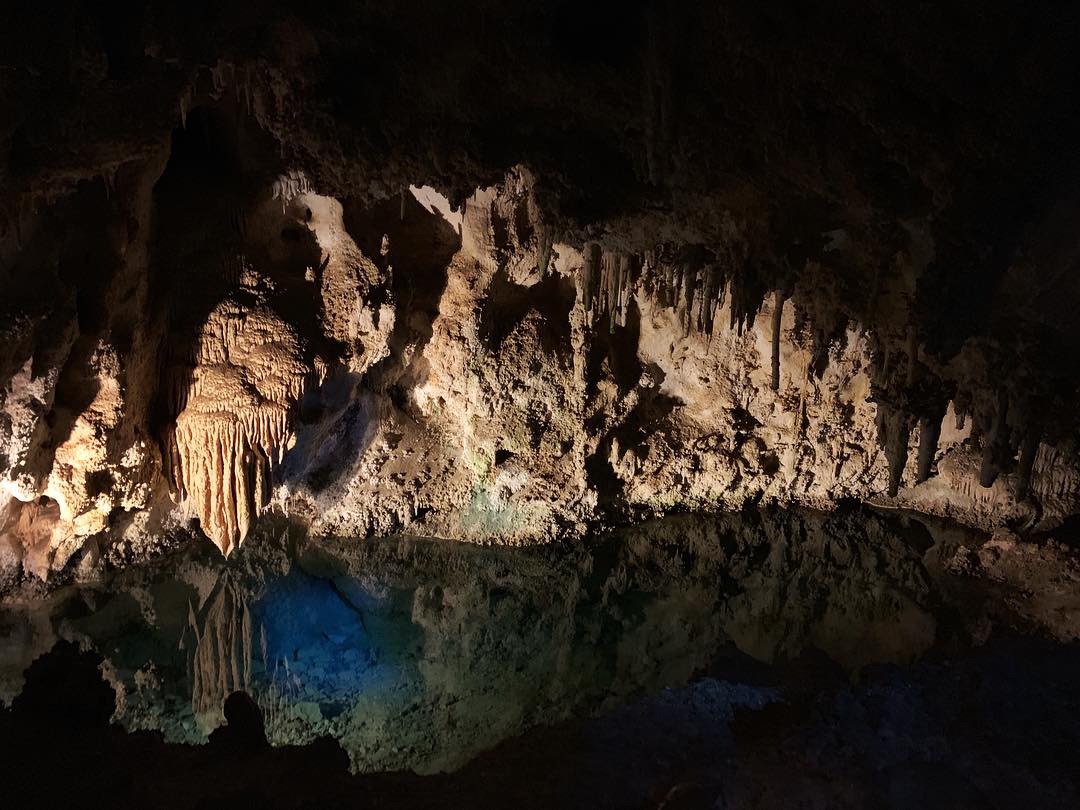
Now journey with me more than 750 feet underground. It will be a cool adventure, and this place makes me feel incredibly small again. I follow the cave explorer Jim White’s footsteps. I walk into the darkness and wander through the Earth’s enormous, cold, damp, spiky belly, exploring the marvels in the cavern. I cannot believe my eyes: this place does not look real. I see a variety of spectacular cave formations. The water reflects the surreal formations like a mirror, the inverted image like a strange but beautiful wonderland.

IMG_8694
Pictures never do justice

thumbnail_IMG_9729
The Land of Enchantment’s underworld

IMG_8700
Carlsbad Caverns National Park, New Mexico

The most exciting moment for me is to see thousands of bats flying out of a cave, off into the night sky. It is a wonderful experience. My eyes follow them in flight, and I can almost feel their speed. The creatures are marvelous, small and cute, with powerful navigation and flying skills. l think myself similar to the bats: small but not weak, and like bats, I love to fly about and experience adventures in the dark. Their amazing flight blew my mind!
IMG_8698
 Sitting at the mouth of the cavern to watch the bats fly.

Don’t miss: Bat flights program (late May through October); King’s Palace Tour. If you haven’t been there, you need to visit. Trust me!

The magical sights of New Mexico touch my soul and speak to my heart. Now I know: this home of so many stunning and splendid sights and creatures is truly the Land of Enchantment.