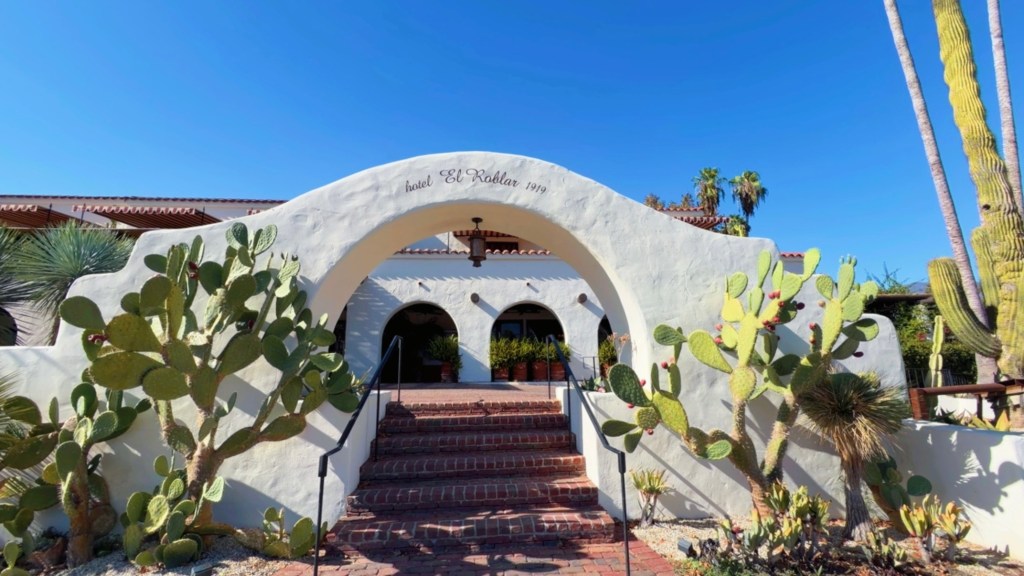
At El Roblar, architecture, art, history, and nature seem to speak in the same visual language.
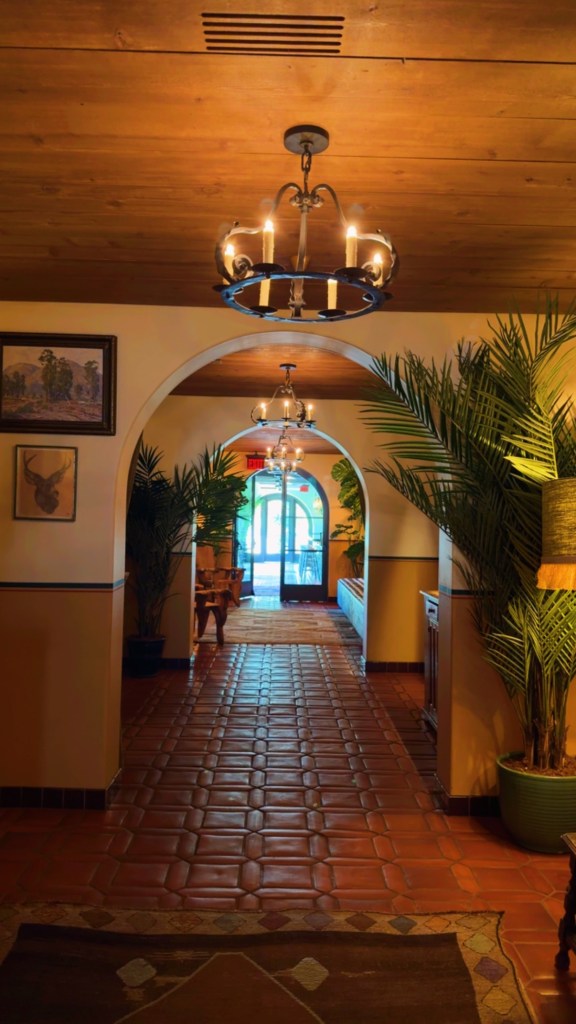
Ojai, California was sweltering, well over 90 degrees in late August, but somehow, Hotel El Roblar’s atmosphere made the heat feel almost beside the point. I was immediately transported to another era by its white Spanish arches, dating to 1919, historic façade, textured surfaces, muted tones and moody interiors. What drew me in was the thoughtful interplay between architecture, interiors, art, and landscape. Nothing feels imposed; instead, each element seems to naturally belong to the same visual narrative, creating a sense of place that feels unmistakably Ojai.
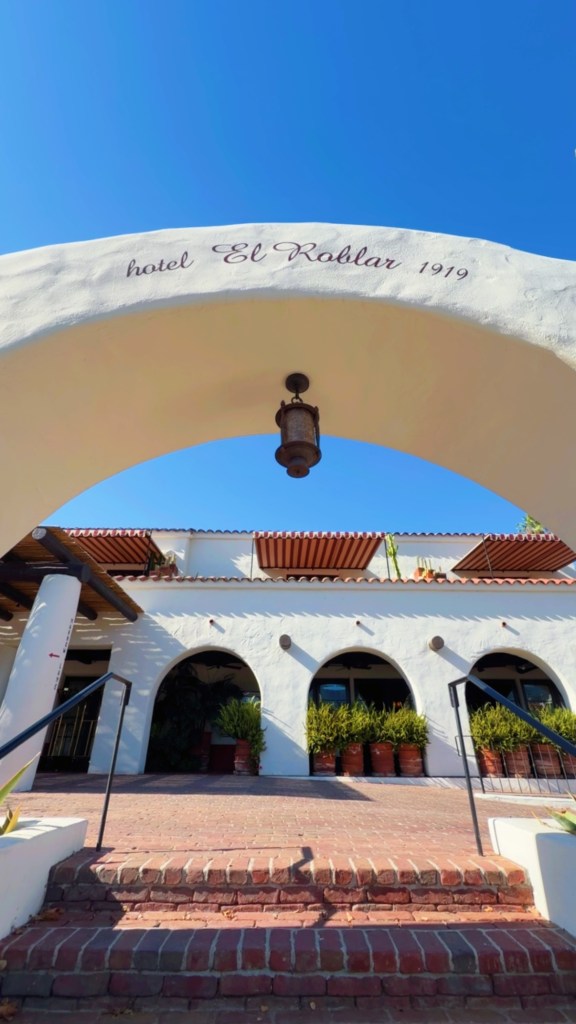
The Character of El Roblar
The dark tones are punctured by understated Western and equestrian touches, from the privacy and service signs to the keys shaped like miniature cowboy hats, quietly adding wit and personality to an identity that feels deeply local and effortlessly lived in.
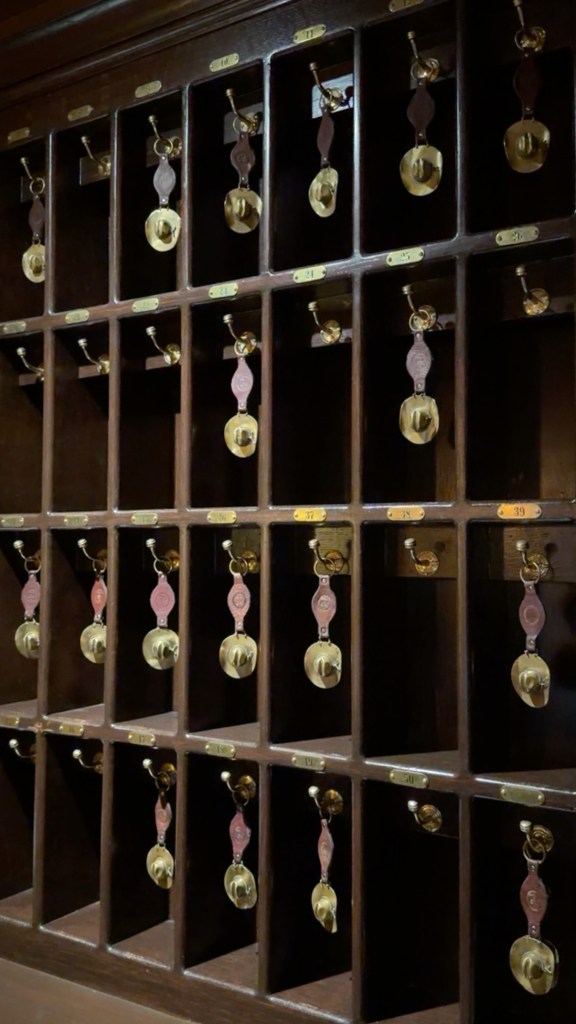
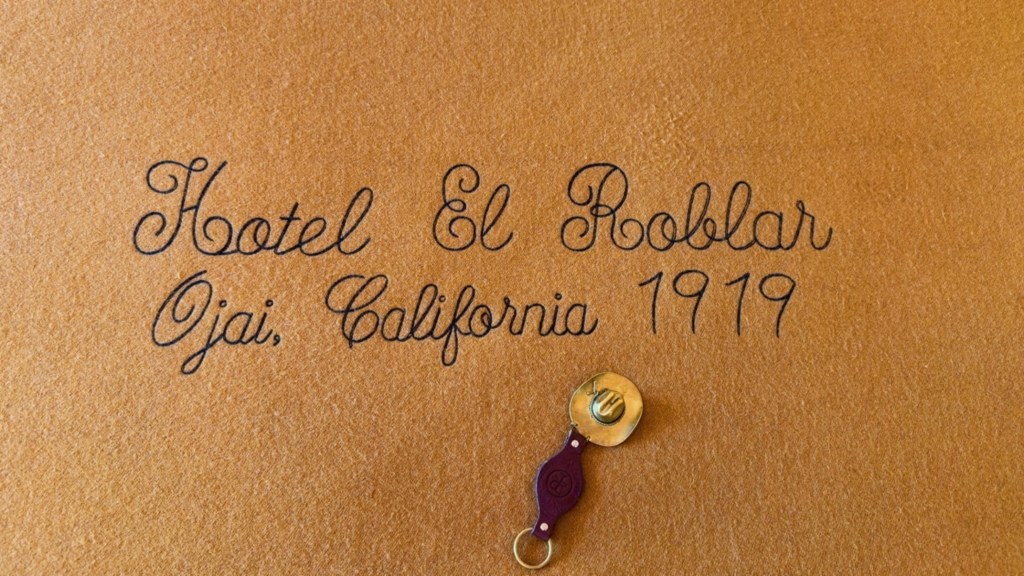
The sensibility immediately reminded me of The Bowery Hotel in New York, not because the two spaces look alike, but because both share an appreciation for vintage references and old-world patina. Ha. I later discovered the ownership connection between the two, which perhaps explains why the aesthetic felt so intuitively familiar.
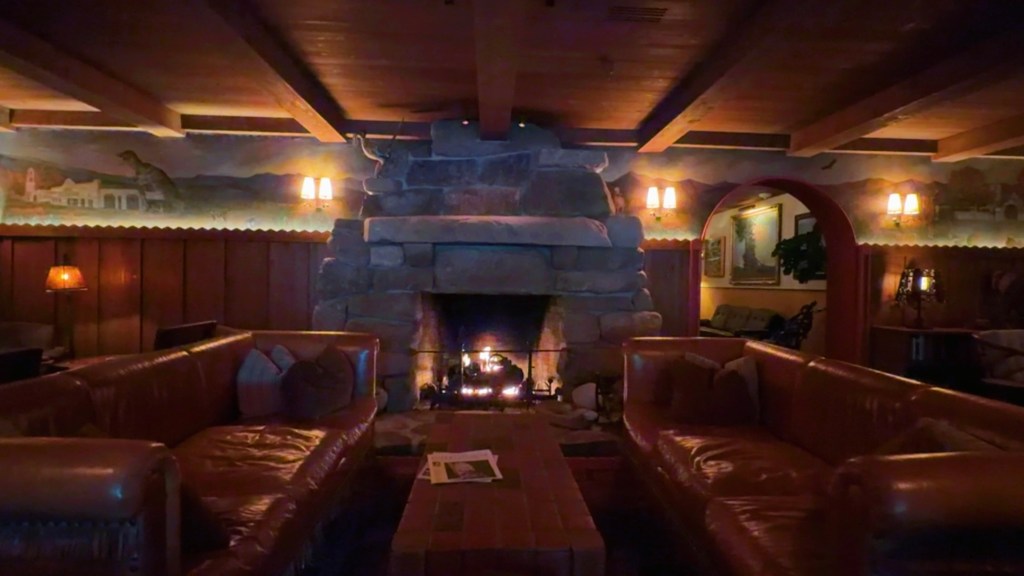
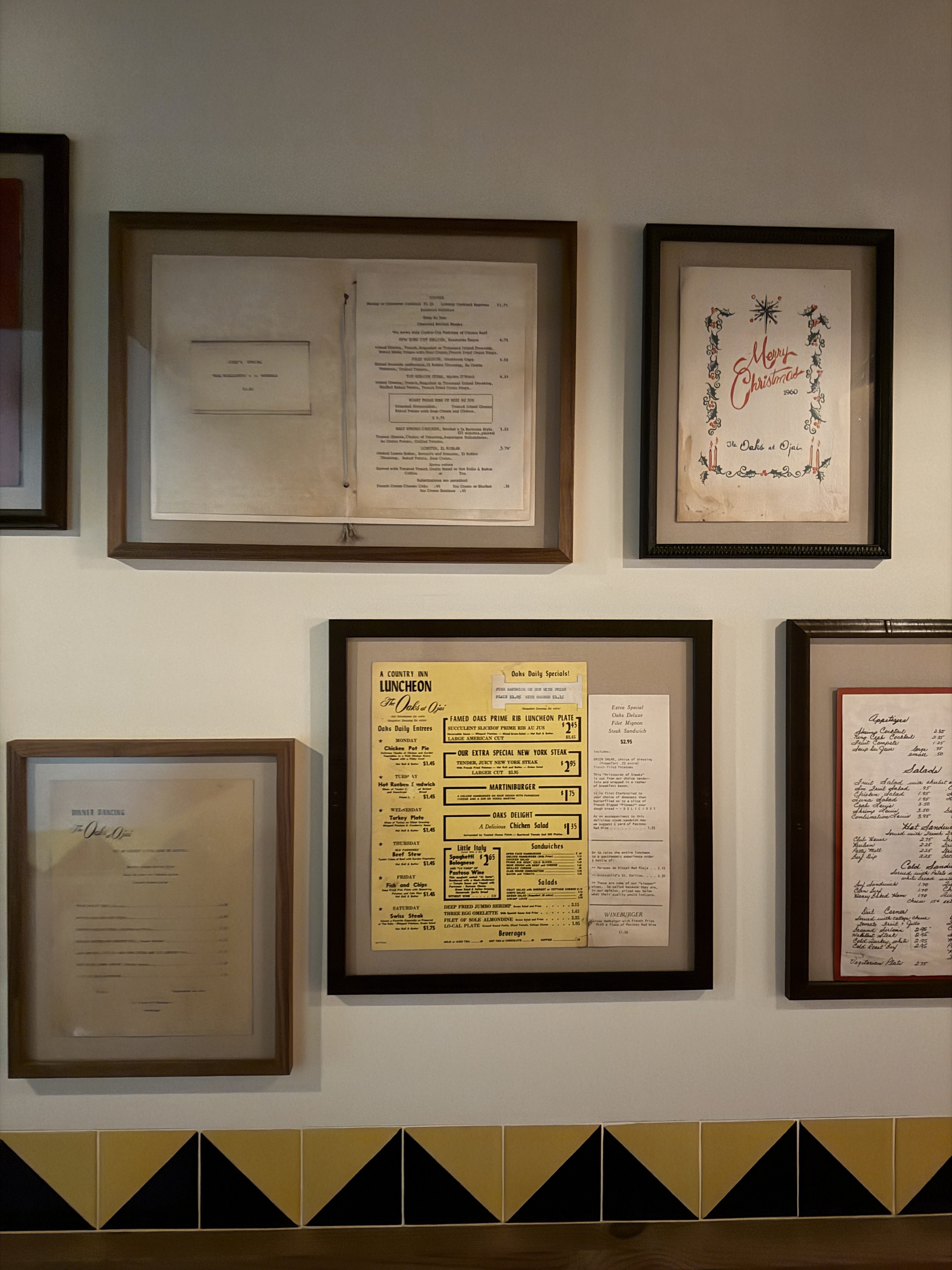
The soft light lured me into the lobby, inviting me to take in every detail, from the dark wood paneling and Persian rugs to the vintage furnishings and lamps. The space feels collected rather than decorated: layered, intimate, timeless, and full of character.
The Art of Arrangement
The art, objects and old photographs throughout the space feel like a visual archive of place. Every piece in the collection seems to carry its own story. Beyond the antlers and peacock feathers, artist Stefano Castronovo’s wraparound mural brings layers of Ojai’s history into the space. Looking closer, I began to notice references to the valley’s agricultural roots, natural landscape, and the character of the town, alongside glimpses into El Roblar’s past and identity.
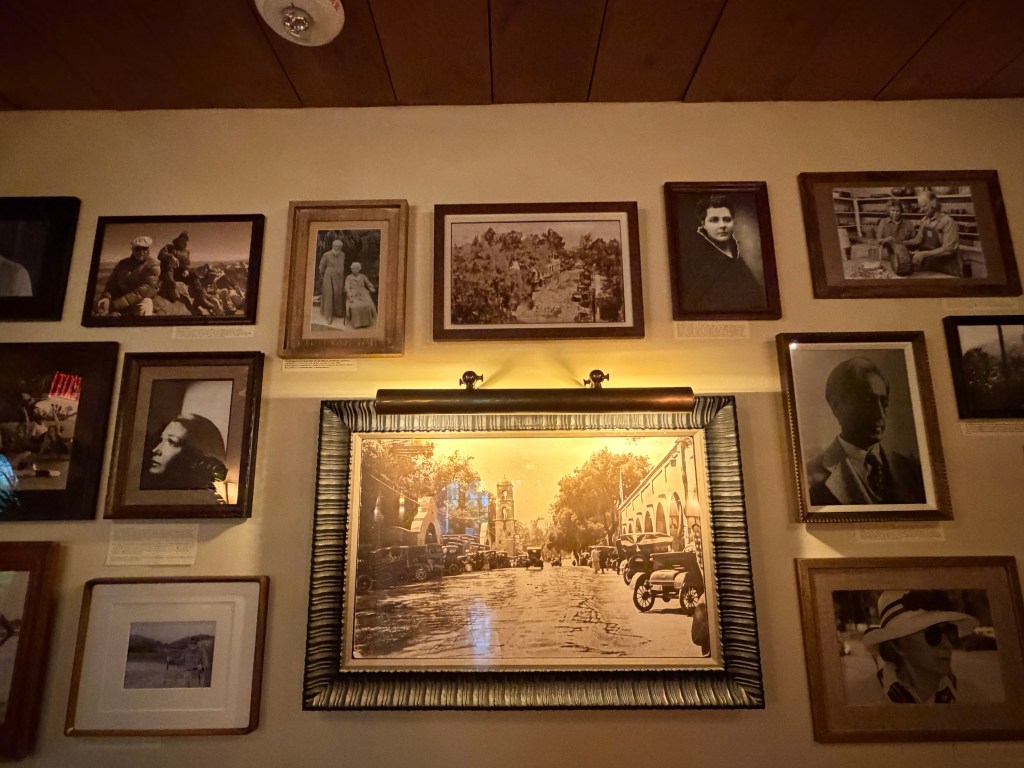
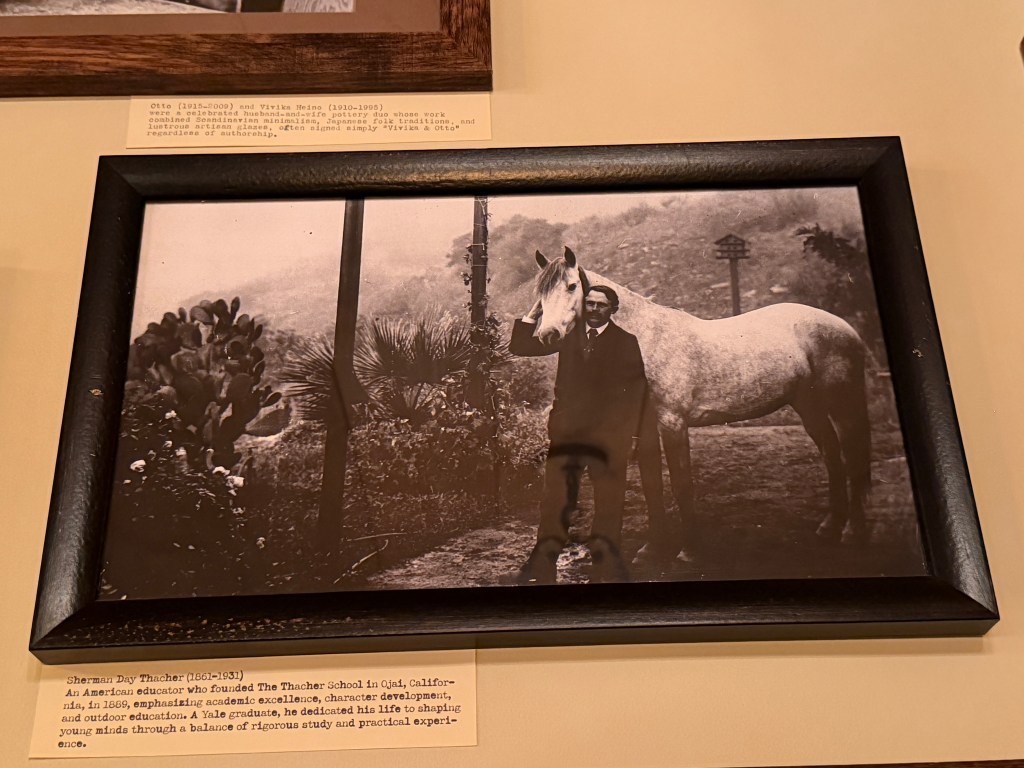
It is impossible not to turn your head when you see it. The recurring images of horses drew me into a deeper layer of Ojai’s heritage, where horsemanship, nature, and hands-on experience have long been part of the valley’s cultural language.
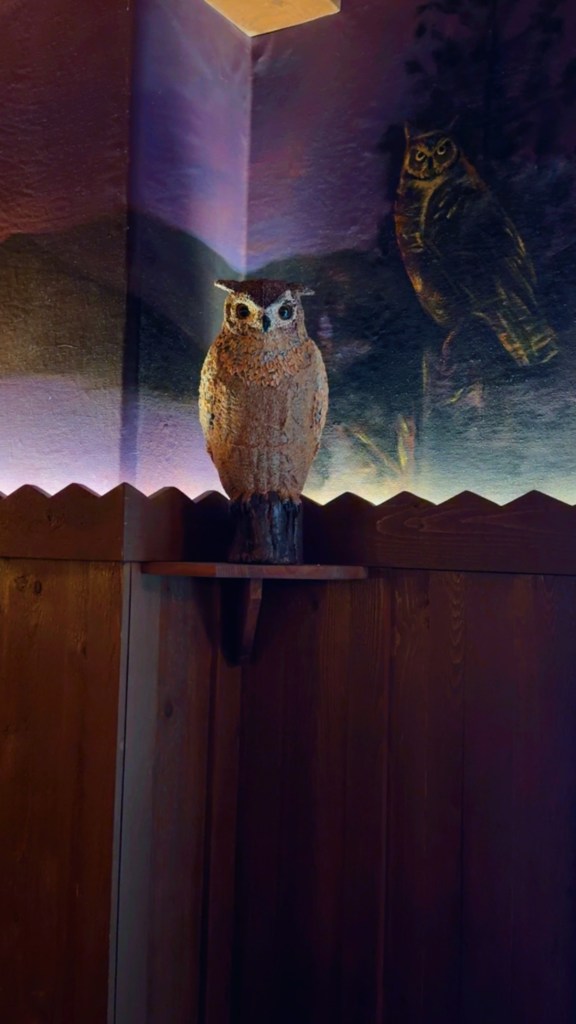
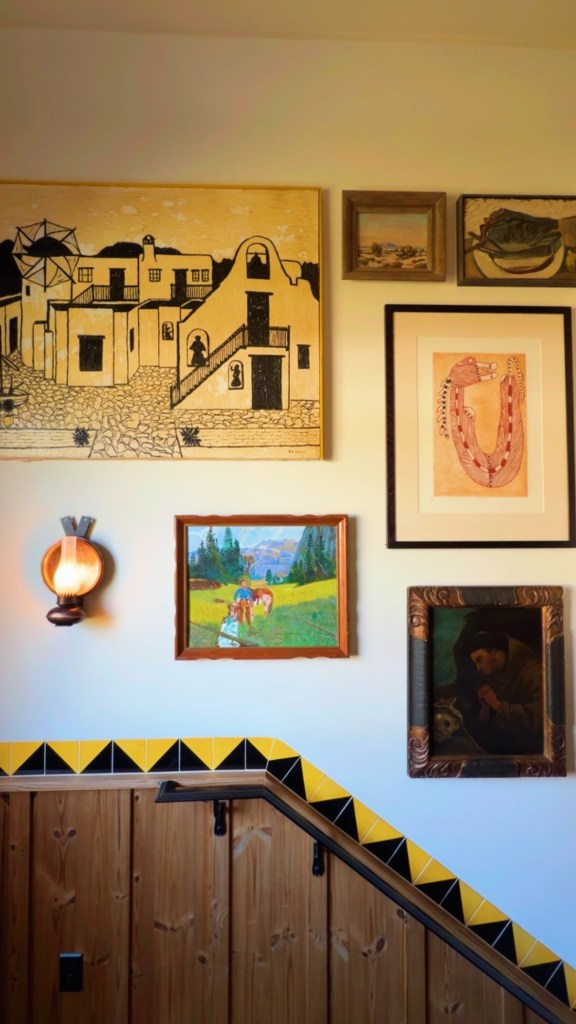
The stairway nook invited me to linger, allowing layers of time and memory to unfold through a visual journey. A collection of folk, landscape, native wildlife, and figurative works creates a dialogue with the place and its surroundings, connecting the art to Ojai’s landscape, history and spirit. The warm glow of the vintage sconce, natural wood paneling, and playful geometric border give the collection a sense of rhythm and cohesion.
The conversation between place, furniture, and design
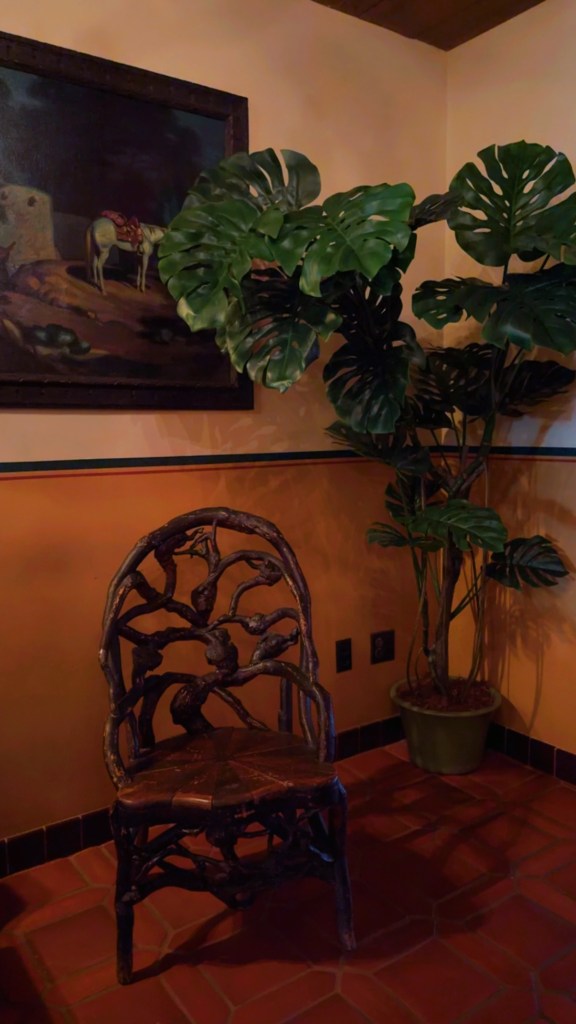
The furniture evolves from one space to the next, responding intentionally to each setting’s tones, textures, light, and connection to the landscape, giving each space its own distinct mood. In the old-world charm of the lobby, aged chairs in varied shapes, proportions and silhouettes take on an almost sculptural presence, creating an unexpected dialogue with the artworks around them.
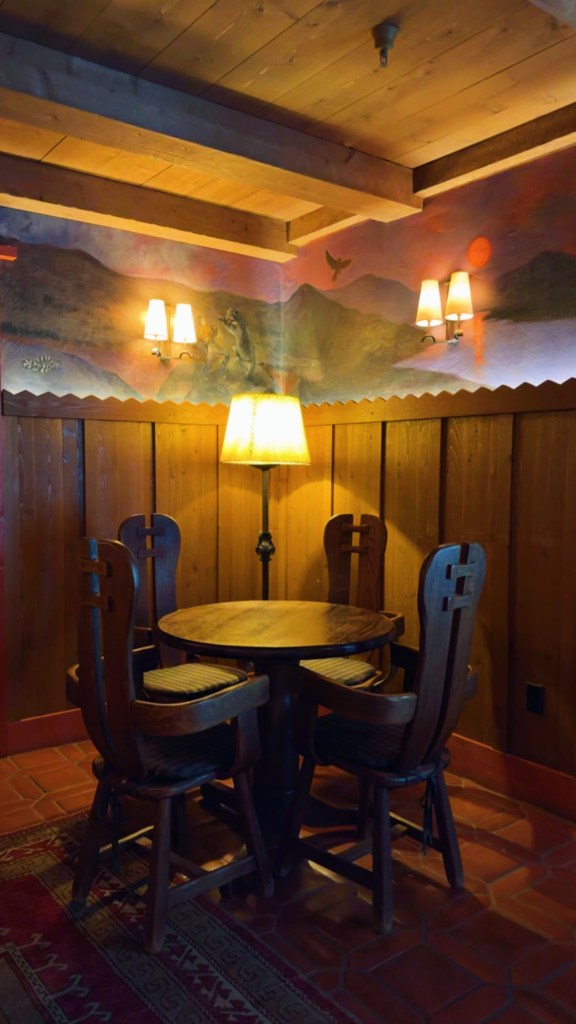
In the bright room, orange floral patterns on the chairs bring warmth and energy, while deep red outdoor furniture on the terrace sits naturally among greenery, playing boldly against the California sun, striking yet effortless.
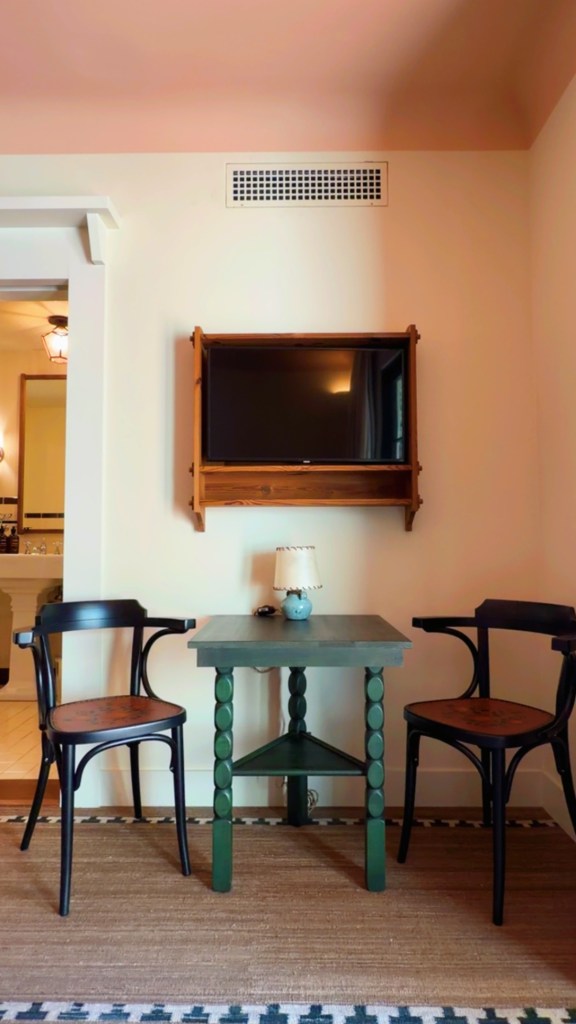
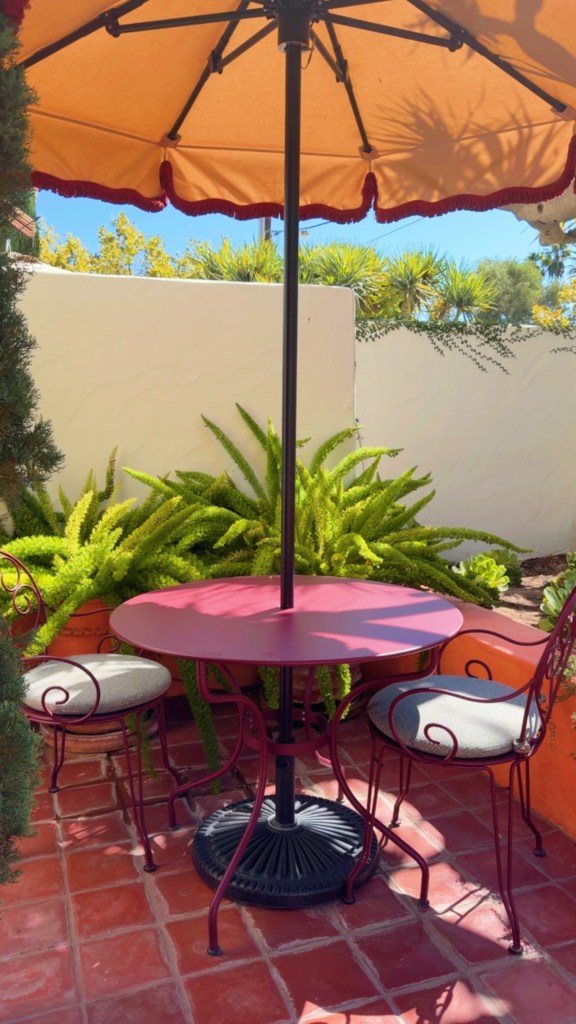
What interests me is that nothing feels simply placed for effect. Each element is thoughtfully considered in relation to the larger composition, creating an environment that is cohesive yet naturally lived-in. It reminds me that meaningful art selection is not only about the strength of an individual work, but also about how it engages with its surroundings and contributes to a broader visual and emotional narrative.
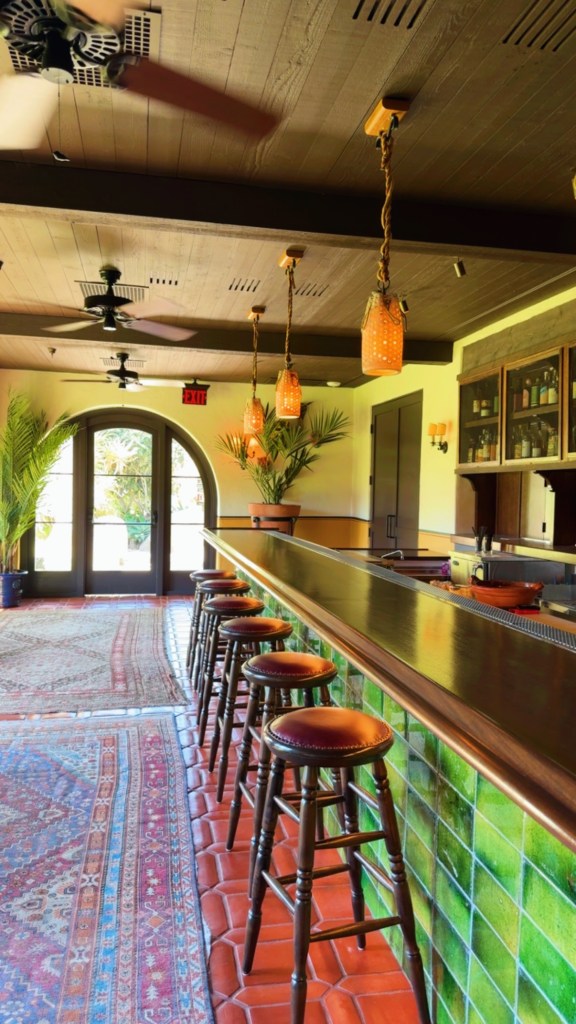
Where color meets the landscape
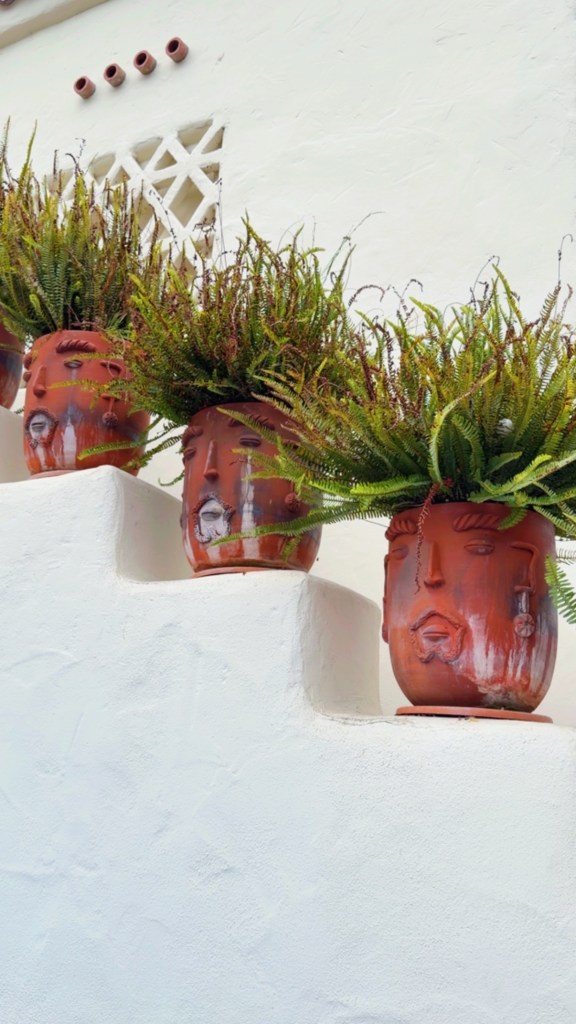
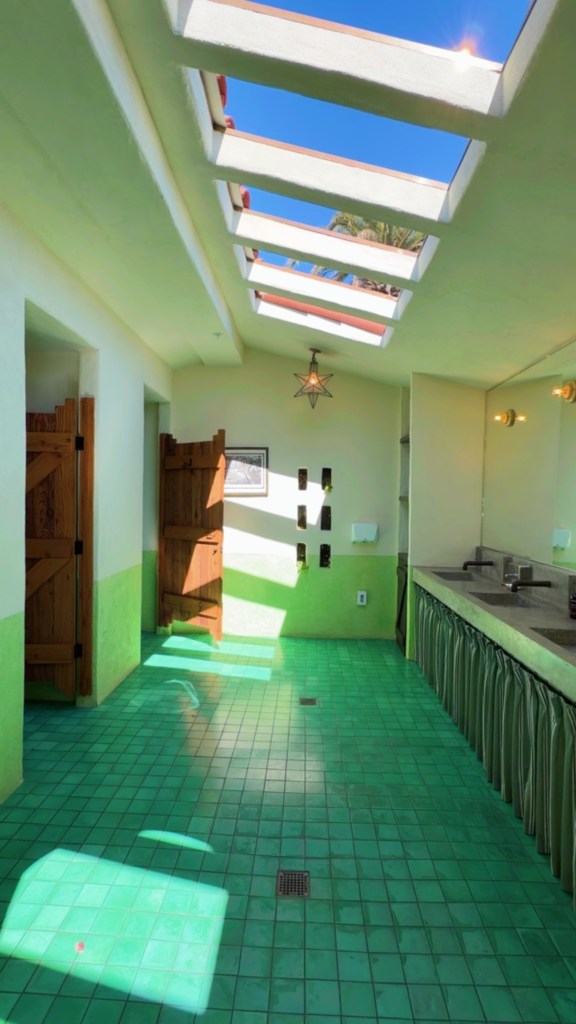
Sunlight dances across the green tiles, arched windows, and intricate inlaid details, bringing an immediate sense of freshness. The contrast between cool green and warm terracotta creates a natural balance, drawing the landscape indoors and vividly connecting the space to the little slice of Ojai beyond.
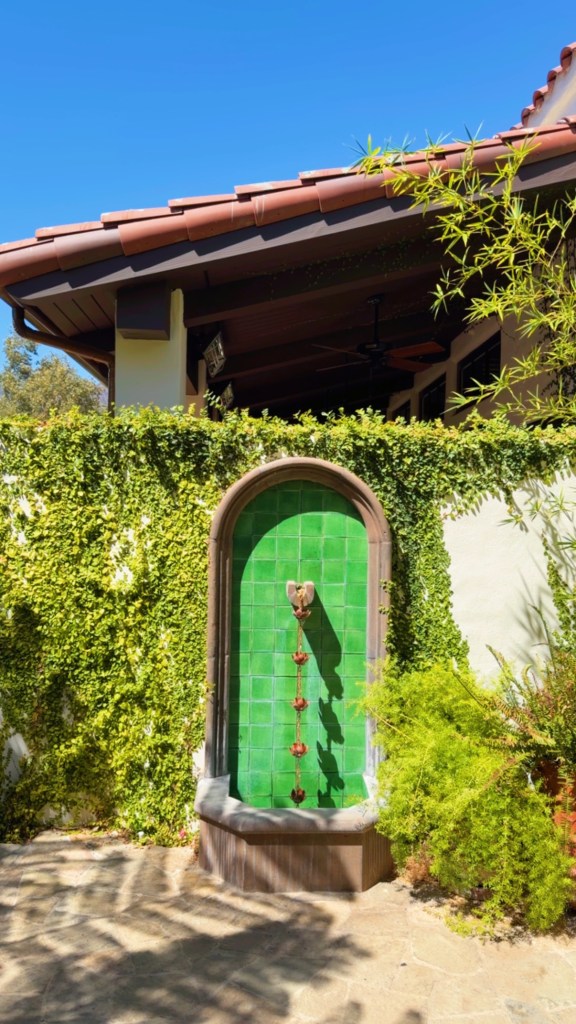
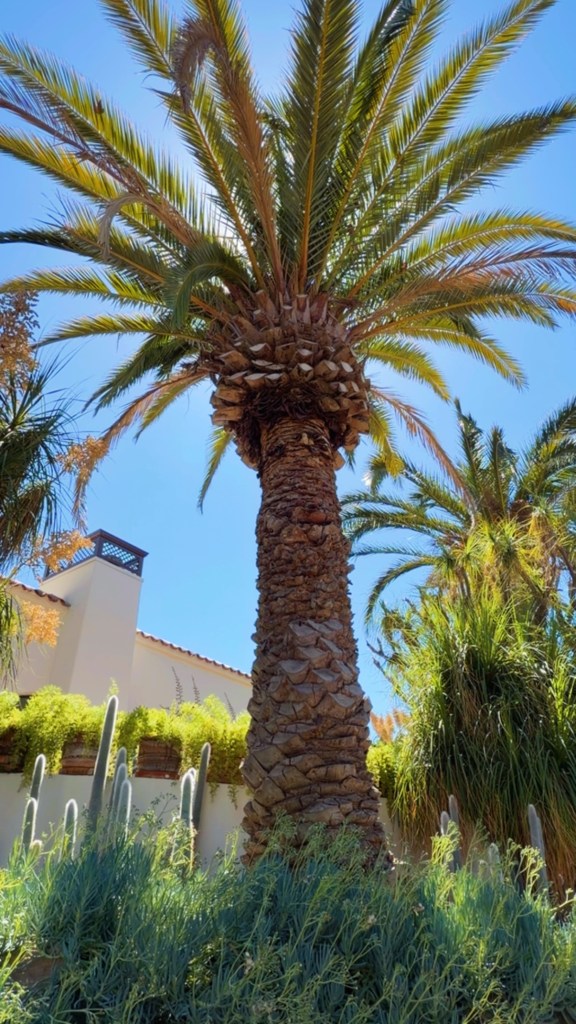
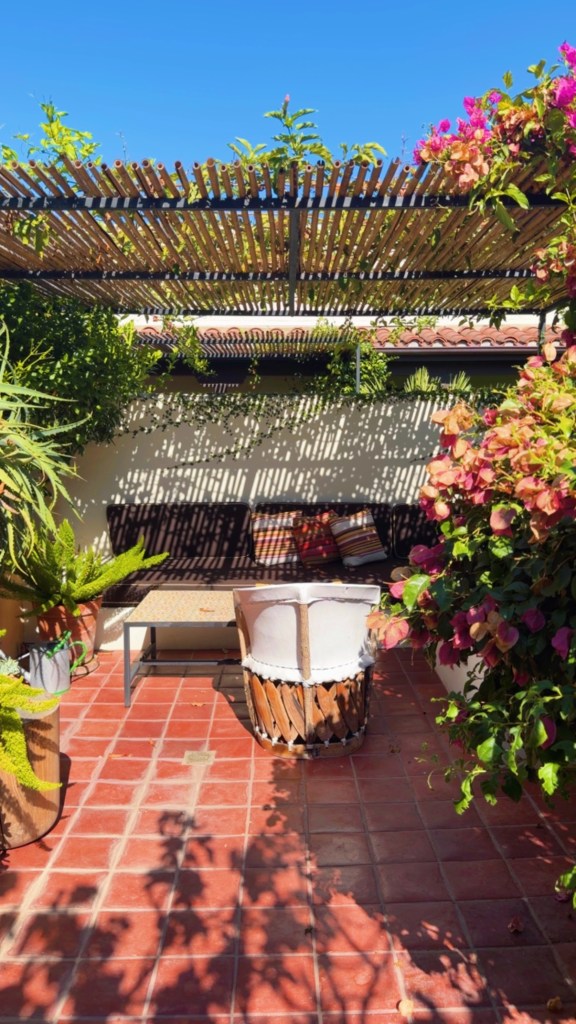
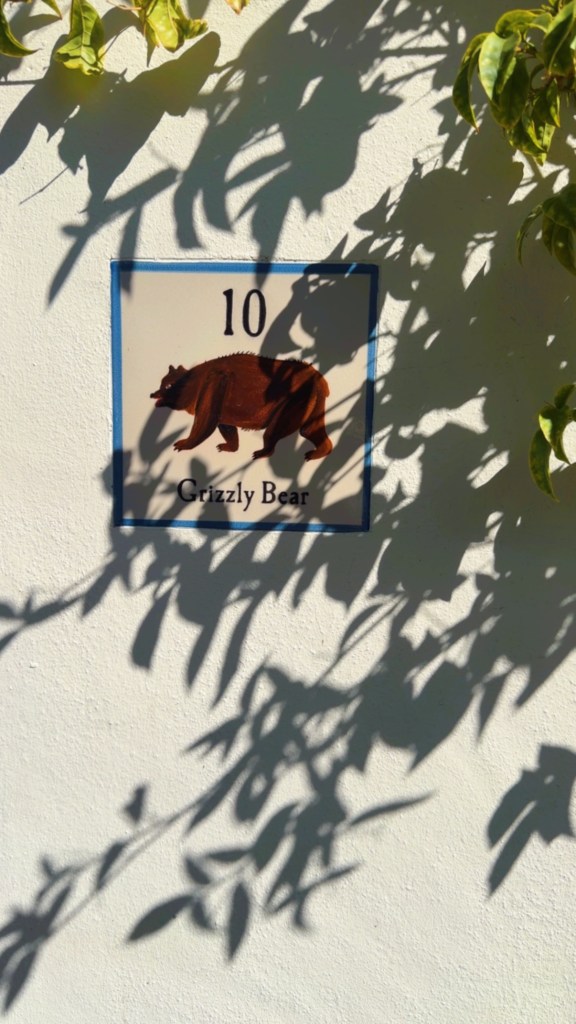
I was struck by how each bungalow pays tribute to one of Ojai’s native species, each marked by a hand painted tile featuring a grizzly bear, mountain lion, swallowtail butterfly, and Matilija poppy and more. The grounds feel alive and vivid, with the landscape becoming an integral part of the visual language woven throughout the property.
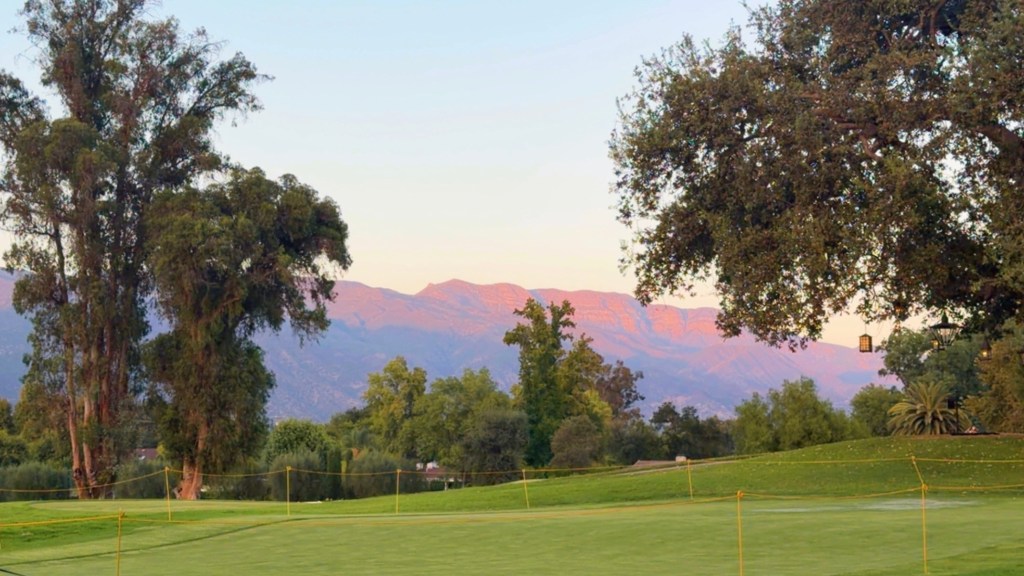
Under Ojai’s intense summer sun, with the Topatopa Mountains as a backdrop, the fresh green hue felt like an oasis, a cool counterpoint to the heat. Echoing the landscape beyond, the color and natural light created an atmosphere of ease and calm, evoking a quiet connection to nature.
I did not stay at Hotel El Roblar. I lived it.
As the afternoon sun began to sink, I wandered along historic East Ojai Avenue, taking in its architecture: the Ojai Post Office Tower, the Ojai Playhouse, along with the character of its streets, while soaking up the pink moment.
I found myself settling back beside the ever-burning fireplace once again, taking in the art, the warmth, and the atmosphere. I began to see El Roblar on a deeper level: how the art, architecture, interiors, and exteriors speak to one another, each reflecting something of the place while honoring its history. More than a century later, its past is still alive.
Good design, taste, and art never exist in isolation; their meaning unfolds through context, story, history and memory. What makes El Roblar memorable is the thoughtfulness behind its art selection. The works are chosen and positioned with a sensitivity to scale, material, architecture, and light, responding to the surroundings and the spirit of the place. Design creates the setting; art carries the story forward, keeping memories alive while creating new ones.
Perhaps, for a moment, I was living inside the soul of Ojai.


Leave a comment