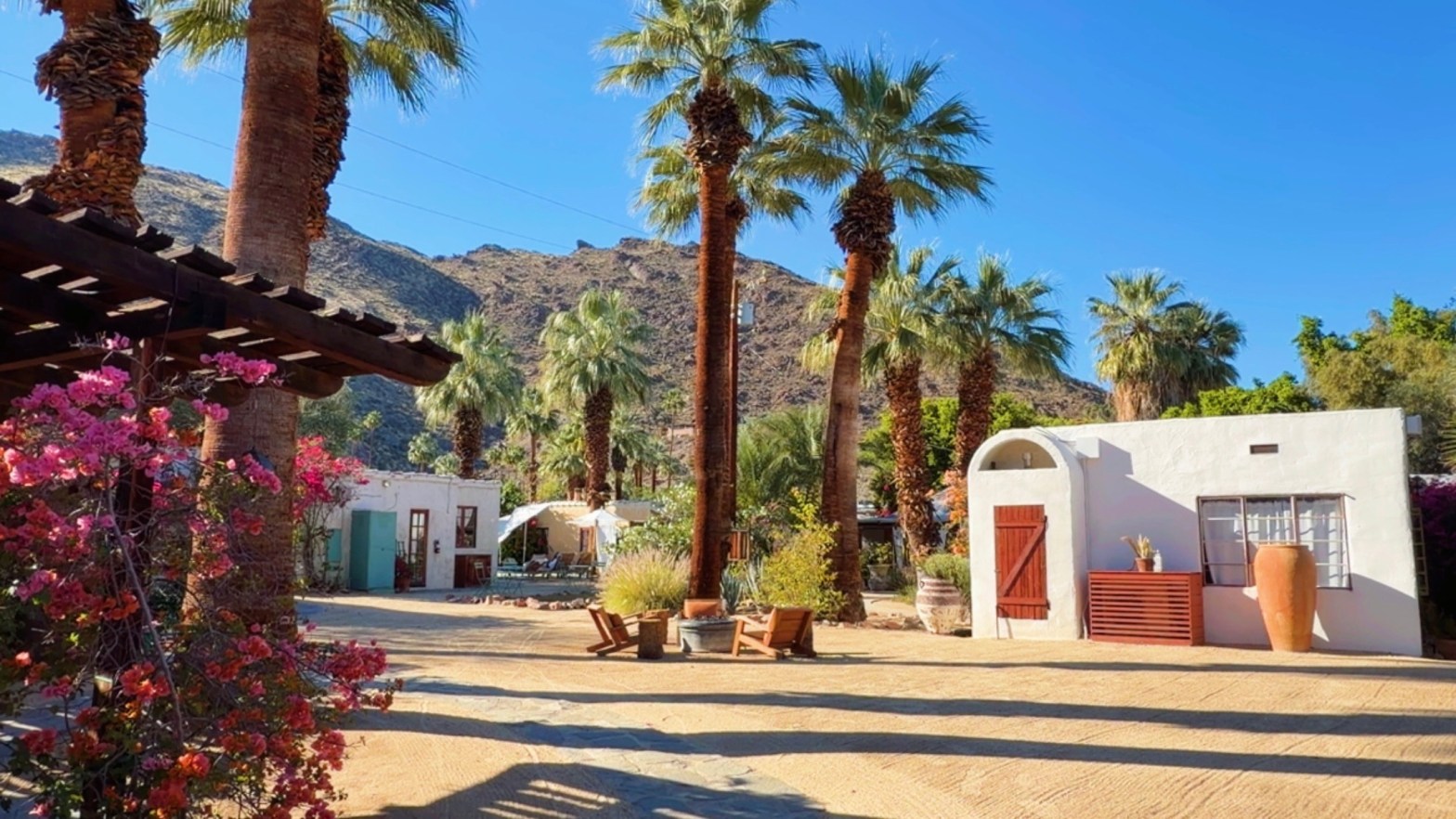
As I stepped out of the car, the desert greeted me like fire, dry and relentless, wrapping itself around my skin. The temperature soared past 105 degrees, the sun burned so fiercely I could barely open my eyes. Each breath was ignited by its scorching intensity, every vein in my body pulsing with heat. I was in Palm Springs on my recent birthday trip, and it felt as though I had become one with the desert itself.
From dawn to dusk, the light radiates from within
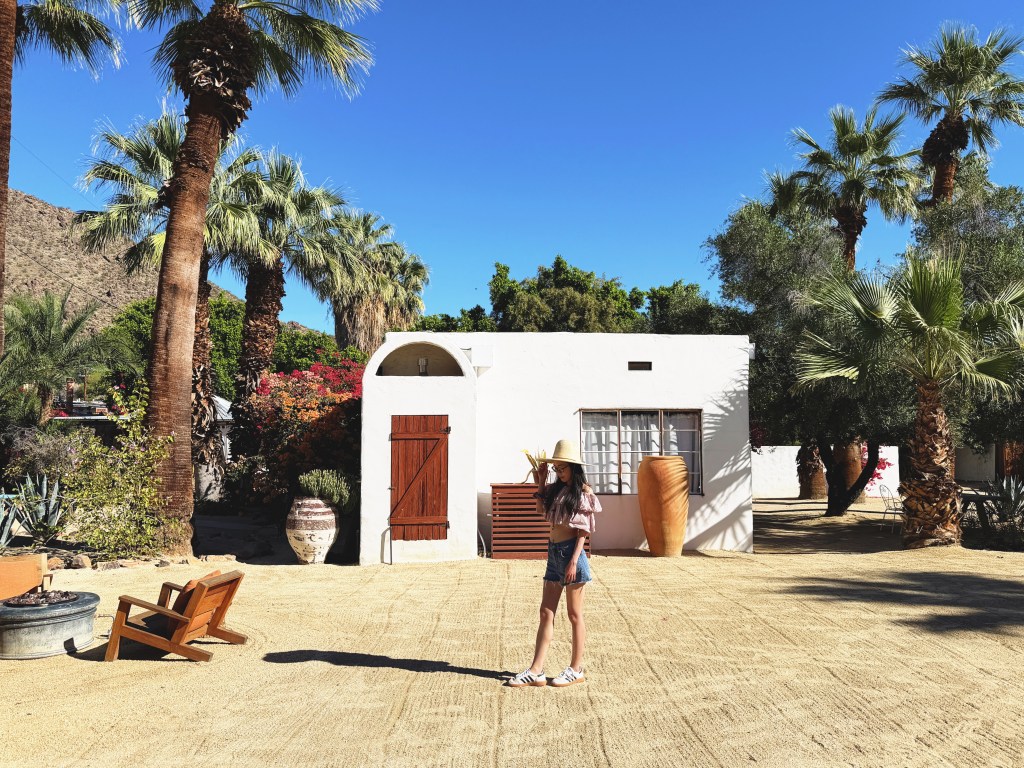
At Korakia Pensione, citrus blossoms, palm trees, and gently trickling fountains filled the Moroccan courtyard. I was transported into a Mediterranean fantasy infused with Moroccan charm, where arched alcoves and whitewashed walls evoked a dreamlike atmosphere. I did nothing, only wandered, discovering beauty and inspiration around every corner of this hidden oasis beneath the desert light.
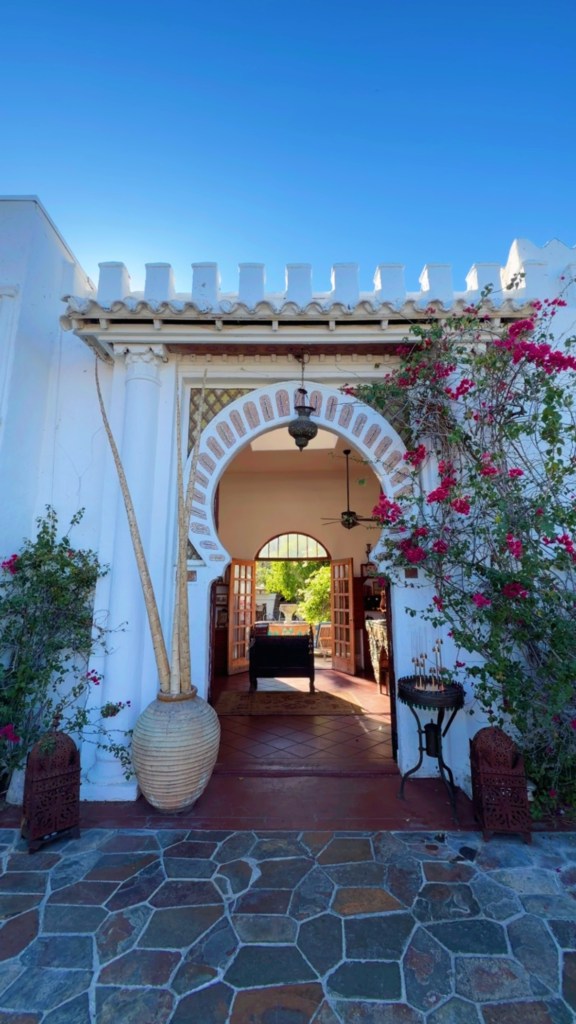
In my Tangier Studio, bathed in fresh yellows and greens, a basket of oranges added a cheerful touch. A bed nestled within an arched Moroccan alcove, while the desert heat wrapped around me.
I woke to birds chirping, soft light creeping over the San Jacinto mountains and gardens. I wandered along a blossom-lined path, watching the sun rise above the palms.
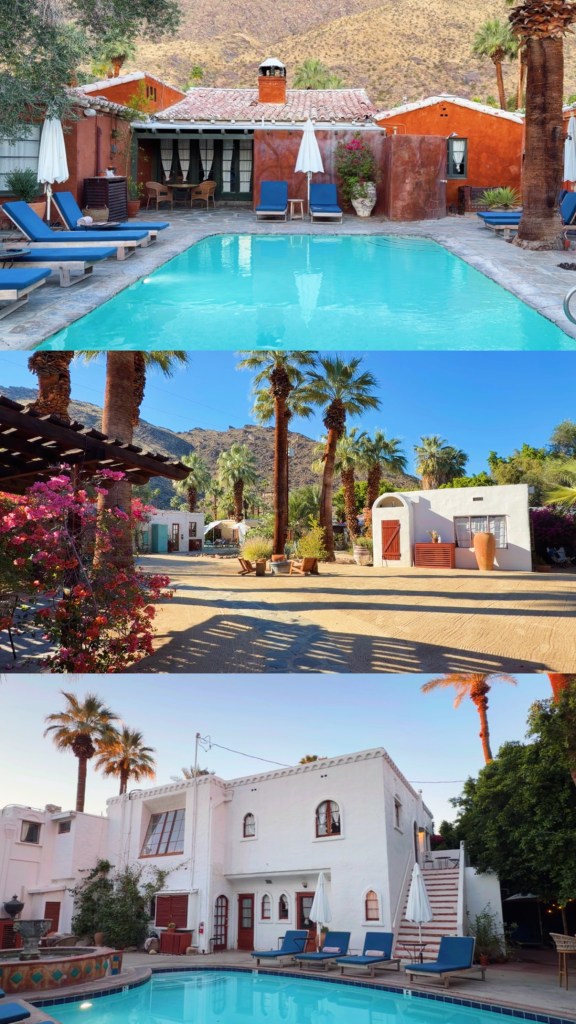
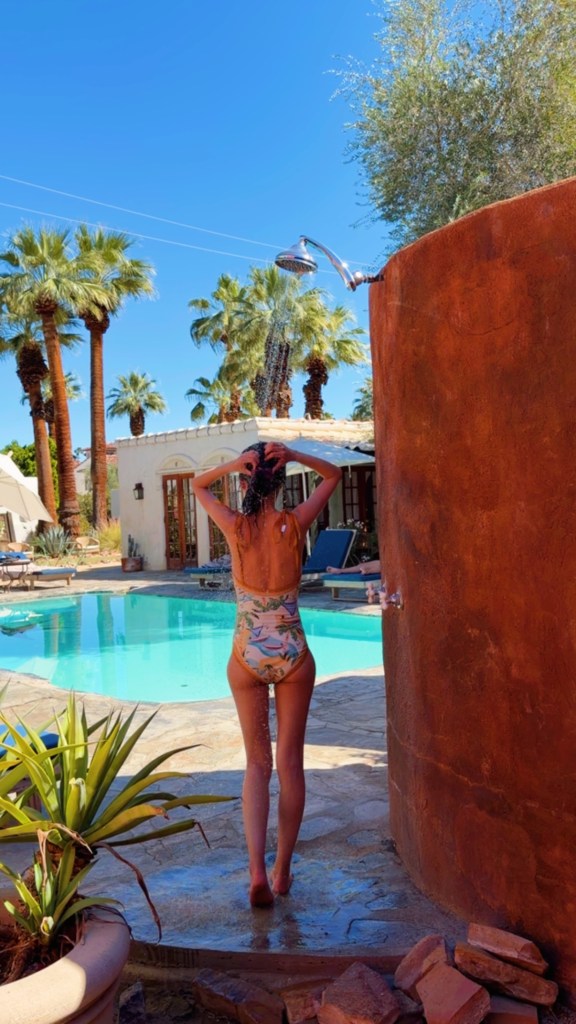
Perched at the pool’s edge, toes skimming the water, I watched sunlight dance across its surface as distant mountains stood quietly beyond swaying palms. A glass of Moroccan mint tea, refreshed my body and soul as I read, absorbing the luminous charm of this sanctuary. I never imagined I could find such joy in the intense desert light, it soothed my soul.
Stars twinkled above as the warm desert breeze moved through the air, filling my heart with quiet contentment. Bougainvillea-draped archways and hanging lanterns cast a gentle glow in the dusk, their light brushing against walls steeped in history and artistry. I watched a vintage film on the outdoor big screen, the fire burning nearby, making the entire space seem to glow from within.
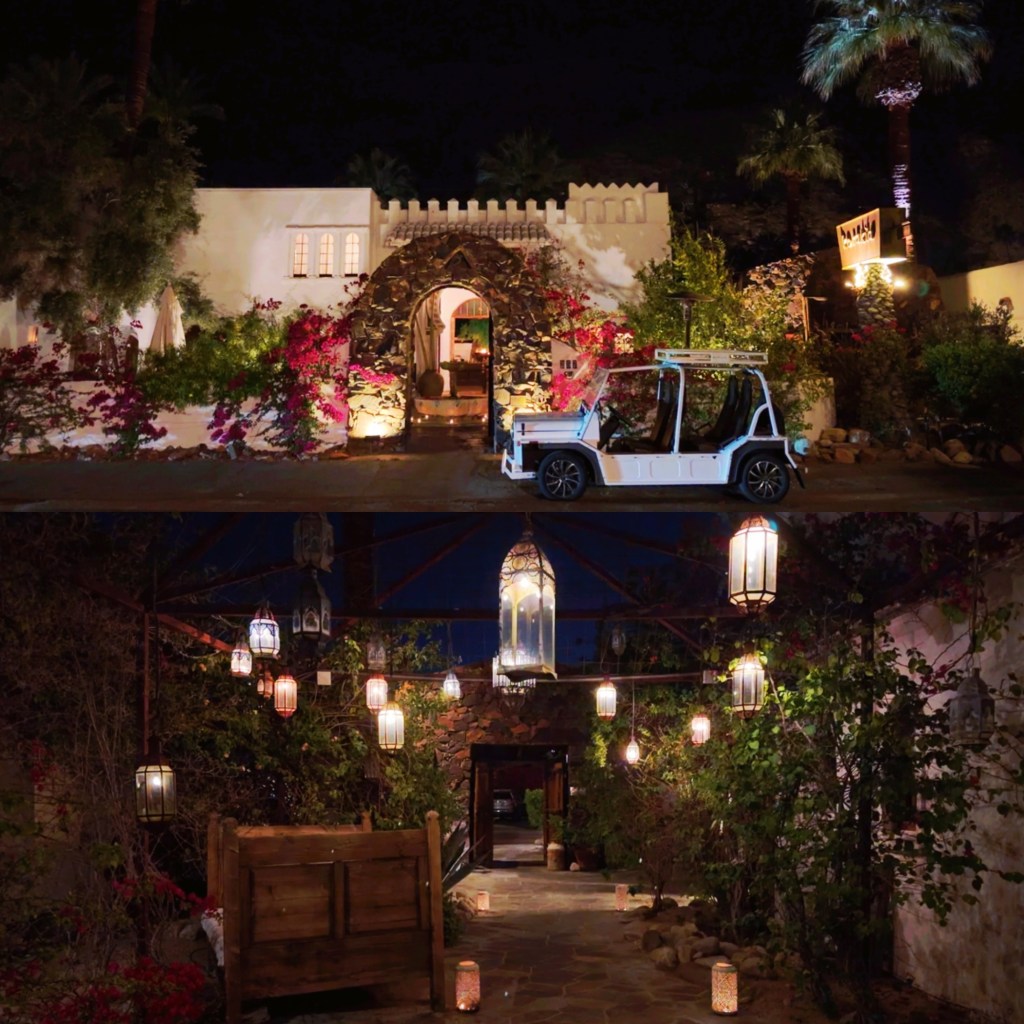
From radiant sunlit stillness to tranquil starlit clam, every intimate moment felt rare and luminous. Thank you, Korakia, truly one of a kind.
In the Heart of Palm Springs: Mid-Century Modern Design
Palm Springs, California, is home to one of the largest concentrations of preserved mid-century modern architecture in the world. Desert modernism is characterized by minimalist clean lines, organic curves, geometric shapes and the seamless blending of indoor and outdoor spaces.
I visited several luxurious homes there a few years ago, but under the blazing sun this time, the architecture revealed itself more clearly, showing how design responds to the desert climate through materials, structure and spatial strategy.
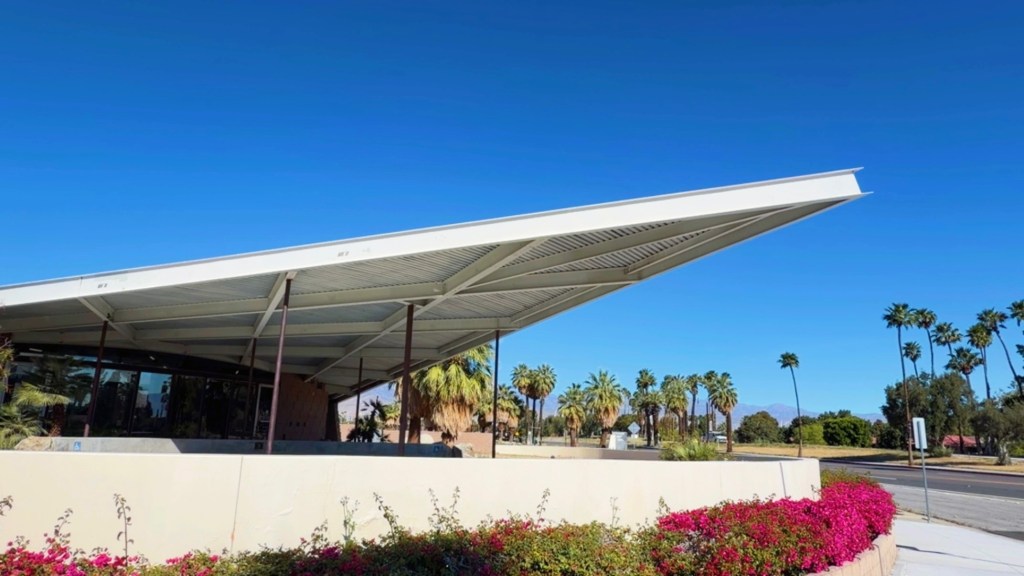
I ran for shelter beneath the white roof of the Palm Springs Visitor Center, constructed from corrugated galvanized steel and supported by six steel pipe columns. Its soaring, V-Sloped profile creates a striking modernist silhouette.
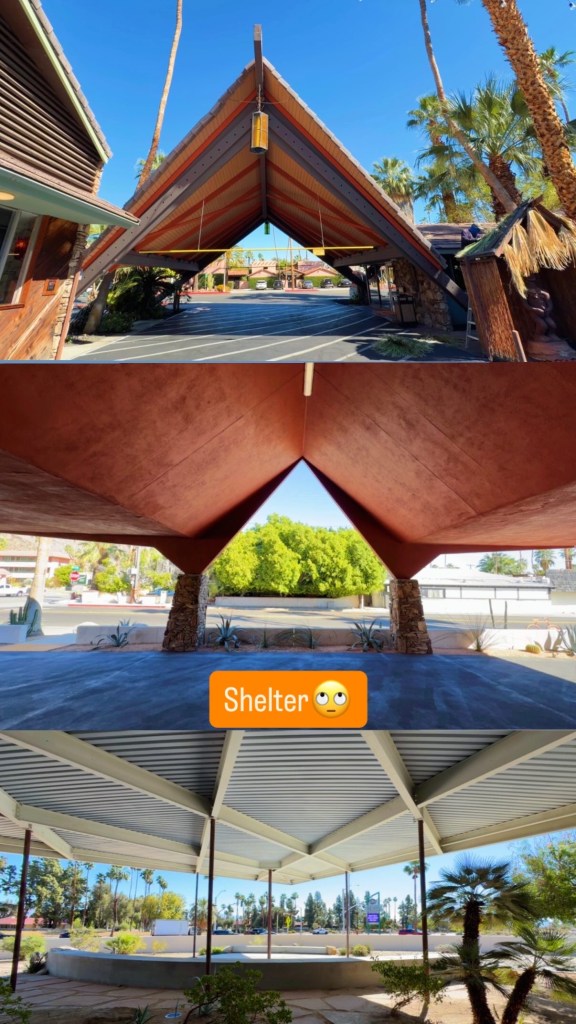
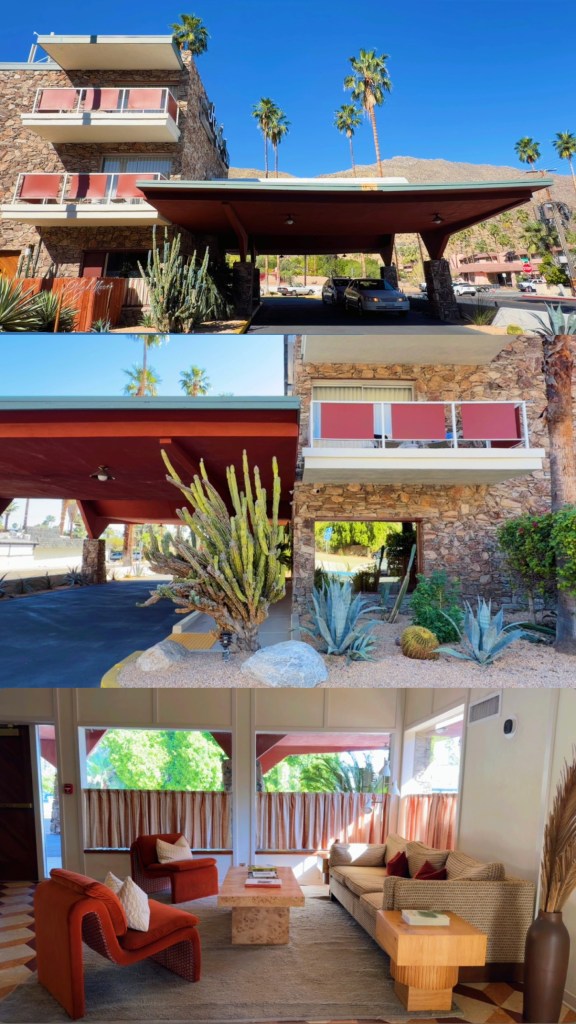
I stood under the roof of the Royal Sun Palm Springs, savoring the delicate balance of shade and light. Each detail seemed to speak to me, its precise symmetries and atmospheric color palette, from retro orange to sage green, captured both the essence of both the surrounding desert and the historical inspirations behind the hotel’s design.
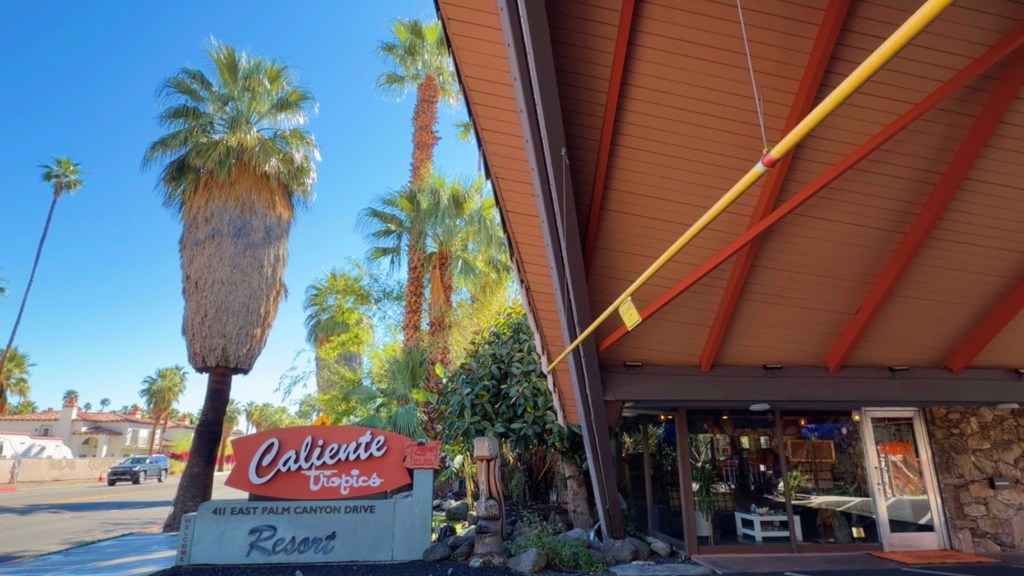
The iconic A-frame, steeply pitched roof at the Caliente Tropics Resort like a Polynesian beacon against the desert sun, inviting me to its playful, tropical world. Tiki carvings, some original figures by Ed Chrisman, lined the roofline, complemented by lush landscaping that evokes the hotel’s 1960s vibe, offering a refreshing respite from the desert heat.
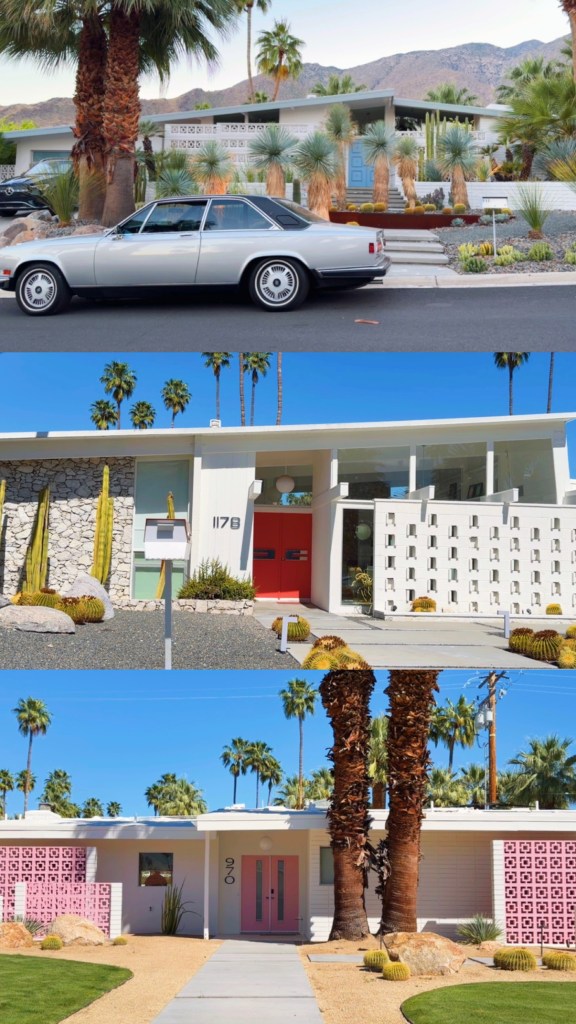
I drove through the Vista Las Palmas, Old Las Palmas, and Deepwell neighborhoods, like a kaleidoscope, absorbing every detail of mid-century design and aesthetics.
I followed in the footsteps of visionary architects who responded to the desert with innovation, restraint and imagination.
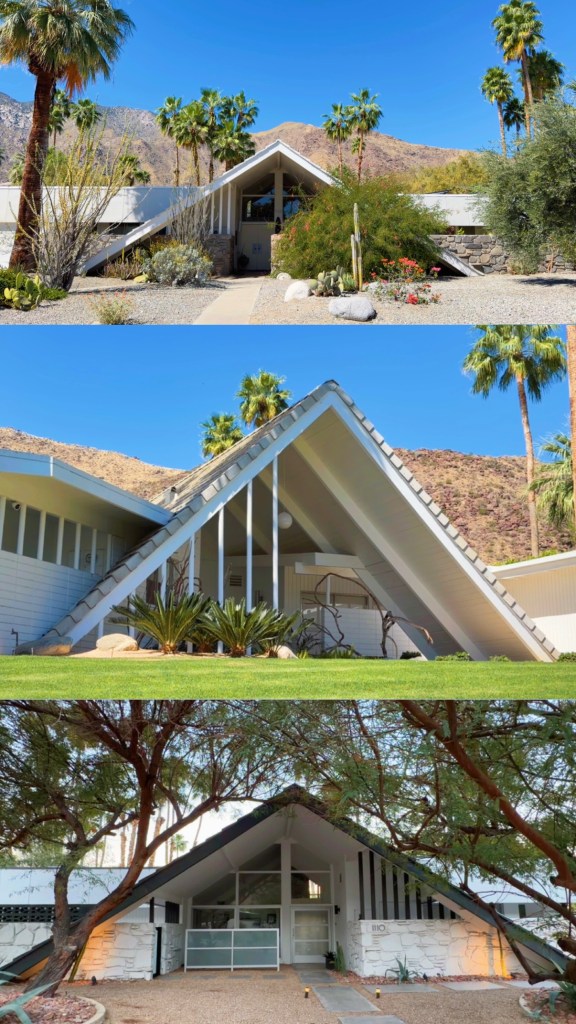
Architect Charles Du Bois’s iconic Swiss Miss Houses, distinguished by their dramatic A-frame entries, introduced bold rooflines, post and beam construction, and seamless indoor – outdoor living. These low, single-story homes have steeply pitched roofs that span the full width of the structure, creating shaded porch areas at both the front and poolside.
The strong sun glinted off the rock-faced walls, flowing seamlessly from exterior to interior, inviting me to pause and appreciate these homes. Framed by post and beam construction, clerestory windows, and butterfly rooflines that embrace the surrounding mountains as a striking backdrop.
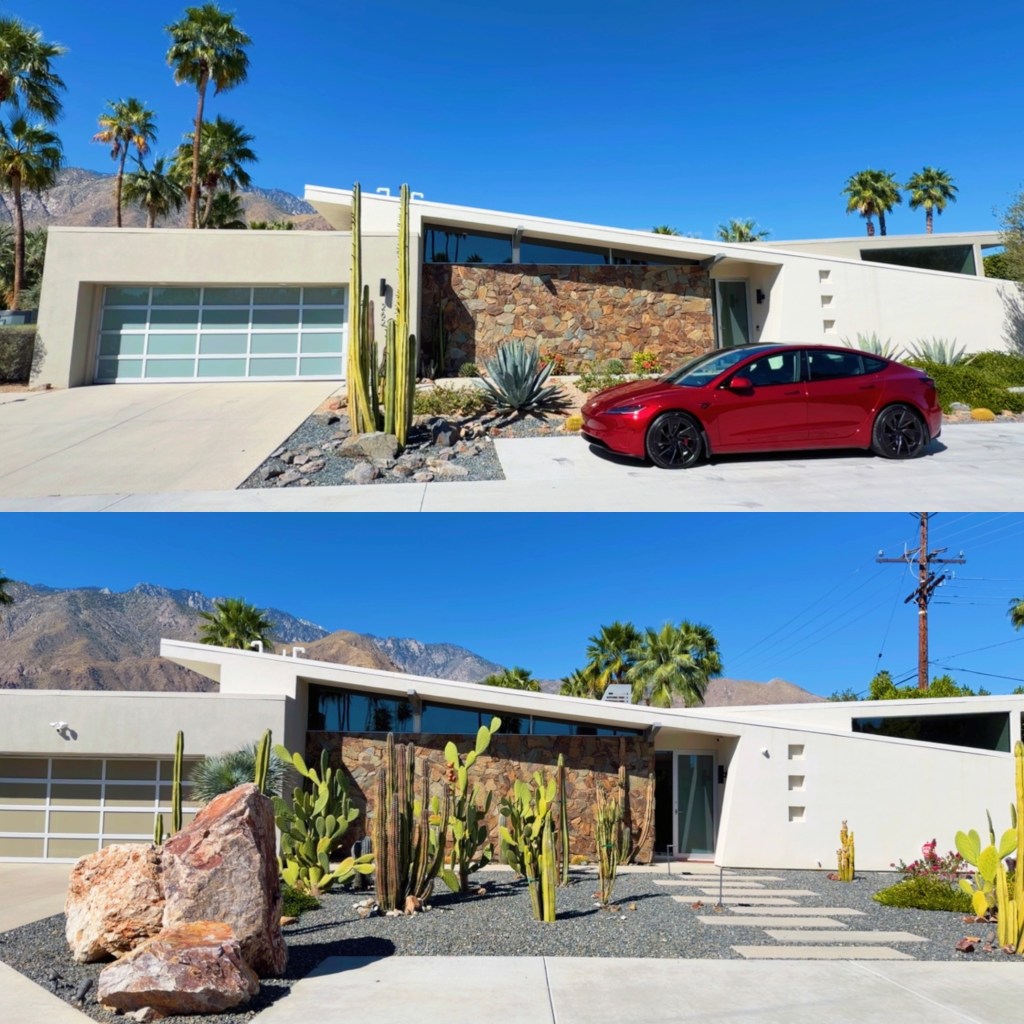
By incorporating boulders into his designs, pioneering mid-century modern architect Albert Frey acknowledged the essential role of nature, leaving a deep impression of his aesthetic design principles on my previous adventure.
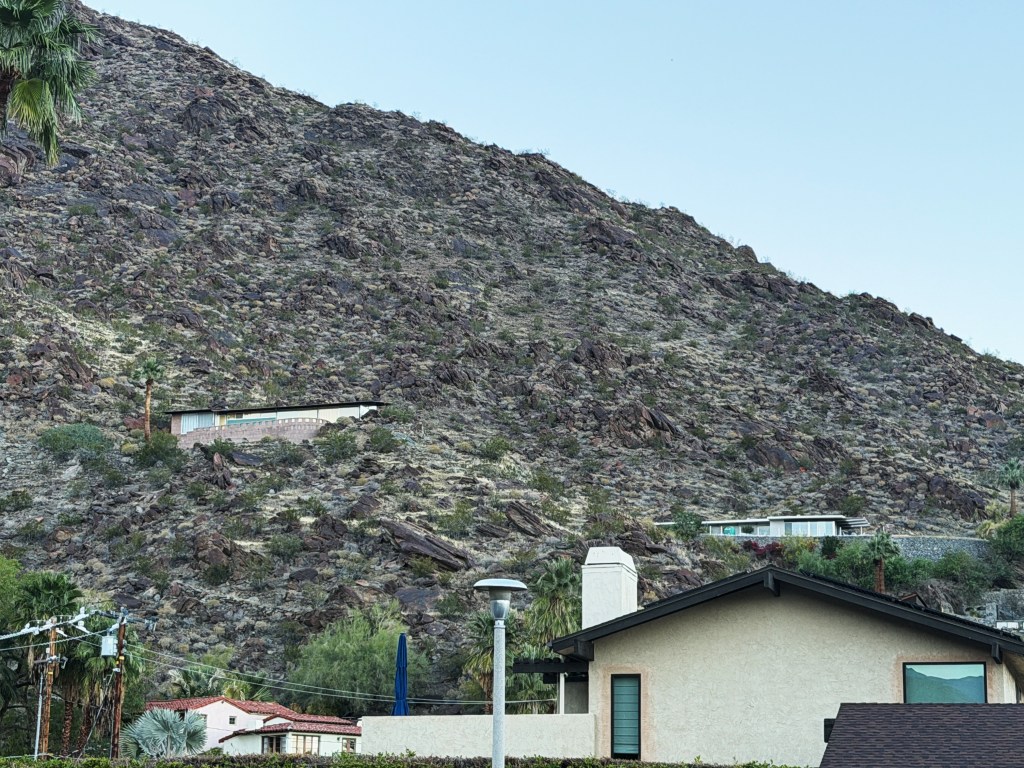
Similarly, the Edris Residence, designed by E. Stewart Williams in 1954, embraced the desert landscape, with carefully placed boulders leveling the site while integrating seamlessly with the surroundings. Native rock formed a prominent chimney anchoring the house’s southeastern corner, while a floor- to- ceiling glass wall in the living room frames breathtaking views of the Coachella Valley.
I drove down from the hill to explore the historic home of psychoanalyst Dr. Franz Alexander, designed by Walter S. White. Perched above a boulder-strewn site, the home’s dramatic features: V-shaped steel supports, a soaring tongue and groove ceiling, and a double-heigh atrium with an open tread black steel staircase, are simply breathtaking, imbuing the space with creative energy.
The iconic Kaufmann House, designed by Richard Neutra in 1946, has been described as “an architectural marvel that helped define Palm Springs’ modernist aesthetic.” Even from the outside, under the scorching sun, I admired the cacti, palm trees, and rocks, noting the juxtaposition between the structure and its natural surroundings, as well as between horizontal and vertical lines.
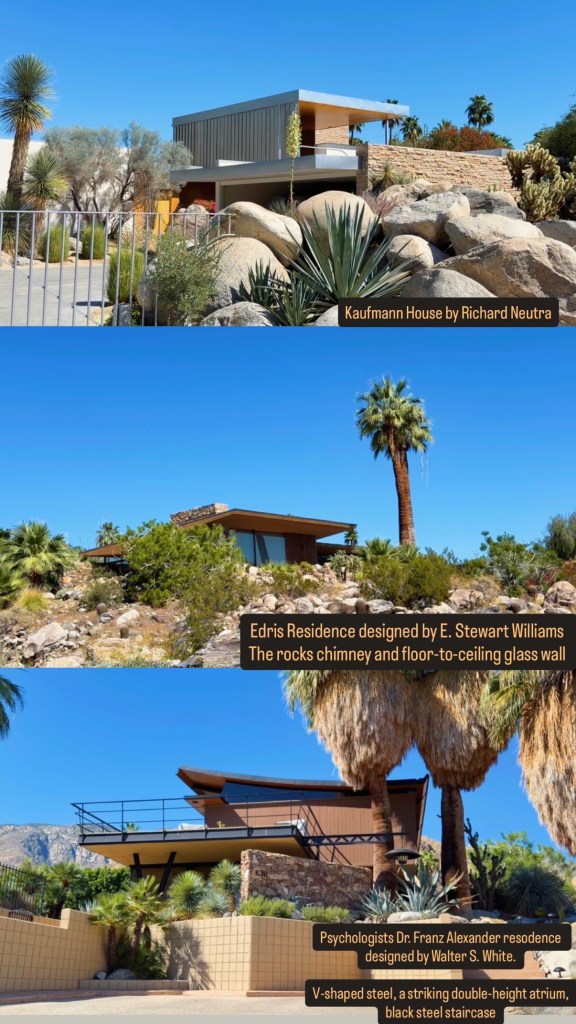
Glass windows and clean lines define mid-century architecture, shaping a dialogue between interior spaces and the desert. Views are thoughtfully framed, light is artfully choreographed, and the architecture manages to feel both protective and open.
The Elvis honeymoon Hideaway Home, designed by William Krisel, features circular rooms with floor- to-ceiling windows, eschewing traditional square layouts, while the Palm Springs Art Museum, designed by E. Stewart Williams in the 1970s, employs diagonal lines and materials who depth and texture withstand the harsh desert sun, reflecting an innovative spirit throughout.
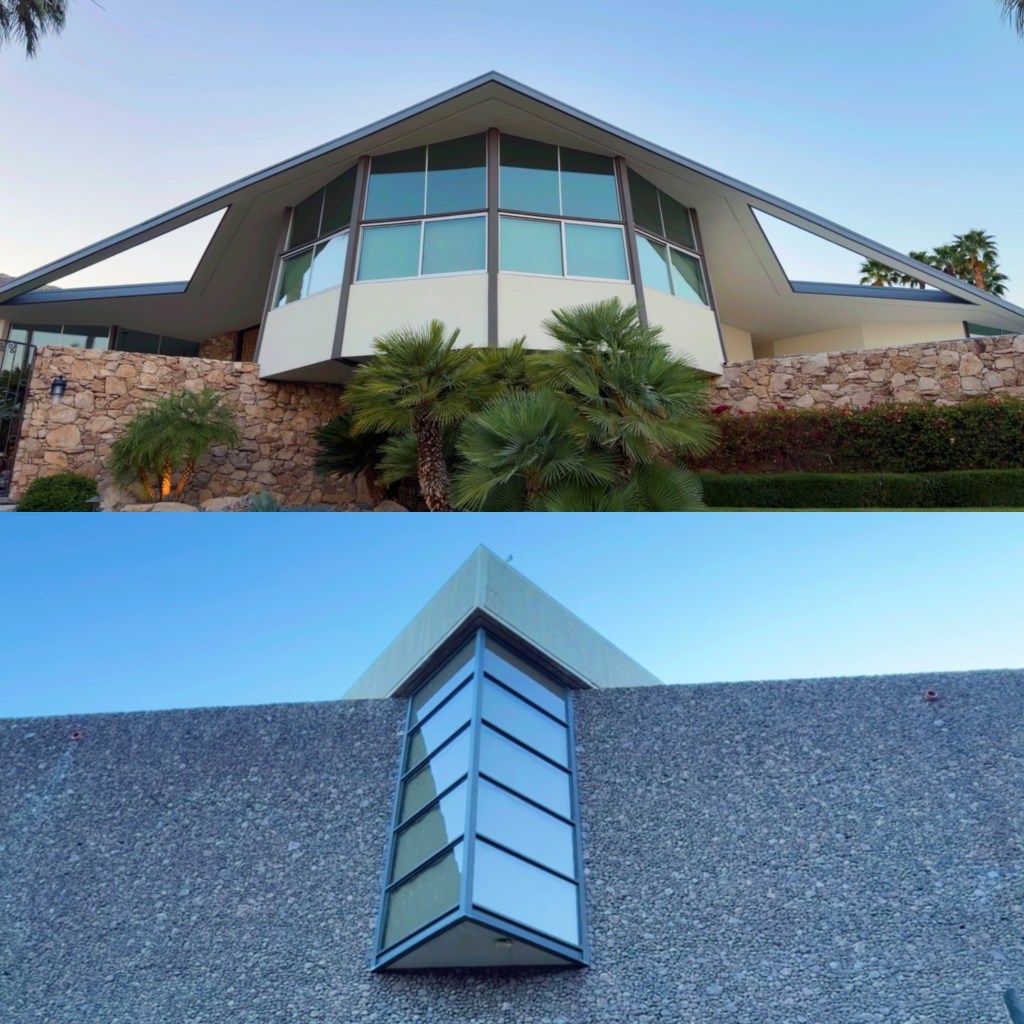
Baking in the intense heat, I longed to cool off in the pool, an oasis-like centerpiece that was both practical and integral to the home’s design.
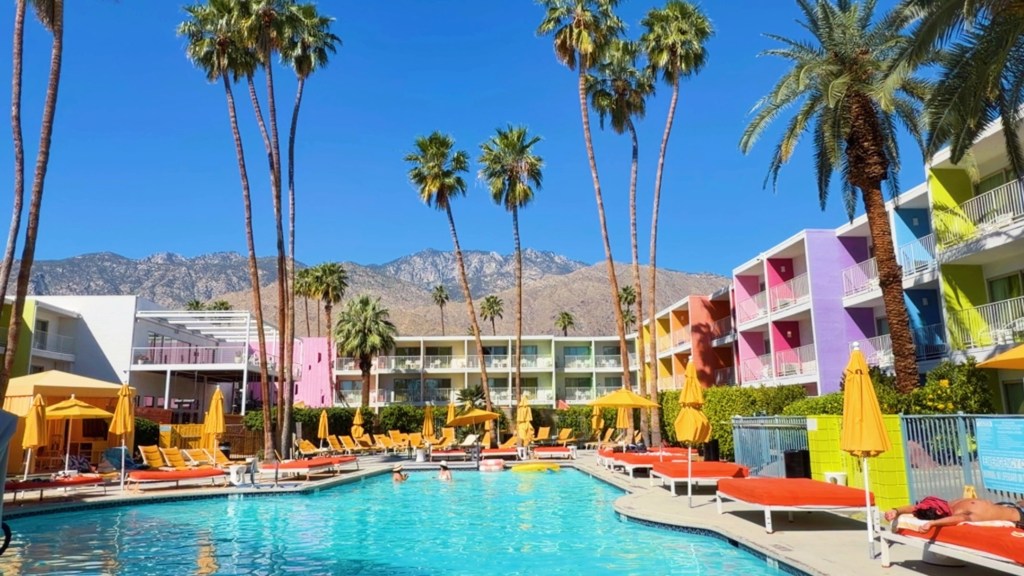
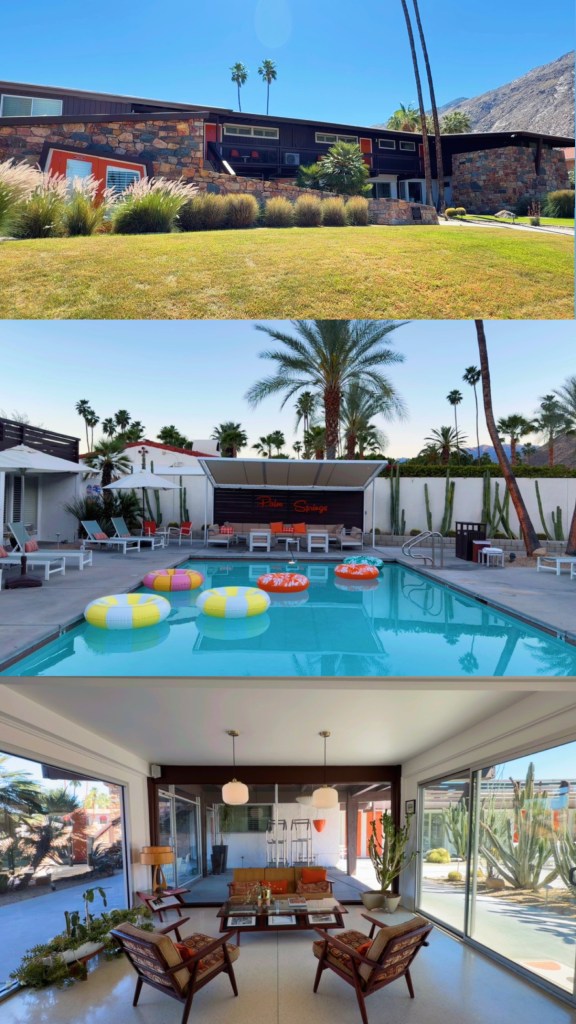
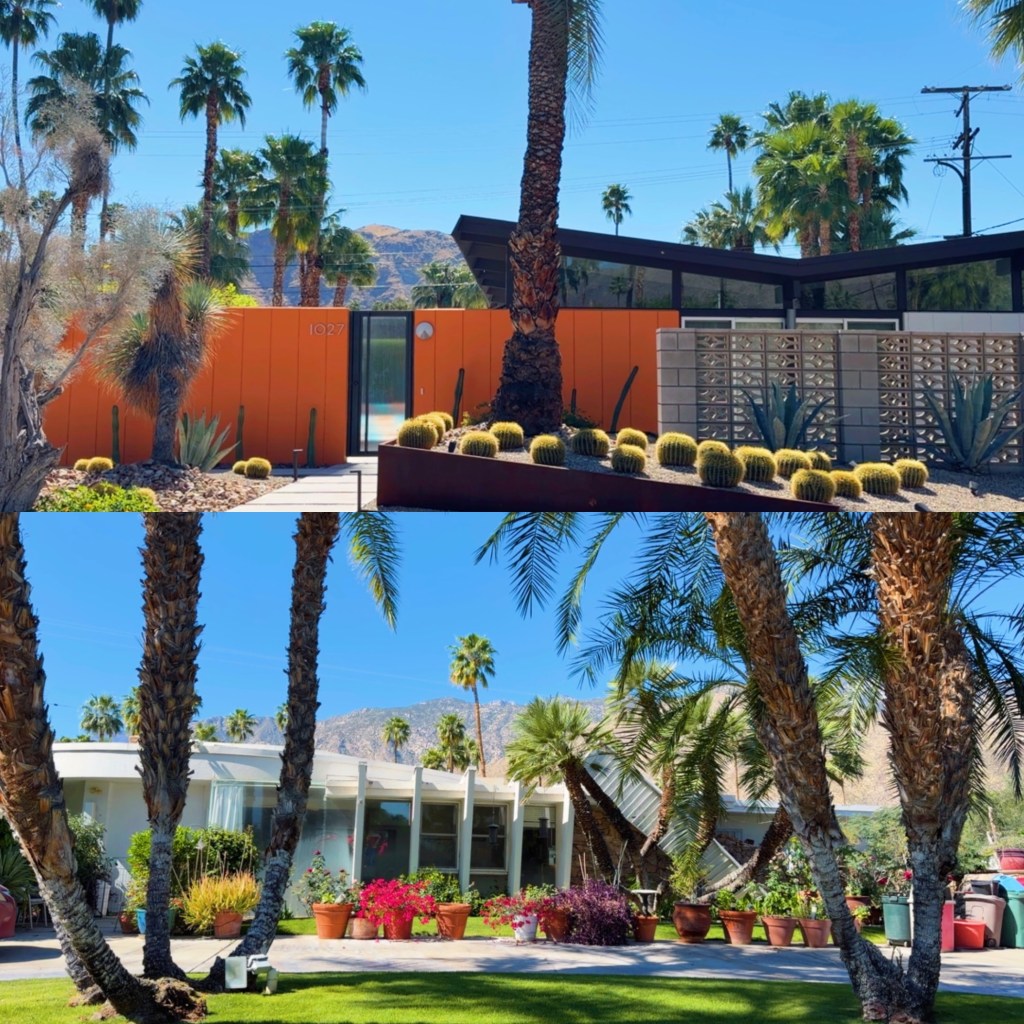
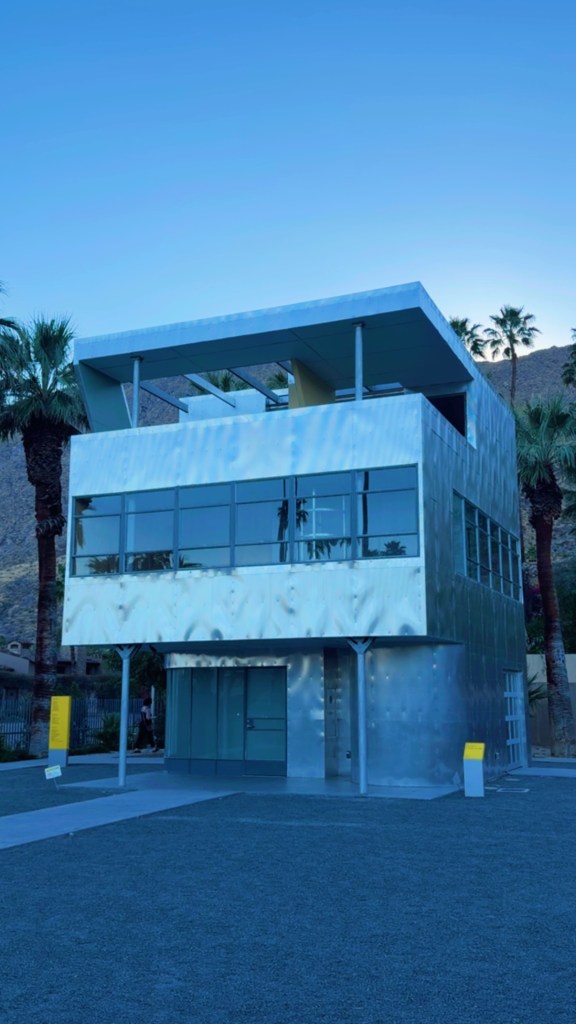
I’d describe this as an adventure that felt both like a field study and a living case study of mid-century architecture and design, seen through my lens. The harsh desert sun and unseasonable March heat, though intense, provided a rare chance to experience these designs in their true environment. To me, this is the essence of architecture world: firsthand experience.
I still adore you, Palm Springs.
(Notes: I shared my architectural adventure in Palm Springs and San Diego a few years ago. For more details about that journey, check out my post here.)
 STEPHY