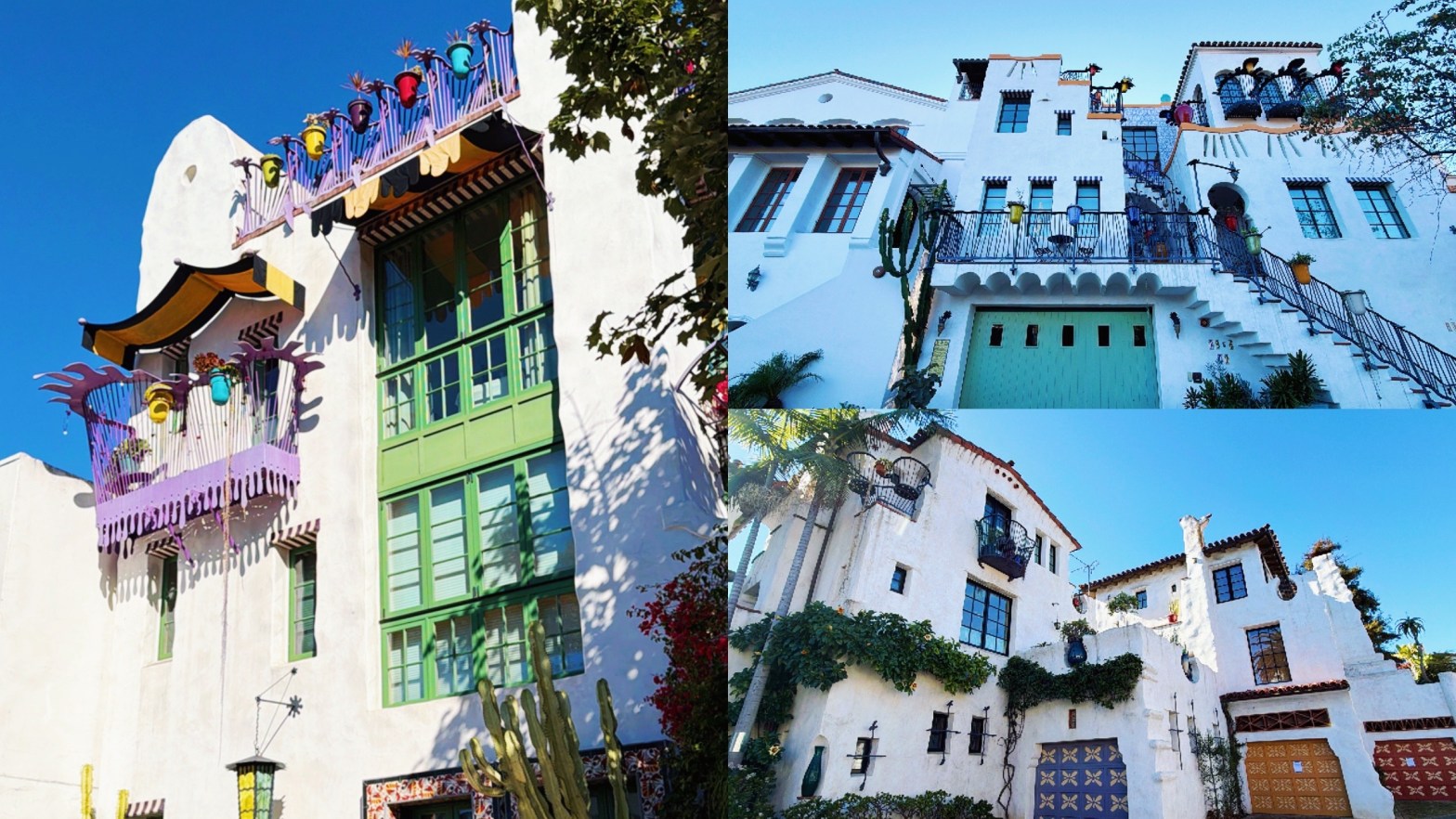
“Even if you can’t see the full picture, trust the process, every small piece you add brings the vision close to life, gradually revealing the vision you’ve been building all along.” – Jeff Shelton
On a sunny day in early December, I returned to Montecito (California) and drove along Mountain Drive, a residential enclave of free spirits tucked into the hills above the town, where the top of Coyote Road merges into a winding spine. The landscape hinted at stories of both past and present. The land was once owned by a man named Bobby Hyde, who sold off small parcels to his artist friends. In the 1950s, the area was wild and loosely settled, until a fire around 1962 swept through much of it.
The road winds past post-World War II homes built by artists, peacetime dwellings meant to endure. They sit like nests: simple, efficient and gently lived in. The idea of the “nest” sparked a conversation between Santa Barbara’s most intriguing architect Jeff Shelton and me. These artists-built shelters to live in and raise families, learning not just how to design but how to live, a lesson shared by everyone on Mountain Drive. The community’s bohemian spirit and freedom profoundly shaped Shelton’s creativity, a quality evident throughout his architectural work.
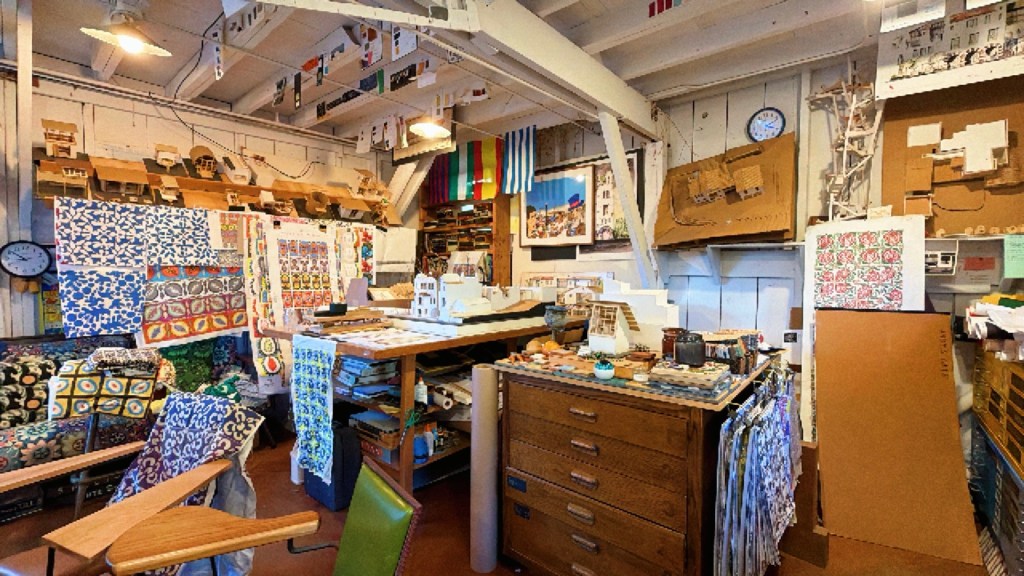
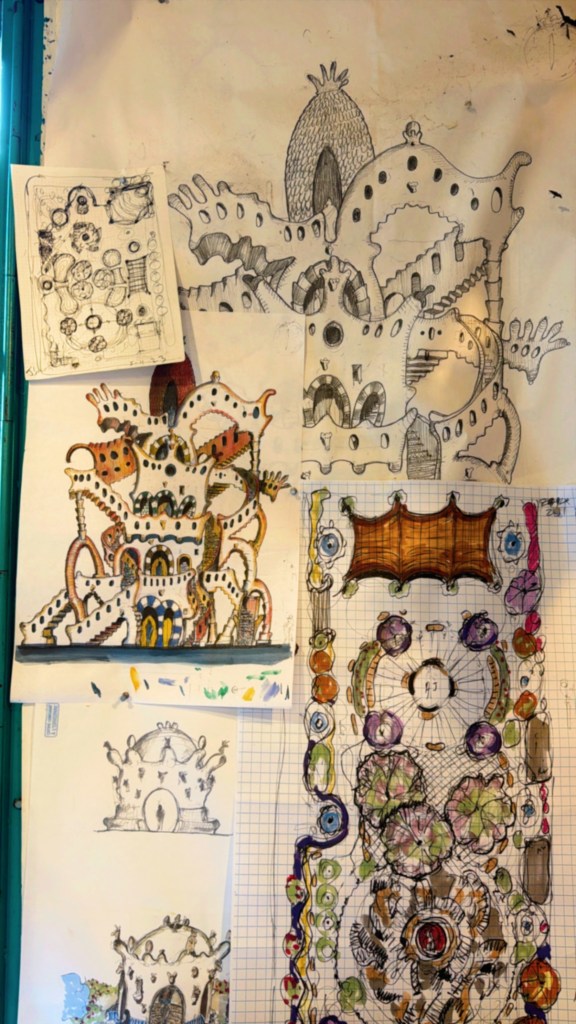
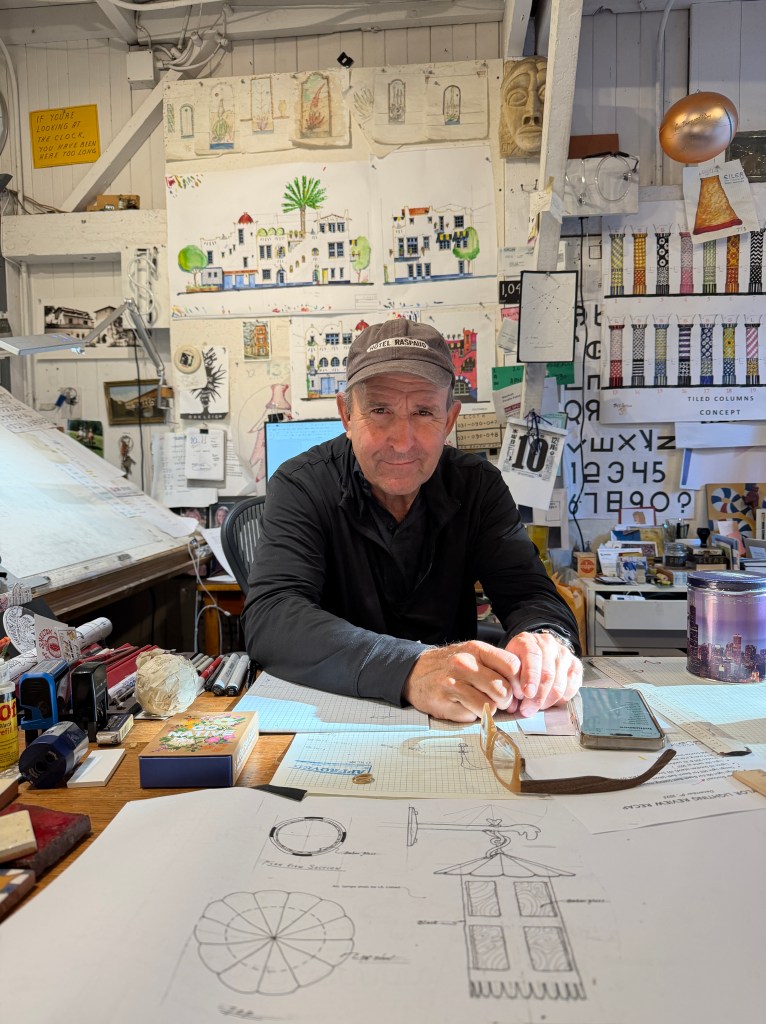
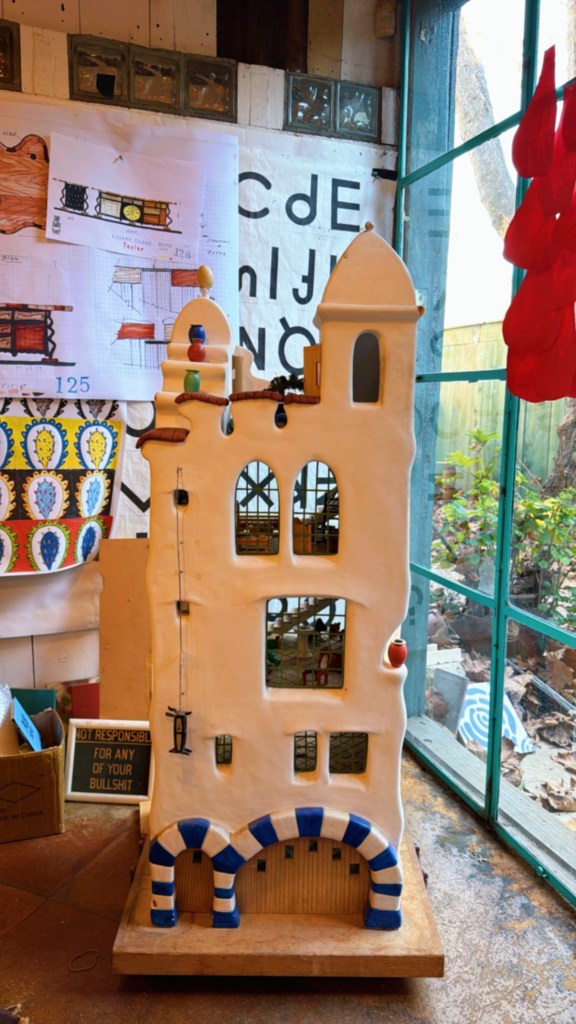
Housed in a carved wooden cottage shaped by many influences, Jeff’s architectural studio on Fig Avenue reflects his simple lifestyle. Inside, we were surrounded by his original pencil sketches and drawings, colorful handmade title works adored with whimsical patterns, miniature architectural models, and thoughtfully designed lighting, while warm sunlight streamed through the windows, casting a gentle glow across the space.


Humble yet brimming with whimsical creativity, Jeff spoke of his deep admiration for Santa Barbara and invited me to explore the layers of his creative vision.
“Jeff, it seems like there’s a child living inside you – you design playful, colorful buildings that draw people into your whimsical world. But for many architects, translating a vision into reality, especially within building codes, can be a challenge. How do you strike that balance?” I asked, driven by endless curiosity.
Jeff smiled, “As an architect, I understand the rules and embrace California’s strengths, but I don’t force the work. In my practice, I start by listening, truly seeking to understand how people or clients want to live, feel and move through a space. I design from the inside out, allowing the process to unfold organically. Through intuition and dialogue, the complete vision gradually reveals itself. I truly enjoyed this process.”
He continued, “Children love my work. They live with creativity and freedom, the most precious gifts of childhood, and adults should reclaim that spirit too. Open spaces are some of the most joyful parts, full of surprises and possibilities.”
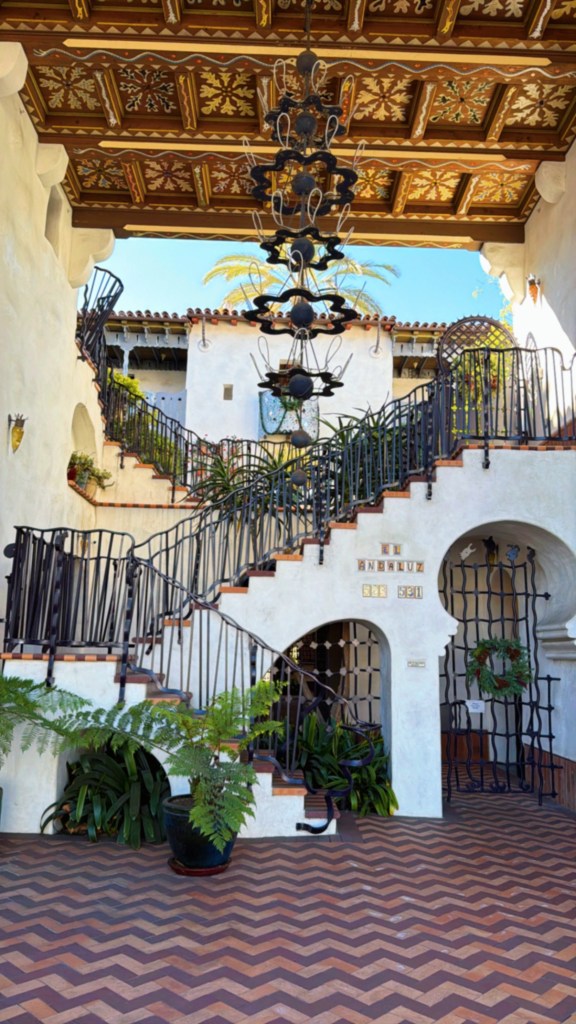
I added, “Many of the buildings you’ve designed in downtown Santa Barbara feature abundant open spaces, seamlessly blending the Mediterranean climate with sunlight.” He nodded, “Yes, I bring the sunlight inside. Every room becomes a perfect place to paint, a puzzle of light and space.” I noticed the deep passion in his eyes as he spoke, advancing step by step in his creative process, continually pushing the boundaries between art and life.
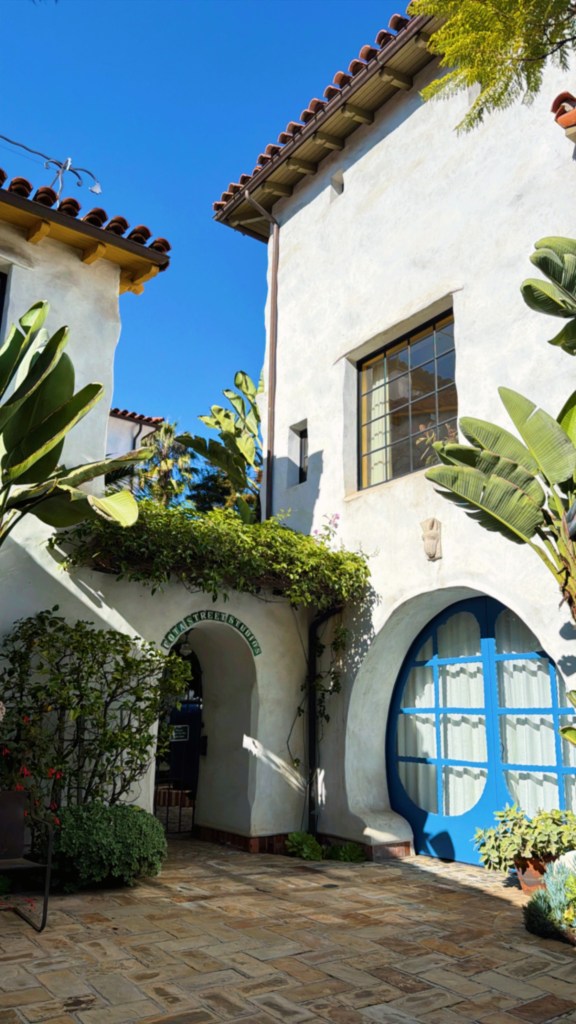
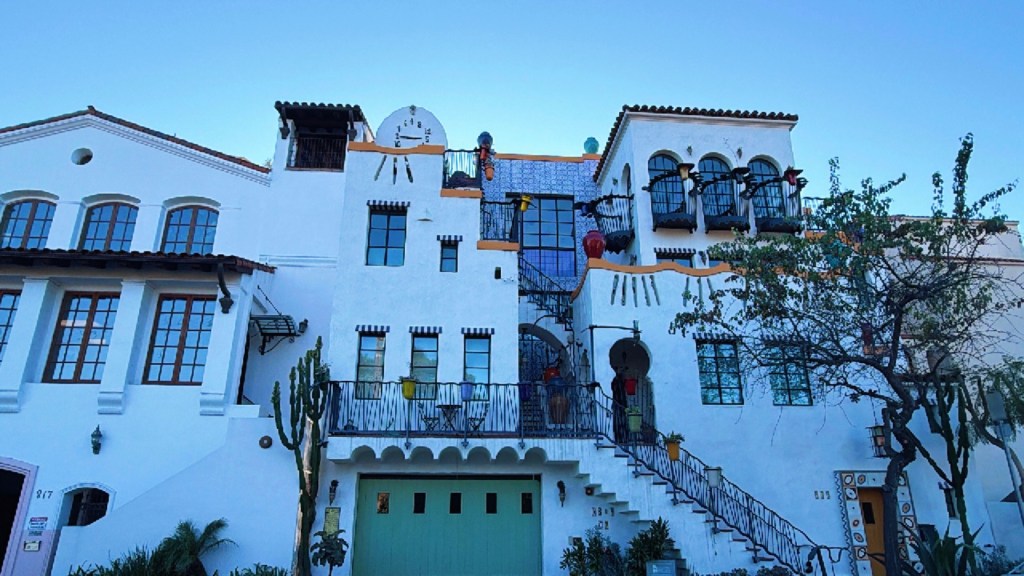
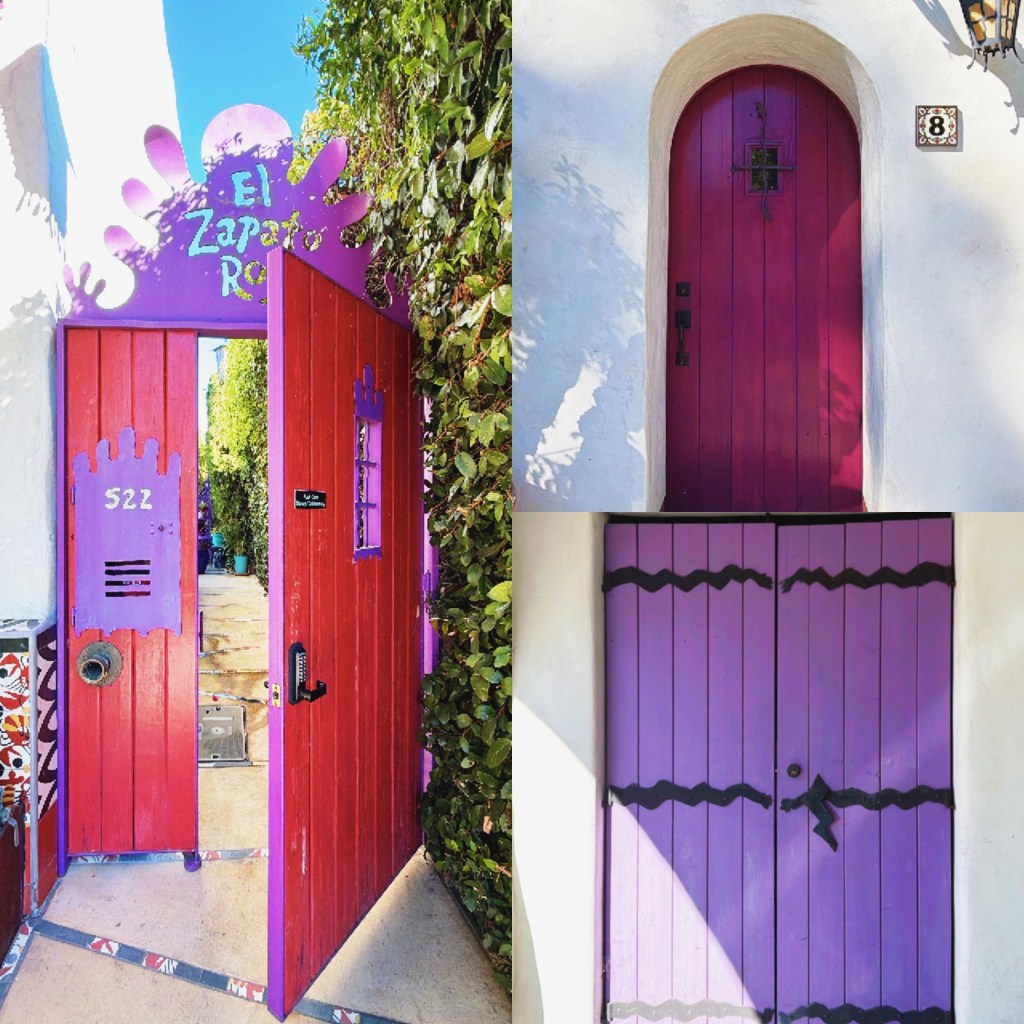
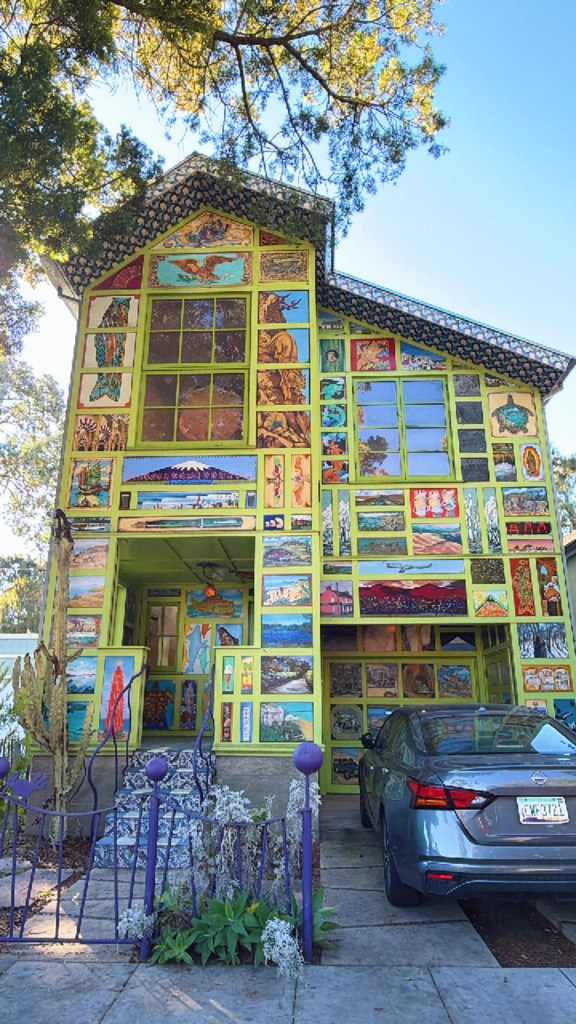
Before meeting Jeff, I wandered through downtown Santa Barbara to experience his iconic projects firsthand and glimpse his aesthetic, from the distinctive tile works and design elements at the State Street Undercrossing, Pistachio House, El Zapato and EI Jardin, to the iconic wrought iron gates created by his brother David Shelton.
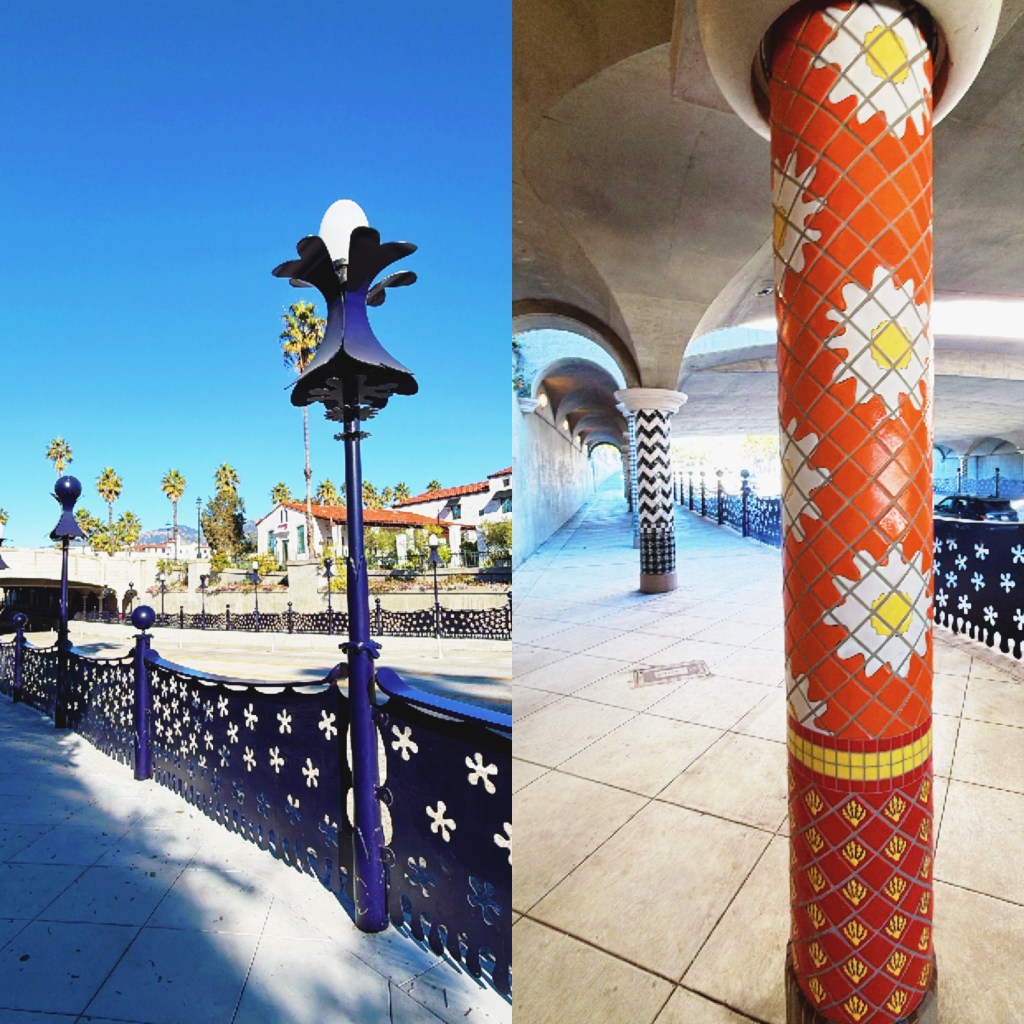
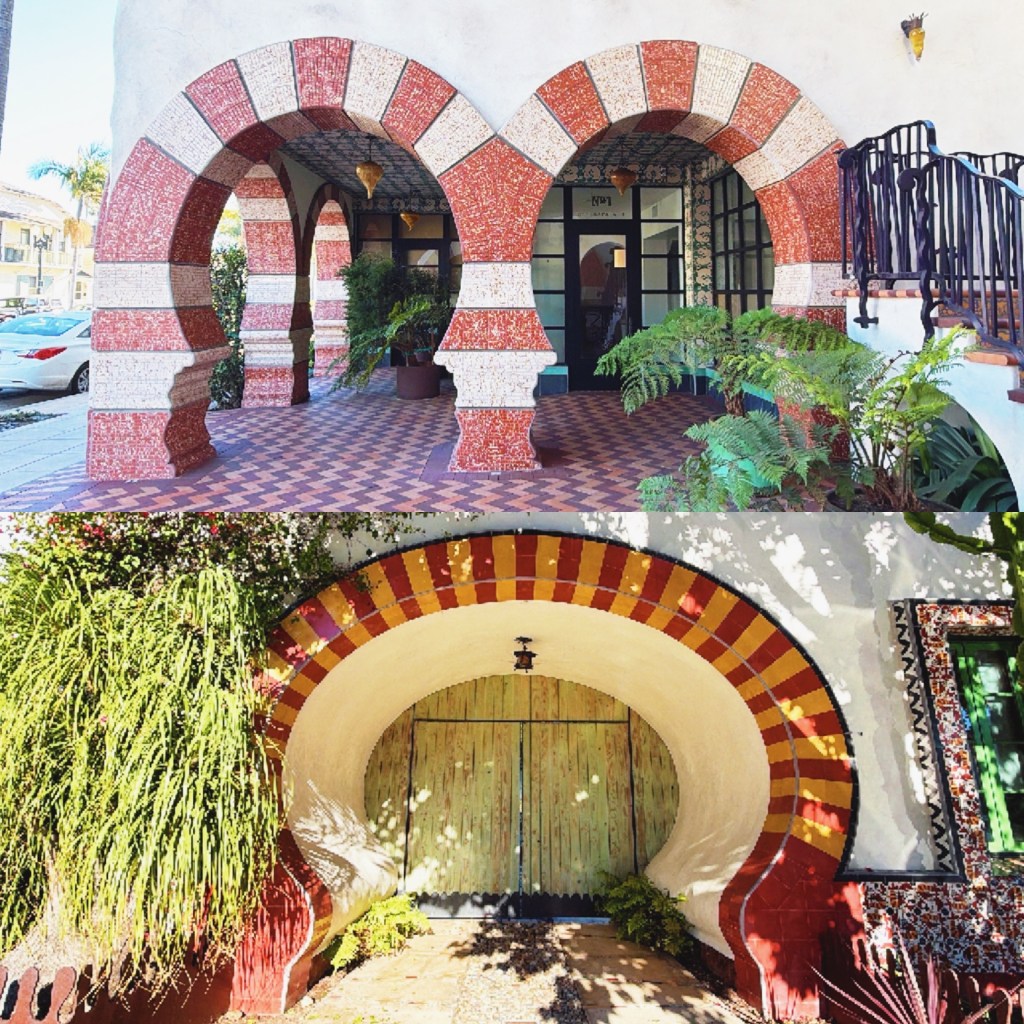
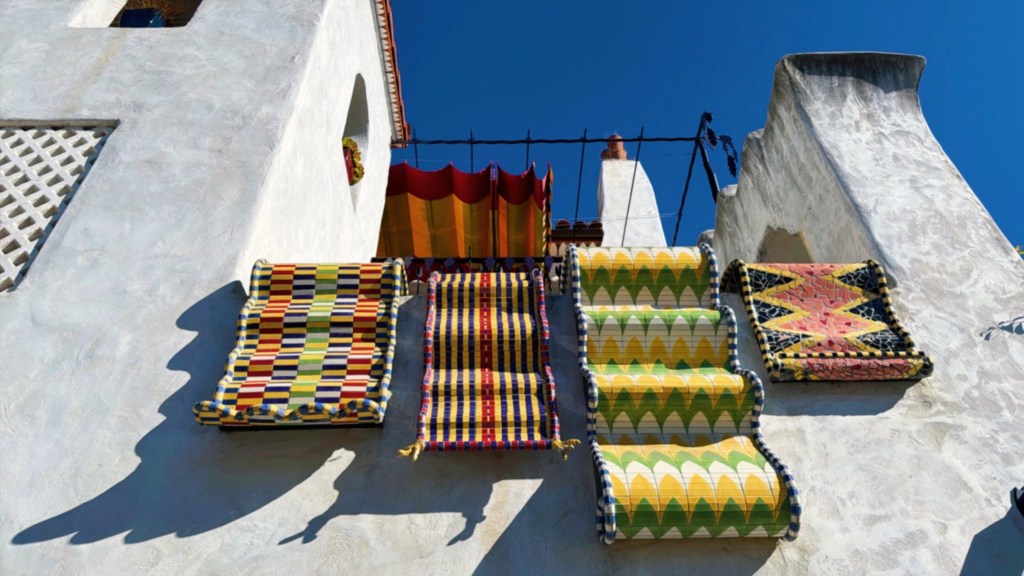
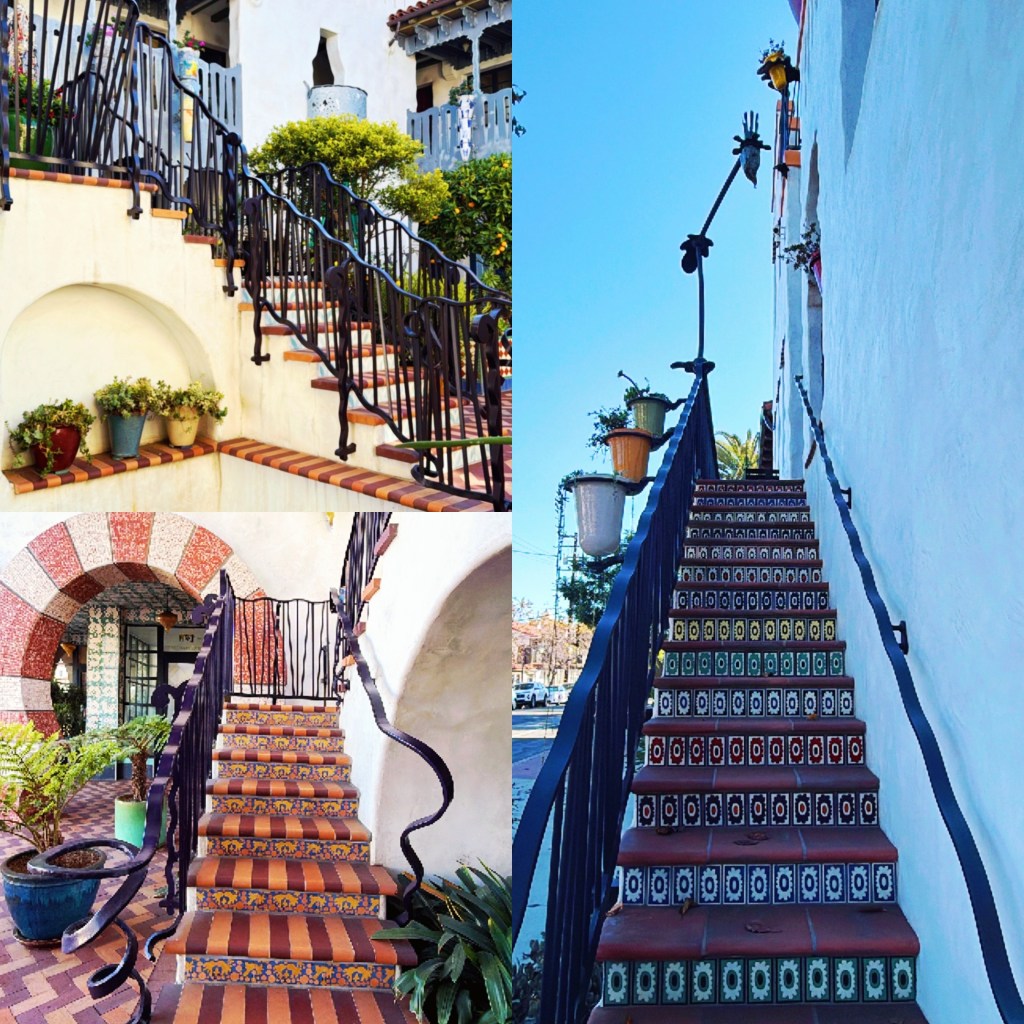
The vibrant colors, swirling shapes, flora motifs, Gaudi-like archways, whimsical touches, lighting and ironwork, and extensive handmade tiles accentuating the curvy, sensual plaster walls and looping staircase railing, a recurring theme throughout his work, stuck me like a kaleidoscope.
The visual richness of the tiles elevated our conversation. “The flowers are my favorite element”, he said. “The patterns I create blend formal symmetrical with bold asymmetry, making each tile unique and alive. Each square can be placed in any direction, adding flexibility and playfulness. Random placement brings a human touch, each title setter makes choices the next wouldn’t, creating ever-changing patterns. This approach even solved awkward angled cuts, producing two beautiful tiles that have since been used in many projects, cleverly concealing awkward corners.”
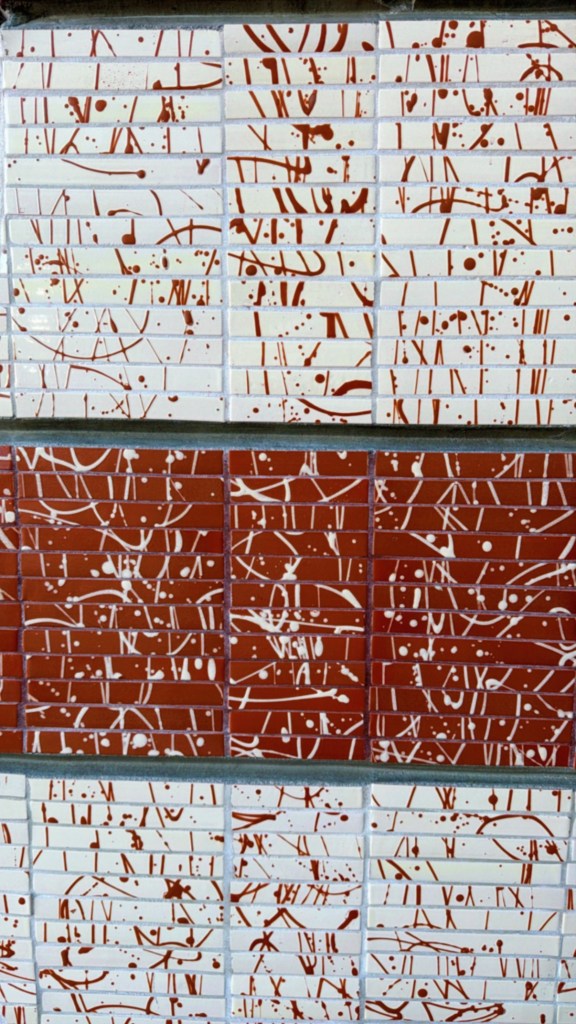
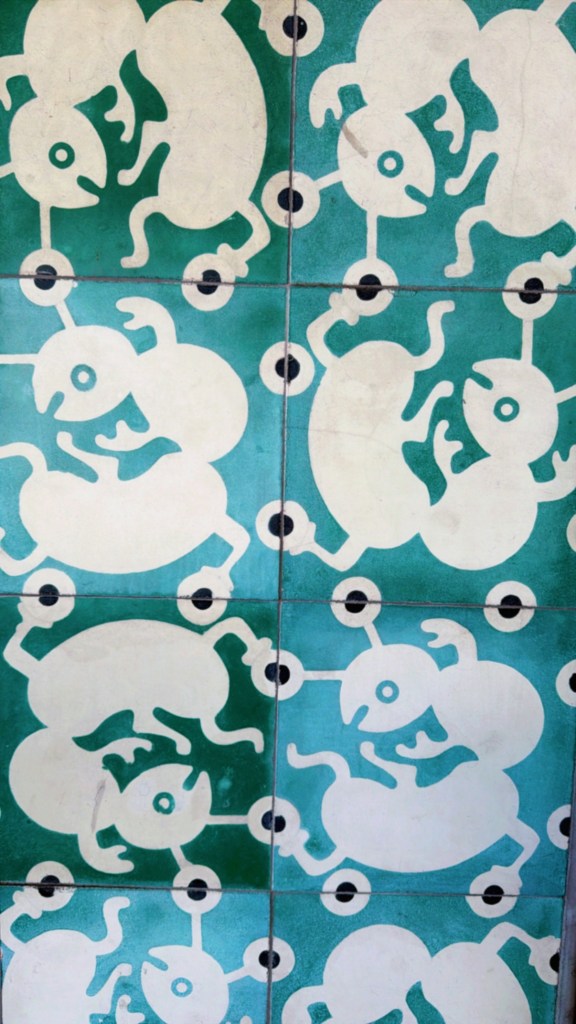
His colorful artworks never cease to surprise me. I asked, “How do you approach playing with color in your designs?” He explained, “I enjoy blending cool tones with bright colors, creating strong contrasts that add playful layers and visual interest to the buildings. The way light hits a key color is a bonus, for example, sunlight on dark purple can make it appear almost black, enriching the palette even more.”
“So, it is a kind of color juxtaposition?” I continued.
He nodded.
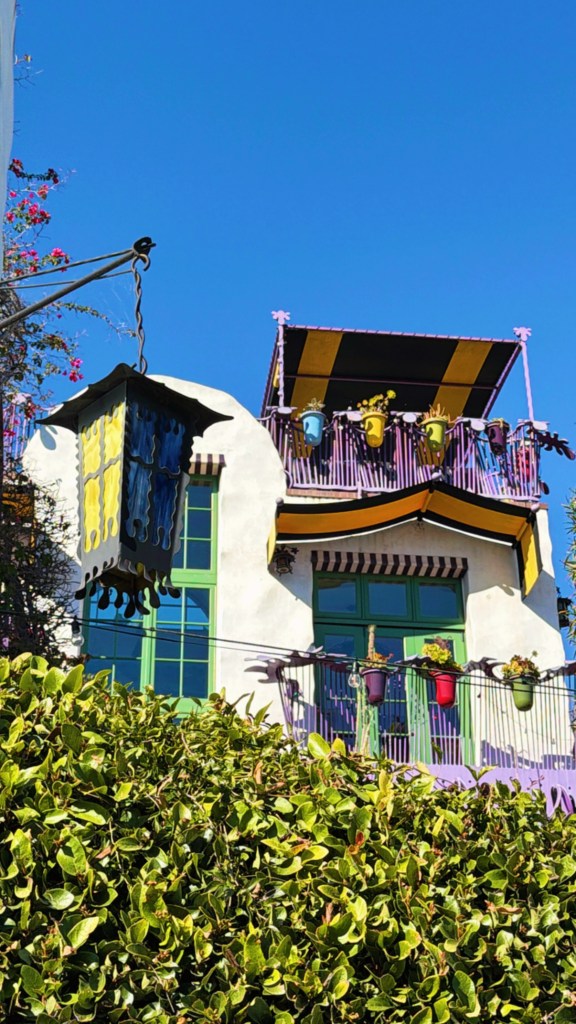
Many viewers, including myself, noticed traces of Gaudi in Jeff’s work and echoes of Dr. Seuss’s whimsical style. He smiled as he listed his favorite architects. Ha! Yet the interesting thing was that I forgot all the names in his long list, remembering only Jeff, sitting right in front of me, hat and jacket on, a twinkle in his eye, always with some odd idea lingering in his thoughts. It was clear that his artistic influences form a continuous lineage, blending inspirations from past and present to nurture and fuel his creativity.
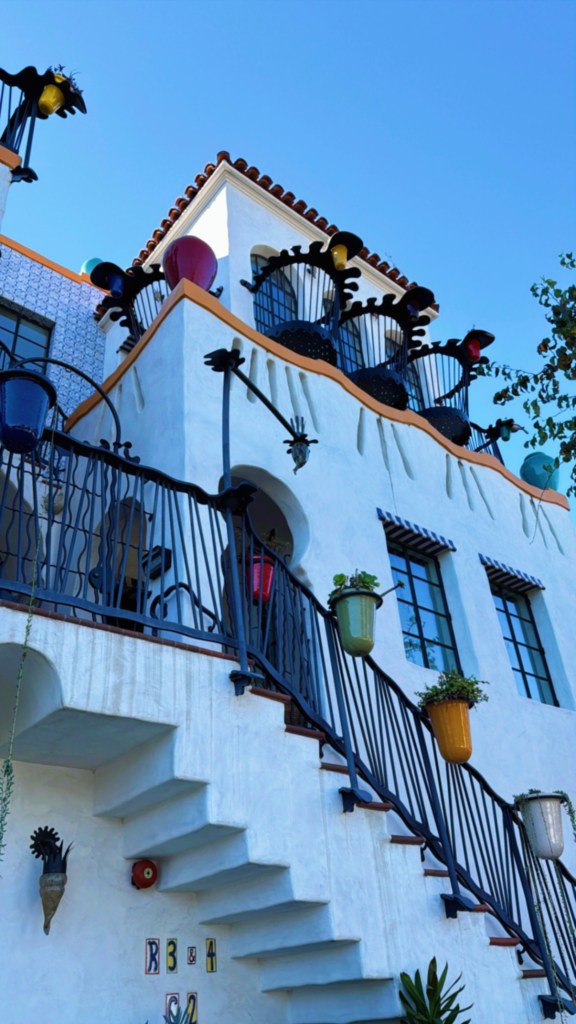
In Casa de Herrero, the historic wrought iron window grills immediately caught my eye, they are four to five centuries old and possess an unmistakably handmade character. I also noticed in Jeff’s fantastical buildings, wrought iron work appears everywhere.
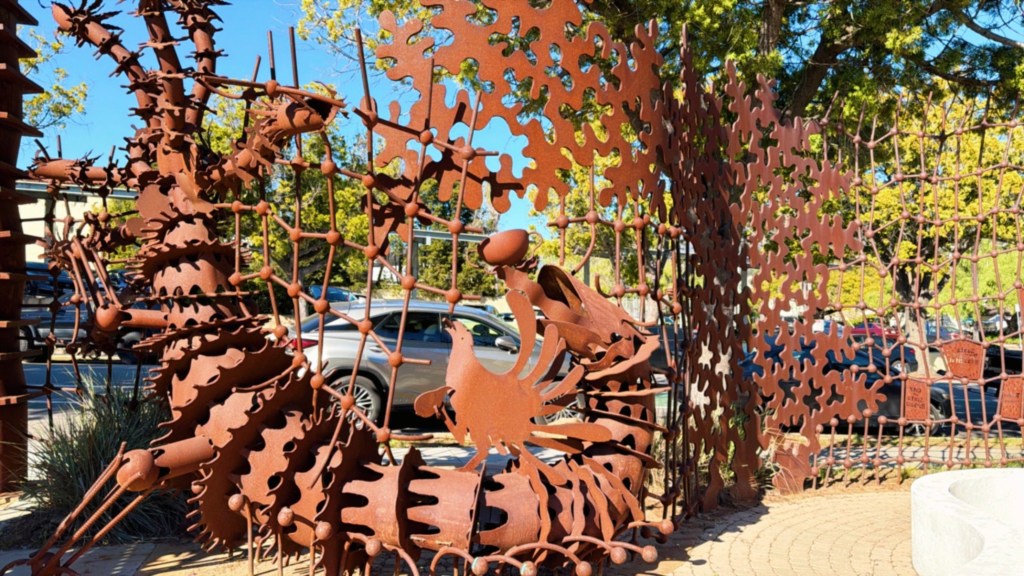
A great project is always a team effort. Jeff’s older brother, David Shelton, gifted with exceptional skill, became an accomplished sculptor and ironworker, fabricating all the ironwork for their projects, while Jeff personally designs and oversees every detail, leaving his influence throughout. This approach is unique and cannot be replicated exactly elsewhere. Jeff also collaborates closely with other artisans, creating a process as intimate and harmonious as sharing a creative vision.

I was curious about the life of an artist. He told me that he always carries a small sketchbook in his pocket, drawing whenever inspiration strikes, anytime, anywhere, even while waiting for a doctor’s appointment. Once inspiration arrives, he never lets it slip away.
Santa Barbara, California is a city rooted in its Spanish Revival heritage and fundamentally Mediterranean in character, shaped by its sun drenched, temperate climate. Its architecture emphasizes human scale and pedestrian-oriented design, simple in form and massing, yet rich in mystery and surprise, and open to sensual experimentation. These qualities are among the main reasons I cherish this place. They weave delicate threads woven through the broader urban fabric, leaving a subtle yet lasting architectural imprint on the city.
Jeff’s buildings and Casa de Herrero exemplify these principles, with carefully proportioned spaces, elegant simplicity and intricate craftsmanship that reward close observation. These houses were never merely homes; they are thresholds where the boundary between art and life dissolves. Within their walls, light became substance, silence took shape, and every detail speaks with intention, inviting reflection on the future of Santa Barbara. Even as the city continues to evolve, its buildings retain a profound sense of character and warmth, a quiet generosity that greets anyone willing to pause and notice.
He shared this advice with me about my new journey: like building a new house, even if you don’t see the whole picture at first, embrace the process, add small pieces little by little, and as they connect over time, the complete vision will eventually take shape.
Mountain Drive has always lingered in my mind. It carries a free-spirit energy that gently disrupts the manicured elegance of the rest of Montecito, offering a sense of healing and inspiration at its heart. Seeing it again with fresh eyes, I notice even more. Today, while many grand mansions dominate the area, Jeff remains devoted to a simple home and way of life, an integrity and authenticity I deeply admire. His vivid architecture sharply contrasts with the surrounding estates, yet subtly embodies philosophy of dwelling: a love for the land he grew up on, a sense of “the nest”, quietly asserting its own values amid the grandeur. His buildings were never designed to impress, but to hold a vision, to protect it, nurture it, and give it space to unfold.
Thank you, Jeff Shelton and David Shelton.
Thank you, Santa Barbara/Montecito.
 STEPHY
Wonderful descriptive writing painting what the architect envisioned for his work. Your interviews excellently support and expand on each picture presented. Well done!
LikeLike
Very Whimsical
LikeLike