I recently embarked on a European art adventure in the art world capital New York City (NYC). I captured the inspiration of artists, discovered more leading international art galleries and artists, immersing in centuries of extraordinary old-master paintings, antiques, timeless creativity and craftsmanship that have left an enduring mark on the history of art, having a profound dialogue between materiality, experiment and abstraction. Through this lens, my artistic perspective rises to new heights.
A profound discovery into galleries and artists at TEFAF NEW YORK
It was rainy day. The European Fine Art Foundation (TEFAF) community invited me in, fine art, antiques, jewelry, contemporary art, and design under one roof, New York edition with 91 leading galleries worthy exploring outside of Maastricht.
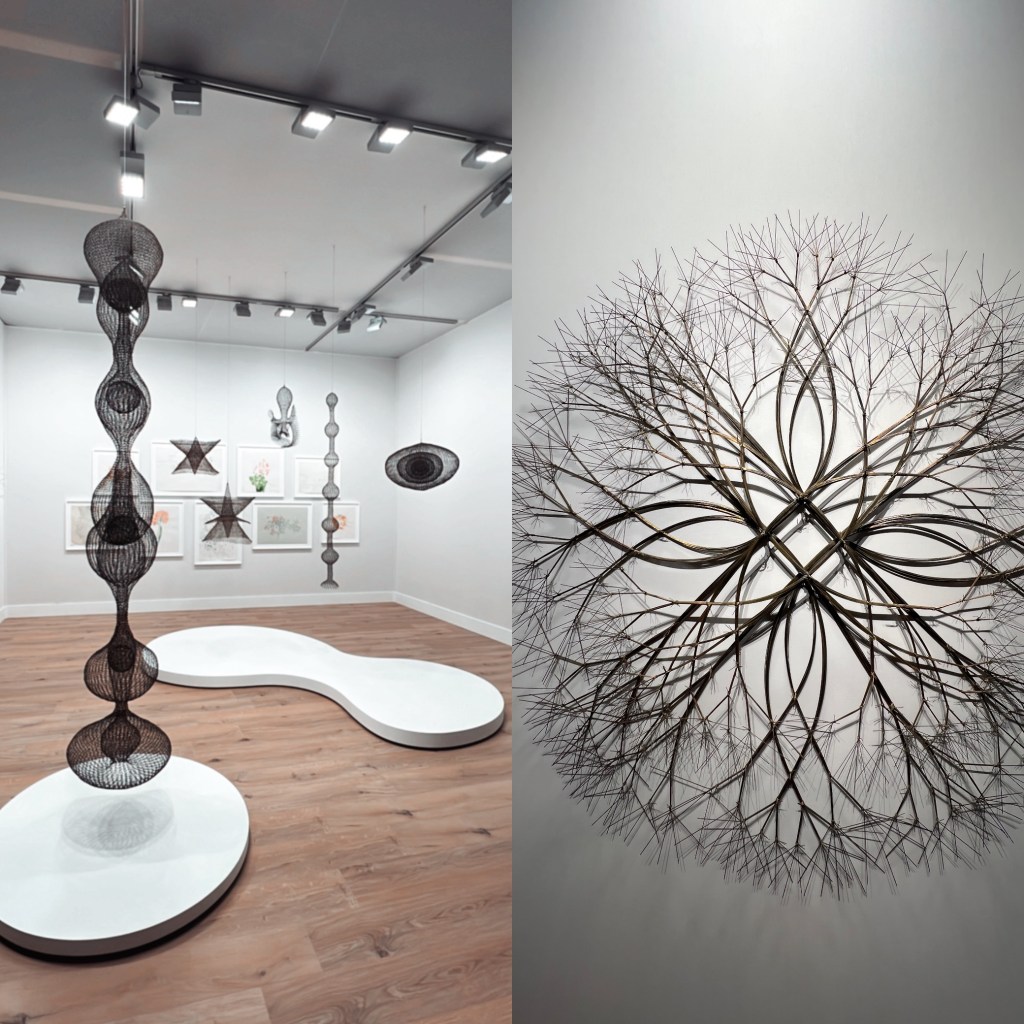
I wandered amongst the beautiful works of artist Ruth Asawa (1926-2013), presented by David Zwirner, captivated by her extensive body of wire sculptures that challenge conventional notions of material and form through their emphasis on lightness and transparency. I got closer to see her signature looped- and suspended tired-wire sculptures, observing them from every angle. I was amazed by their intricate form and delicate balance, evoking a profound connection to the natural world and the inspiration behind them.
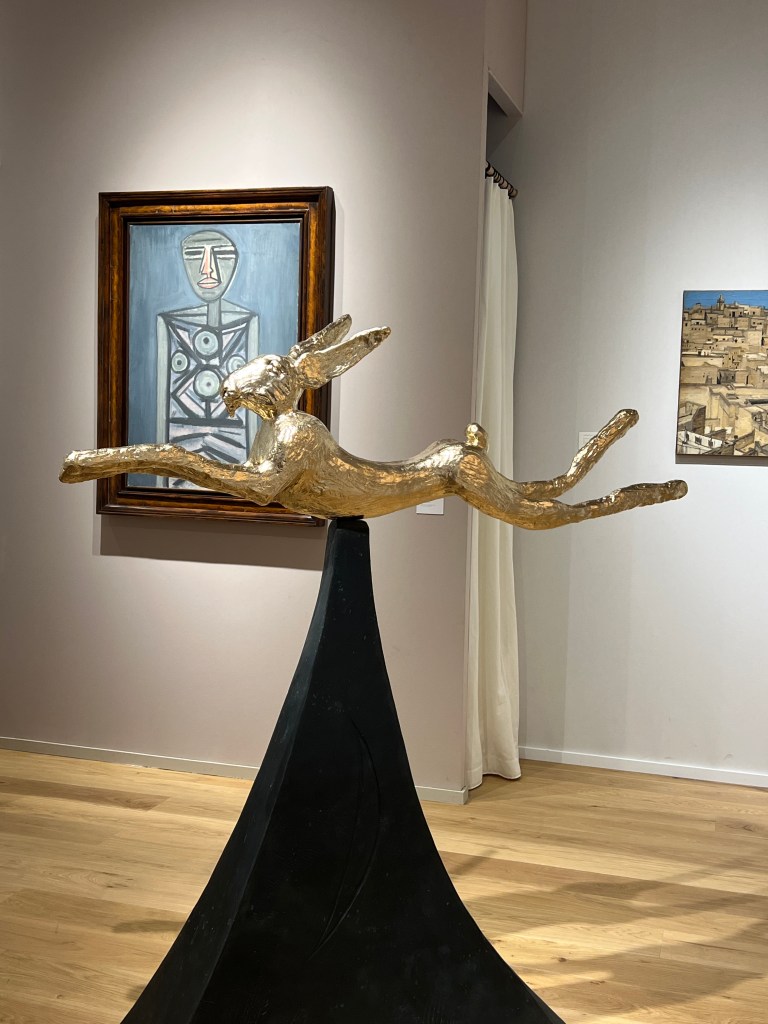
My eyes were fixed in front of Bronze Sculpture “Moon Gold Hare” (2007), beautifully embodied natural elements and made by sculptor Barry Flanagan, presented by London-based gallery Waddington Custot. The work vividly captures the hare in various states of motion and rest, leaping with lightness and energy, seamlessly blending whimsy with grace, as the sculpture appears frozen between dynamic movement and serene stillness. Its unique interpretation of vitality and freedom created a connection with me, as I saw myself reflected in the work.
I was invited to the ancient art world. The leading art gallery Charles Ede amazed me with its exquisite collection and curatorial depth. As I explored, I forgot the time. The Roman mosaic hanging on the wall, featuring tesserae in red, yellow, brown, orange set against a black stone background, depicting Eros poised to hunt a fleeing stag, the head of a woman adorned with earnings and other ornaments at the center, its composition immediately caught my eye.

I can’t take off my eyes from the double-sided herm head by marble, named “Roman Janiform Herm of Mercury” (1st– 2nd Century A.D.), expressing one face as youthful and the other as an aged man. I carefully examined their similarities and differences from different angels, from hair to lips, from eyes to chin, and the nose, down to up, repeatedly, with a dual perspective and sense. It inspired me to explore the cultural and artistic transition from the Greek to the Roman period in greater depth, echoing the intertwining of past and future in the faces.

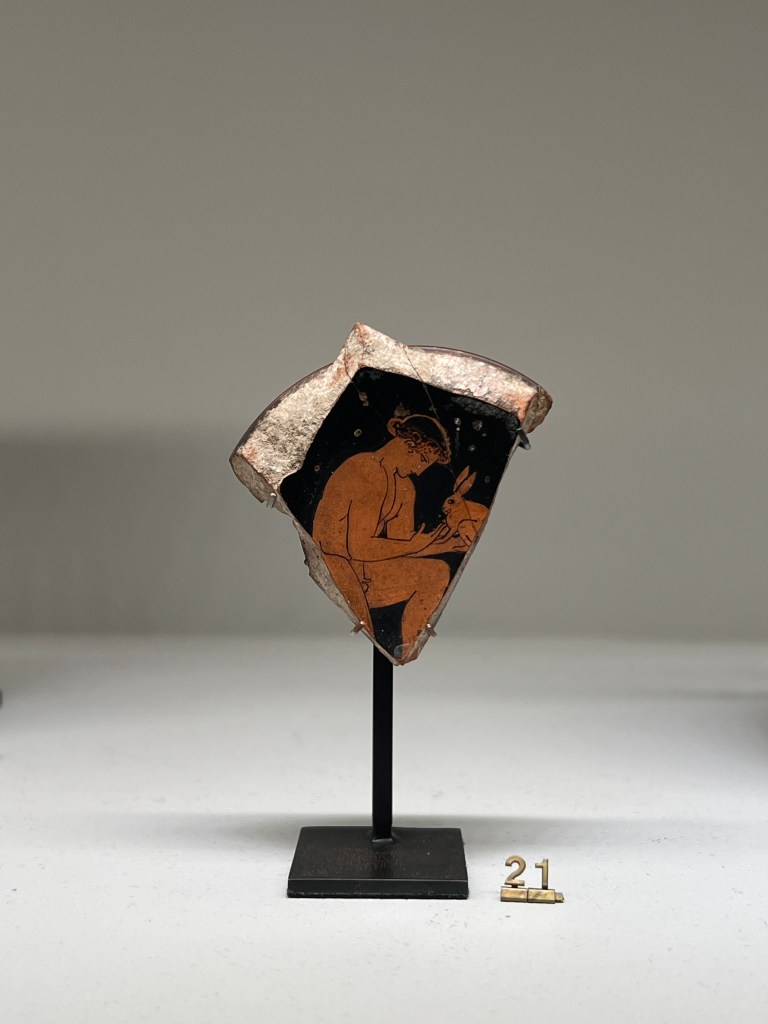
My curiosity took me to discover a small-scale intimate fragment from Greek Red-Figure vase, depicting a nude youth holding a hare and gazing at it deeply. I noticed subtle fine hairline cracks across the surface – one running through the hare and youth’s hair, another crossing the head and meeting the first at the forehead. The scene left me wondering about its hidden symbolism.
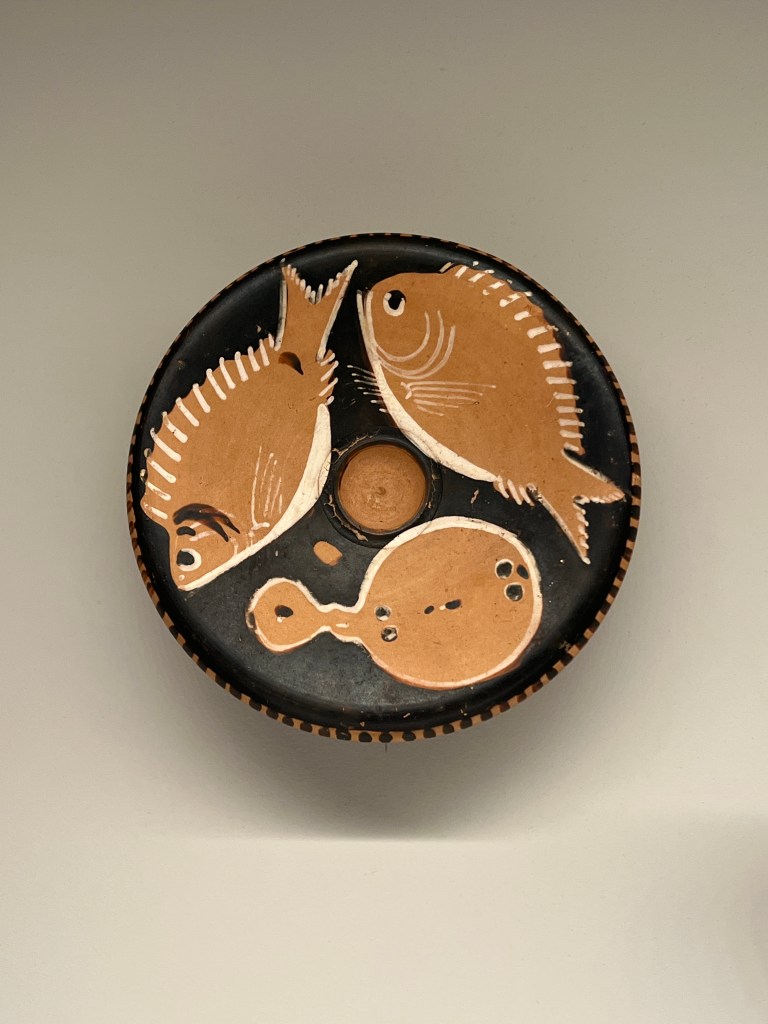
I caught a glimpse of another remarkable piece: a fish plate decorated in red figure with added white details, depicting a torpedo fish alongside two breams. The plate is mostly intact, and its design along with fine glaze cracks near the center reveals its rich history and enduring character from ancient Greece. Serving both as a decorative art and practical dinnerware, it offers insight into the Greeks’ deep appreciation for marine life and their advanced pottery craftsmanship.
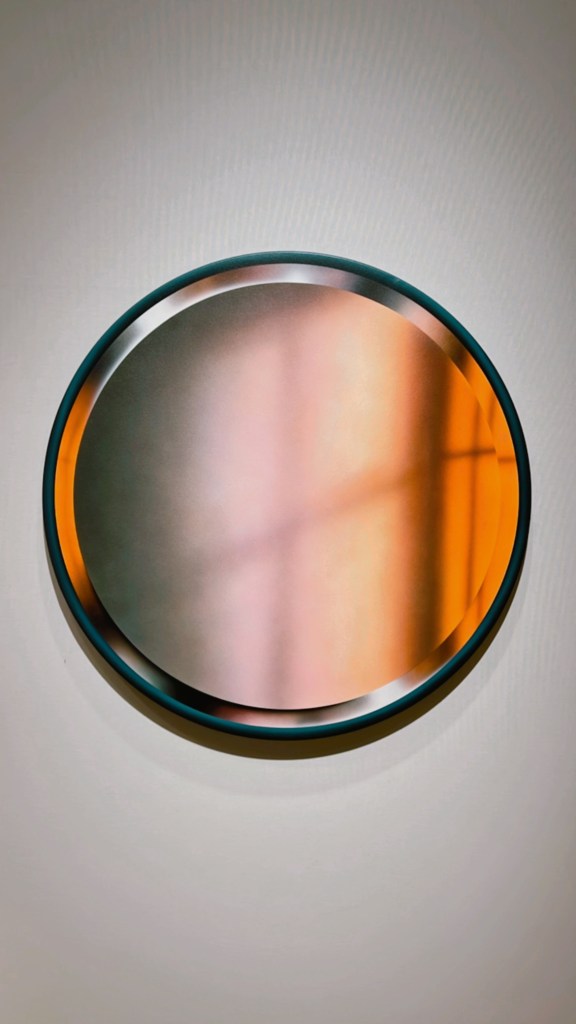
I was captivated by a stunning mirror painting by leading contemporary artist Christopher Page, presented by Ben Hunter Gallery. His work masterfully merges Modernist abstraction with Baroque illusion to create an ambiguous pictorial depth that challenges notions of truth and falsehood in painted imagery, while reflecting the layered realities suggested by the very surfaces we endlessly gaze upon. I was obsessed with the interplay of light, shadow and reflection – both on the surface and depth within – evoking nature’s outer and inner worlds, seeing his vision ascend to a profound height. I did not hesitate to connect with the artist and left a warm message to express my appreciation: a deep reflection of outside and inner.
The Axel Vervoordt Gallery was worth lingering, showcasing a meaningful dialogue between two pioneering Japanese artists: Shiro Tsujimura and Yuko Nasaka. At the beginning, while I couldn’t immediately discern differences in their artwork, I was deeply engaged with surface texture, forms, colors, perspectives and subtle nuances that gradually revealed themselves upon closer observation. Surrounded by the refined elegance of the Park Avenue Armory, the room itself delivered a juxtaposition of raw and contemporary elements in a delicate balance of harmony and stillness.

I wandered the city, the sound of rainfall surrounding me, those artworks echoed endlessly in my mind, a unique sense with the spirit of the art world.
A deep appreciation of rare old-master paintings at Sotheby’s
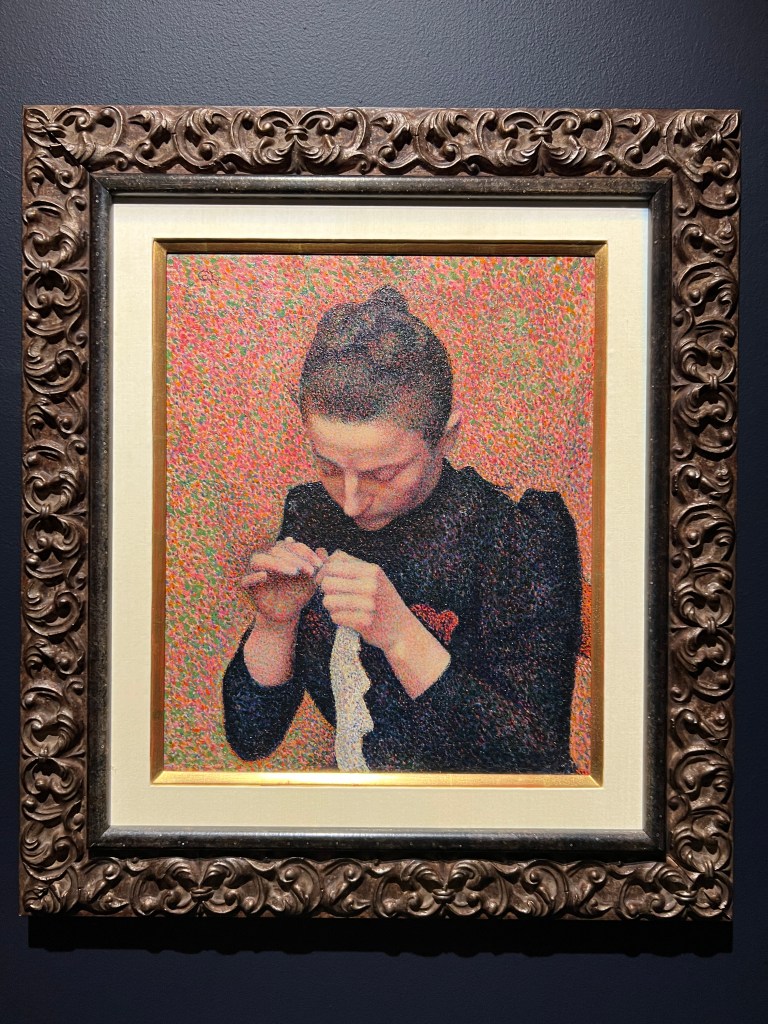
An impressive Pointillist style painting “Jeune femme faisant du crochet” by Belgian neo-impressionist painter Georges Lemmen (1865-1916) draws me in deeply, with the juxtaposition of thousands of tiny dots of color on canvas, allowing the hues to blend optically and create a mesmerizing visual experience. This technique not only showcases his technical skill but infuses the work with a vibrant energy and the spirit of movement. Lemmen precisely captured his sister Julie’s focused crochet work, conveying the intimacy of the domestic sphere and rendering a portrait that is both striking and personal.
I engaged with two paintings by Fauvist painters and close friends: Albert Marquet(1875-1947) and Henri Charles Manguin(1874-1949), discovering both their individual artistic journey and shared stylistic traits through spontaneous brushstrokes and vibrant color palettes, and their lasting legacy. It gave me a chance to gain learn more of Fauvism.


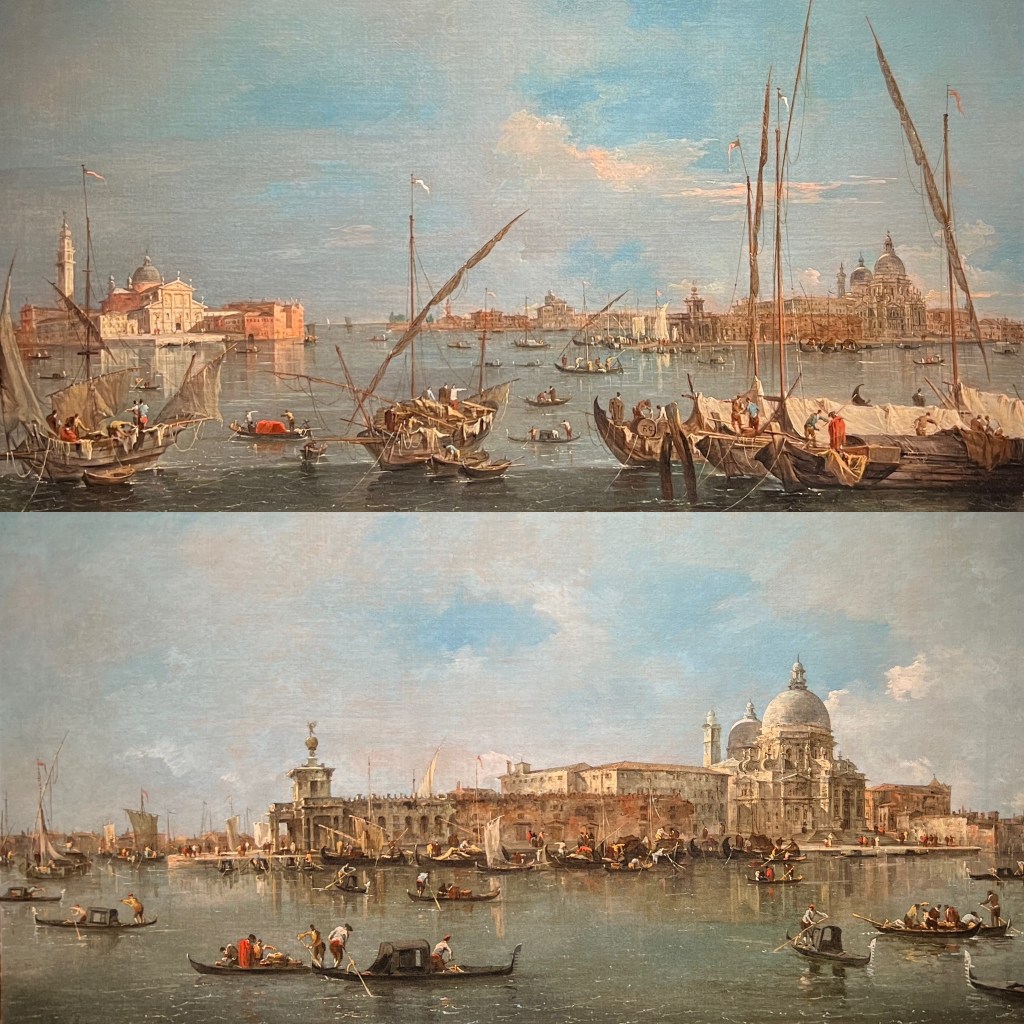
The collecting journey of European art collection from Jordan and Thomas A. Saunders III, exploring a treasure trove of prominent Old Masters – from Peter Paul Rubens and Francesco Guardi to Frans Post and Frans Hals, was worth lingering, too. I was learning art history and individual artists’ contributions to different aspects of art at the same time.
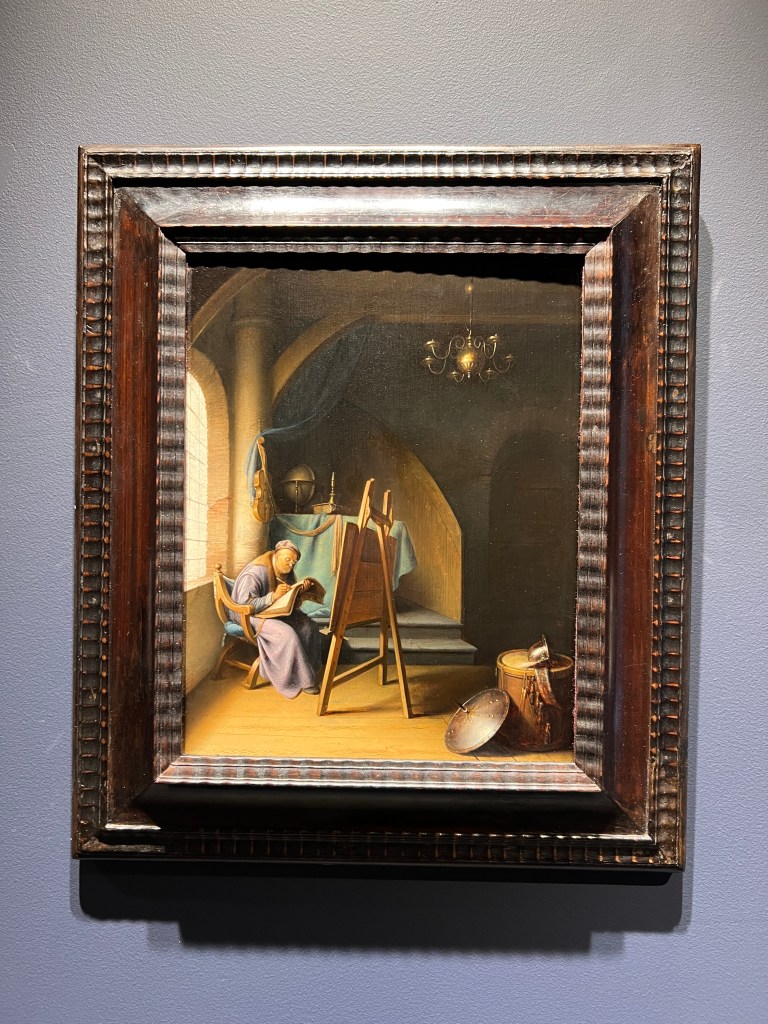
I was obsessed with the painting “Man Writing by an easel in an Artist’s Studio” by Dutch Golden Age painter Gerrit Dou (1613-1675). It depicts an elderly man sitting before an easel, absorbed in writing within a large folio, the light illuminating his figure, while deep shadows envelop the surrounding recesses. I was captivated by Dou’s delicate rendering of the man’s face, contrasted with the rich, textured strokes used to depict the floorboards, the jade-green tablecloth, elegant lighting, and other objects, creating a striking visual balance.
Art unveils the infinite
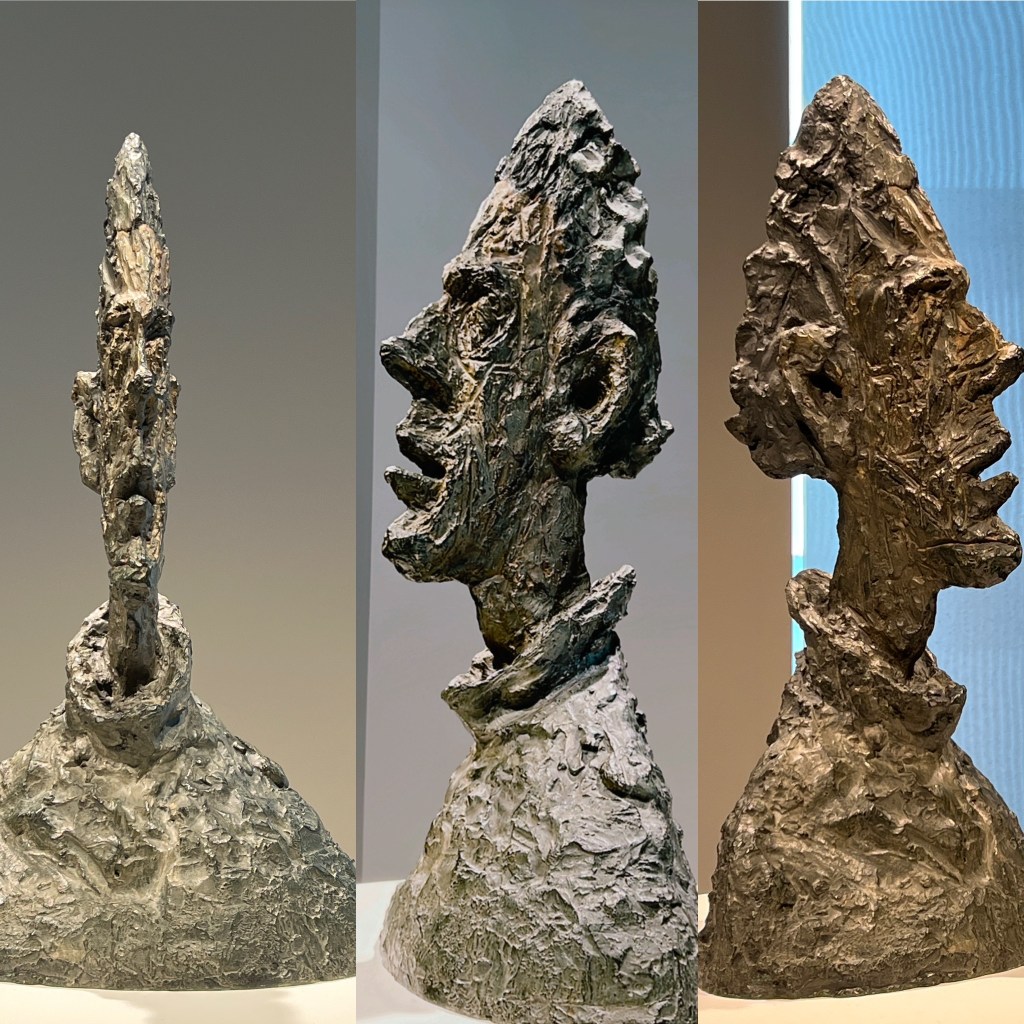
Inspired by artist brother Diego and created at the height of the Cold War, the Swiss sculptor Alberto Giacometti’s (1901- 1966) masterpiece “Grande tete mince” stands as one of the defining and rare achievements of modern sculpture, taking center stage in the room. I walked along the full circle, each side revealed a new surprise, from the richly hand-painted surface to its knife-blade-like form, shaped with a palette of blacks, browns and grays that amplified its emotional intensity of the void, shaped by the artist’s own hands.
The power of art lies not only in the sophistication of work, but also in the extraordinary spiritual experience delivers for the audience: How we see, how we’re seen, and how we connect with it. It invited me to carefully discover the unique nature of each gouge in the surface upon close inspection, then immediately step further away to see its haunting expression. Like many pieces of art, this work is best felt rather than described. It powerfully echoes Giacometti’s own words: “If I look at you from the front, I forget the profile. If I look at you in profile, I forget the front view.”
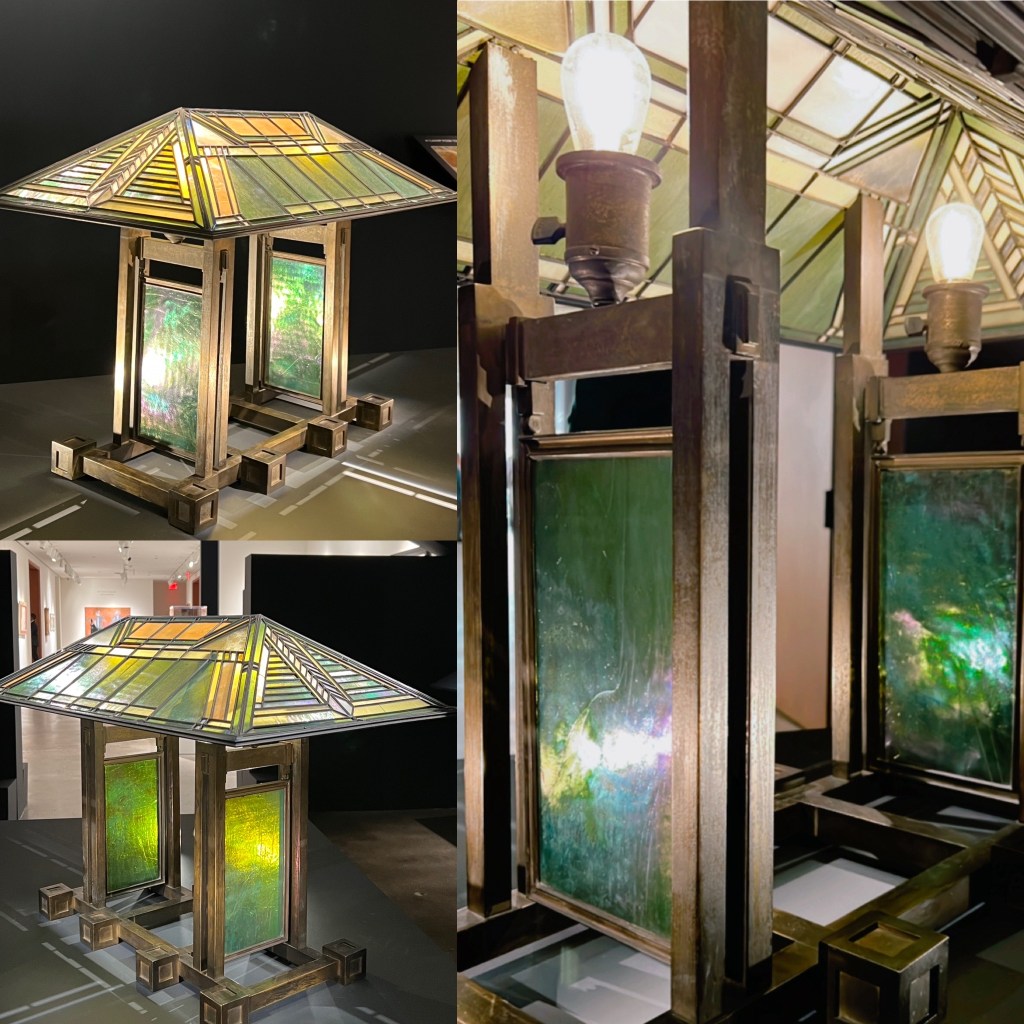
Another rare and amazing object I saw is American architect Frank LIoyd Wright’s Double-Pedestal Lamp, which sold for $7.5 million, breaking Sotheby’s auction record for works by the architect on May 13, 2025. It was designed in 1903 for the Susan Lawrence Dana house.
Composed of colored opalescent and translucent glass, the shade features abstract geometric patterns and a stylized sumac motif, rendered in tons of gold, amber and mossy green. The most amazing visual experience was the opalescent glass shifts from warm amber to iridescent turquoise depending on how the light hits it from where I am standing, creating a mesmerizing kaleidoscope of color and light. Indeed, it conveys a depth of dialogue between nature, iconic design, cultural heritage and interactivity to me.
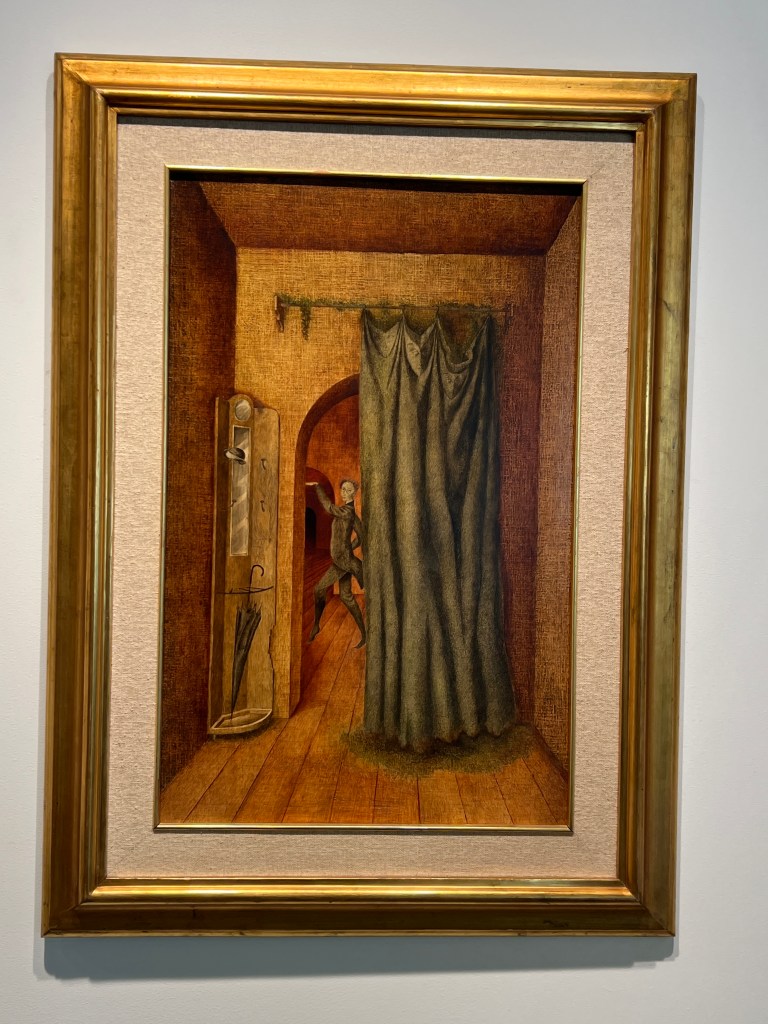
I’ve been fascinated by Surrealist paintings, such as British-Mexican artist Leonora Carrington (1917-2011). This time, I discovered the whimsical world of Spanish-Mexican artist Remedios Varo (1909—1963), created with a ghostly figure wearing a pea-green formal suit, posed like a dancer at the threshold transiting between presence and absence, where playful characters meet introspection in a uniquely surreal universe. The tiny detail in the painting caught my attention: a black color umbrella, few hooks hang on the closet, the vintage wooden floor, a thick hanging curtain bearing mystical ghostly faces that seem to emerge from the folds.
I wonder what world awaits this ghostly character’s world behind the curtain. Is he or she escaping from reality into a surreal dimension? What is the artistic symbolism behind each object? Is it transformative? Perhaps that is why surrealist painting fascinates me – it always invites me to step into the artist’s imaginative world.
My artistic perspective is expanding through discovering the diverse artists’ echo and reverberation worldwide, the constant mercurial tension between old and new, tradition and modernist that keeps art alive, constantly evolving and moving forward beyond itself.
I would say, all art is in dream, representation, translation, reflection, and fulfillment, more than meet the eyes.
Now, I am heading to the New World! Stay Tuned.
 STEPHY