
“I had to create an equivalent for what I felt about what I was looking at – not copy it.”- Georgia O’Keeffe
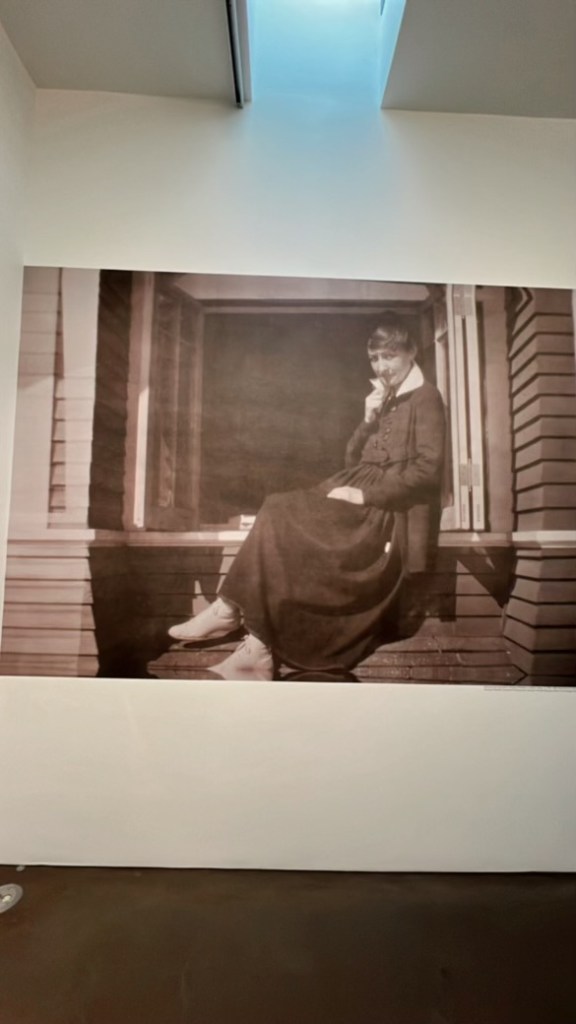
I personally believe the best way to appreciate art is to visit ateliers/studios, creatively inspiring me to start a recent New Mexico journey. In art history, Georgia O’Keeffe is one of the most significant Modernist artists in the United States, and one of its most celebrated icons, best known for her large format paintings of natural subjects, especially flowers and bones, and for her depictions of New York City skyscrapers and architectural and landscape forms unique to northern New Mexico. I visited Georgia O’Keeffe Museum in Santa Fe and witnessed her paintings and a significant archive of documents and photographs relating to her life and times, opening a wonderful “conversation” with her naturally.
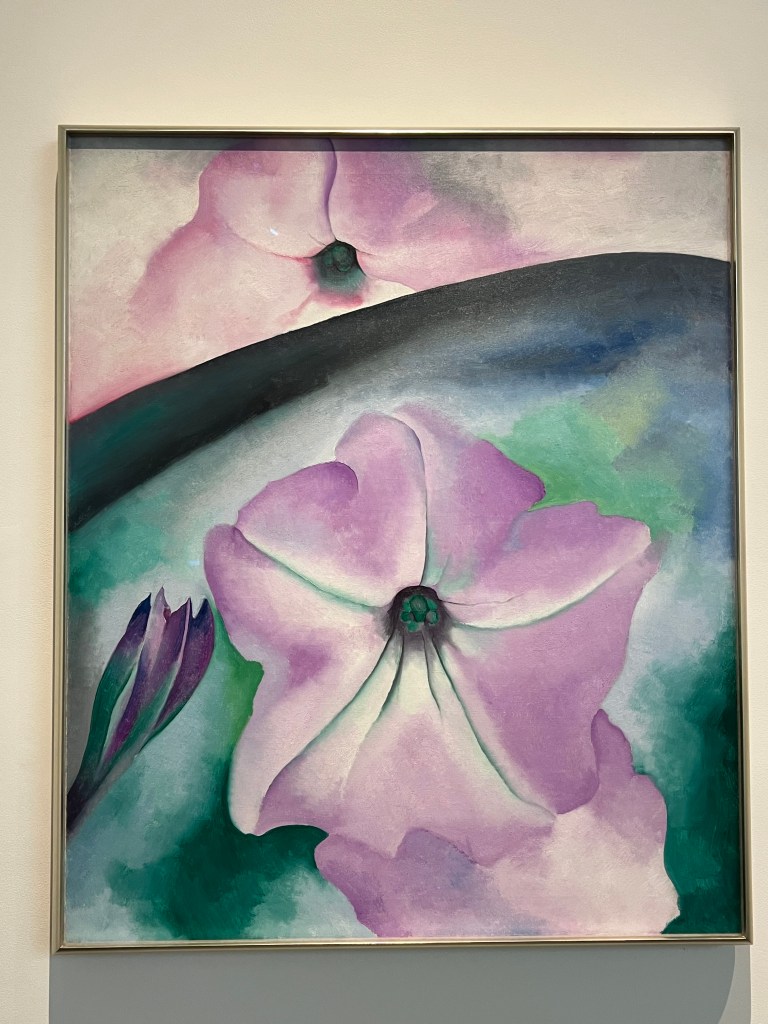
My eyes were fixed on a nature portrayal of an enlarged purple-lavender color dropping flower leaning towards the painting’s center, a sloping darker arch is slightly obscuring a similarly styled petunia. I looked closer, the subtle shades of lavender, inter-mixed with the tones of the lily-pad leaf, accentuate the maturing petunia buds on the painting’s lower-left part. My lens zooms in closer again, I could capture their frills and fleshy folds, the smallest pistils so clearly. I was transported to a natural scene, abounded in stillness and calmness.
We shared deep interest in the design of nature. I continued to “walk” in nature and take time to carefully observe each detail of natural objects – flowers, trees, leaves, water, clouds, feathers, shells, from stripes, color, shade, texture to pattern.


“Dark and Lavender Leaves,1931”.
O’Keeffe worked mostly in charcoal, using expressive and vibrant hues that presents its artistic expression. Another painting, Anything, 1916, caught my attention, through unique framing, magnification and simplification with a new perspective, three conical green trees rise from the base of the work and extend into the central and left portions of the pieces. In the center of the painting, a rounded tree with a yellowish center emerges above the green trees. The color against the evening sky, stretching out from the tree oscillate with movement and vitality, making the object alive and unfold the meaning of life.

The silent artistic language built a deep and thoughtful connection between us. We kept “communicating” in the room, I found some similarities with her, our passion and spirit of independence and adventurous, making a long journey alone, we observe and immerse ourselves outside and surrounding, return home with souvenirs – an experience or inspiration as a reference record in the books.
Maybe that was me, in another life!
We just choose our own unique vision for ourselves, as an independent thinker, with our own aesthetic!


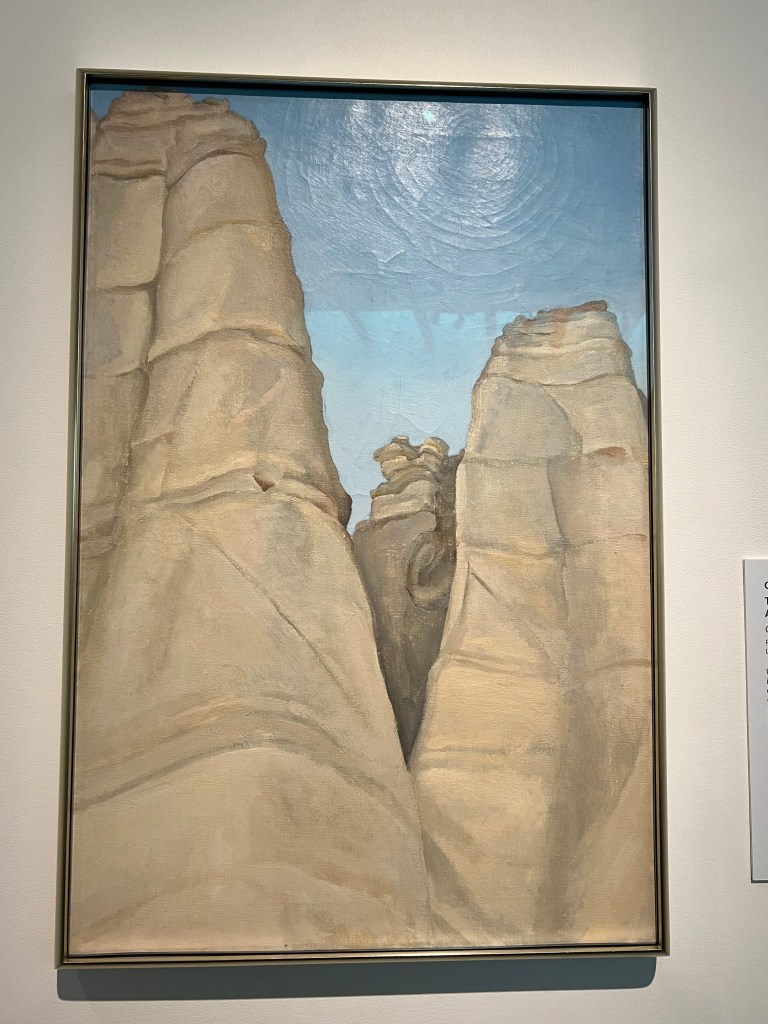
My artistic journey continued, heading to Abiquiu, to O’Keeffe’s Home and Studio, venturing a bit further afield, learning more about her. I did only one hike on this adventure –- Plaza Blanca, marveling at the massive rock towers composed of volcanic debris deposited over centuries. O’Keeffe referred it as “The White Place” due to the pastel white and grey sandstone, made even more dramatic offset against crystal clear, cobalt blue New Mexico skies. Just like her, to be hunting for something of myself out there, the wind blew, the sun was strong, I was surrounded and embraced by almost alien spires which deeply inspired me. My mind was totally freedom in the immense high desert horizons.

O’Keeffe lived her aesthetic. Her home and studio reflected a blend of Native American and Spanish Colonial building styles, with its natural light, open layout, midcentury modern furnishing, decorated with rocks and bones from her collection, showcased regional architectural features dating back centuries and into traditional adobe treatments.
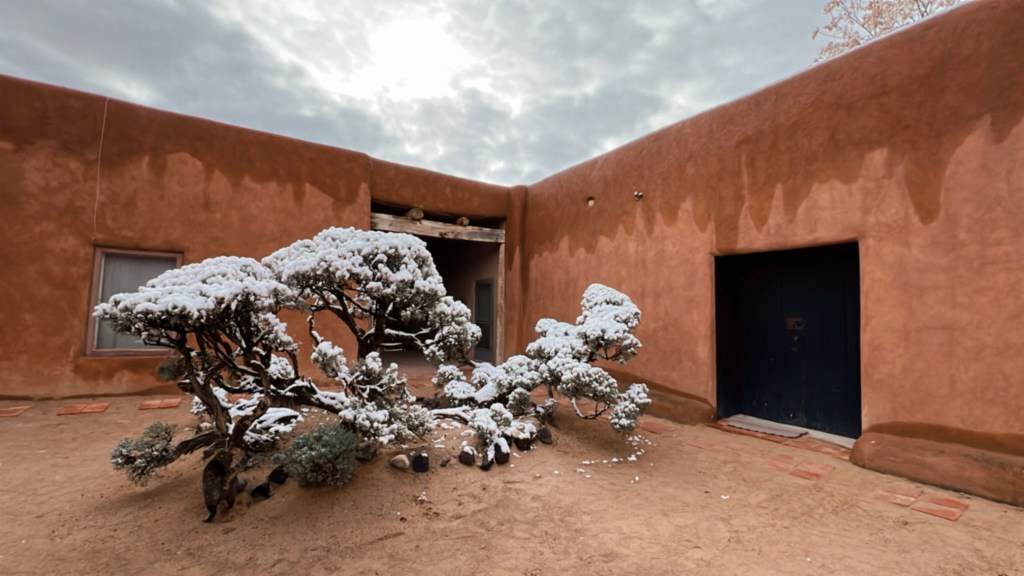
I “walked” into her each room, from the garden, the salita (the room behind the famous black patio door where she prepared her canvases), sitting room, dining room, laundry room, to her bedroom and closet, got a glimpse of her way of living.

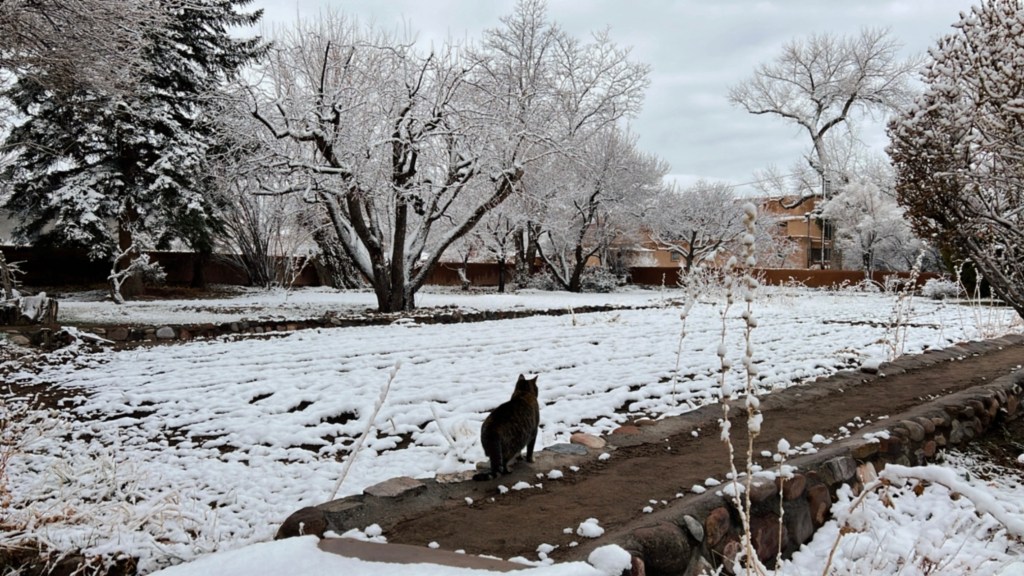
She created timeless and restful spaces with her heart, that was from a real artist. She took the surrounding natural geography into account and reflected on their unique setting. She used shades of local earth to complement the surrounding nature-earth tones of sand, black, browns and beige, completed with a mud plaster floor, rough-hewn beams, and rich textures.


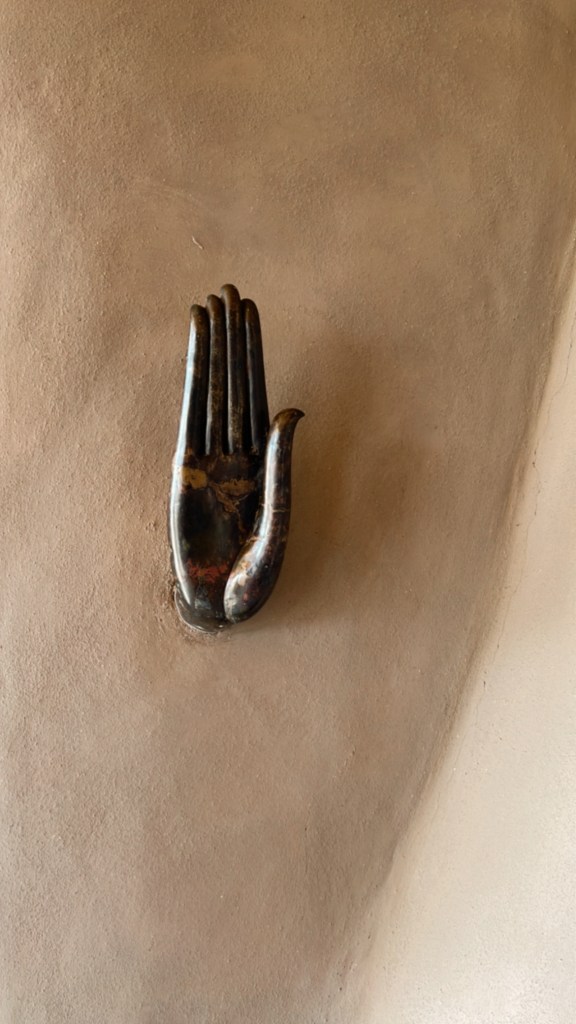
In her design vision, I sense that art doesn’t have to be purchased from a gallery. Sometimes, masterpieces are made merely by keeping our eyes open to the sculpture that surrounds us and relating to the natural world with a well-deserved awe. Please give every little detail a space that foster inspiration, contemplation and artistic innovation.

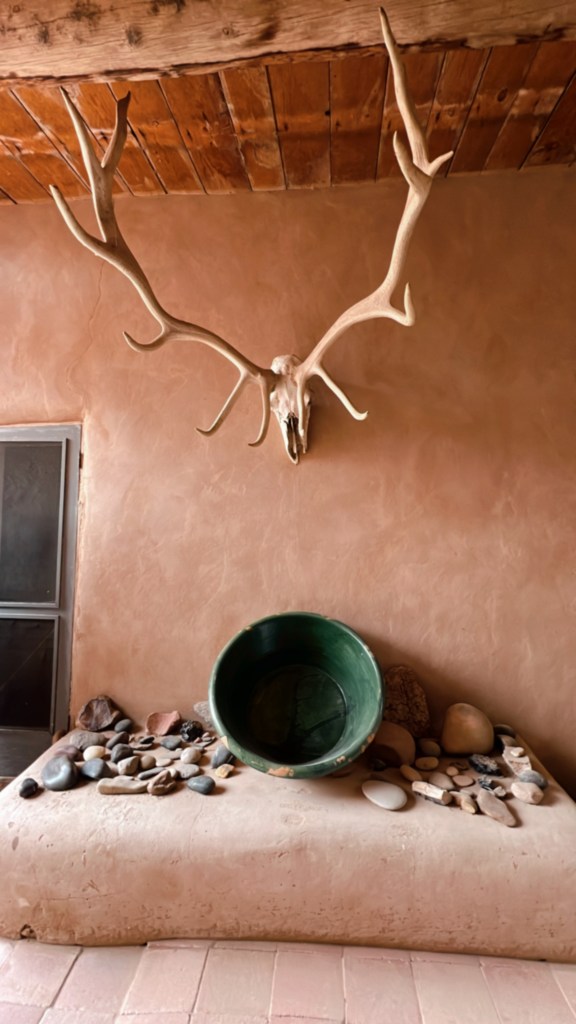
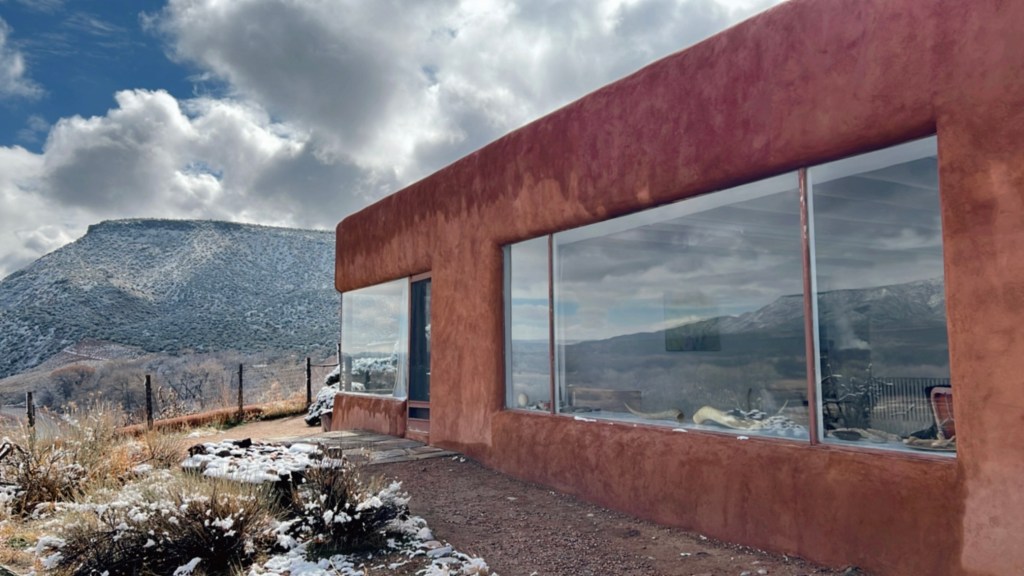
“Everyone interprets art based on their own experiences. People see what they see, and I am always encouraging people to look more deeply into each piece to find their own story”. – Artist Hebe Garcia
On this adventure, I visited artist Hebe Garcia’s studio. Even though we met each other for the first time, it felt like an old friend naturally, as she stood there to wait for me. Garcia and her husband, both originally from Puerto Rico, moved to Abiquiu in 2015, now live on a seemingly endless mesa above Abiquiu, with expansive views from the Pedernal to Taos Mountain and on up to Colorado. “Just happened at the right time,” she said.

She specializes in figurative painting and ceramic sculpture, with narratives that weave mythology, feminism, culture, and history in a way that is both gentle and strong, deep and soulful. “I was born and grew up in mostly females’ family, I have three older sisters, and I have two daughters, and granddaughter as well.” Beautiful family photos hang on walls in the studio, the strong family connection is heartfelt.
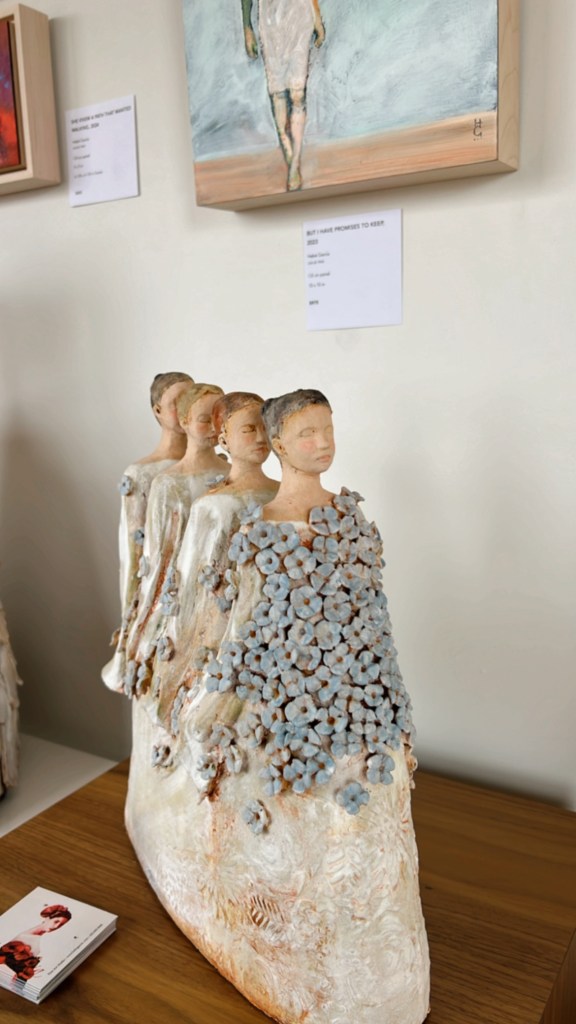
An impressive painting drew me in, a beautiful female figure with rich texture and seriality and vivid blue-purple colors integrated on panel, like a confident lady walking under the sky, I took a glimpse to see her inner world with curiosity. Garcia explained, “There is one man hidden standing next to her in the painting”, she showed the outline of that hidden man to me, “it’s the secret of this painting”. I replied, that is strength and love reflecting an independent woman on her path.
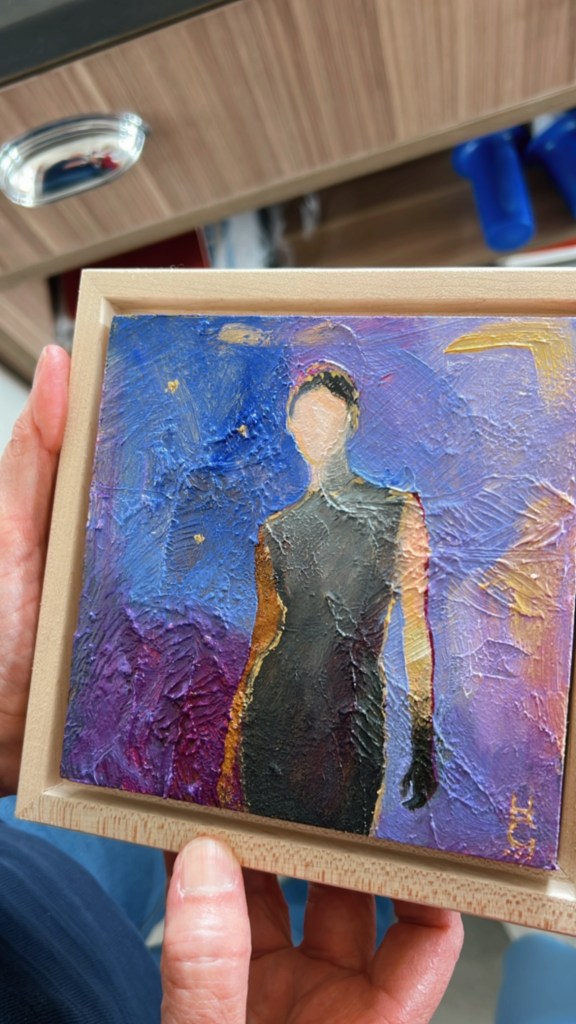
I also noticed her artworks are full of bird elements, “The birds that I saw are always rooted in my memories, and life. I embody it into the creation. I found myself using the ravens and their feathers as a symbol of my thoughts and memories,” she explained.

I saw the “evolution” of females from the painting “Dreaming of past lives”, external and internal, fills with different experiences that shape her perspective and path, a symbol of newfound sense of freedom, independence and strength to keep forward in the female growth journey.

Each sculpture piece is made using slabs and coils of mid-fire red sculptural clay with engobe, oxide, glaze and some with gold luster, the artistic expression speaks volumes in its subtle way: it displays different facial expression, the loudest with their own narratives I could hear. A lively golden sun reflects on an innocent child’s face and eyes, the flowers are on the head, the ladybugs on the nose, drawing on memory to capture moments of celebration, joy and a meaningful bond. Garcia said the inspiration comes from her memory of her daughter’s face and those pollinators from her garden.
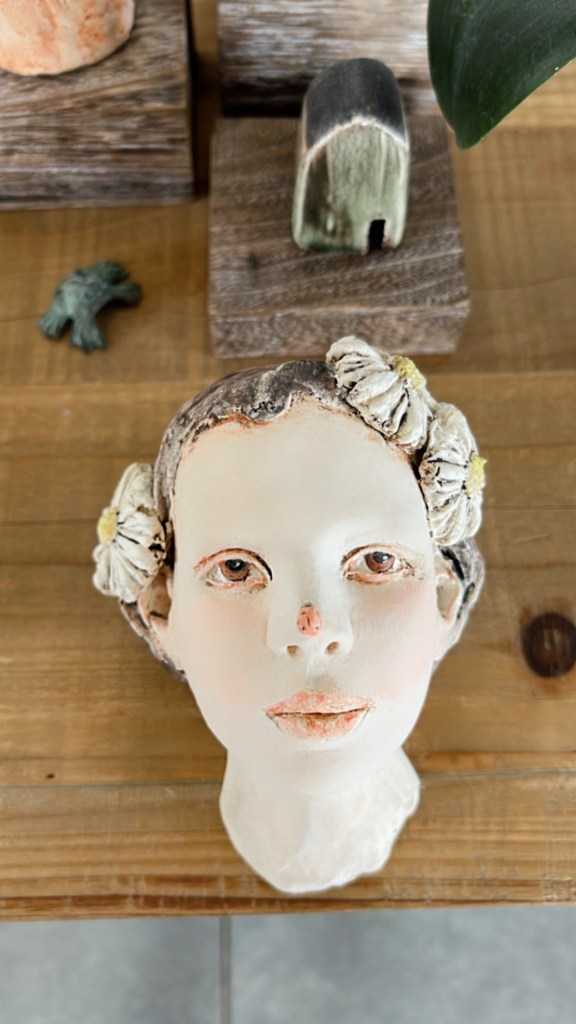

“Your eyes and minds are open,” she continued, “You are seeing the things, but you’re not just seeing the things you are in. My mind keeps working on other things, you’re seeing where you are going, and you are in another place”. I replied, same, that is creativity and juxtaposition. We connected and smiled at the same time.
I captured her “Viajeros”(Travelers) series, reflecting our human journey naturally. We are all traveling through life, by self-discovery and searching for betterment, we are always curious to see where our journeys take us, like “Viajeros”, always ready for their new journeys and adventures, of course, new homes.


We always have lots of conversations in life, with ourselves or others, with voices or without words. Perhaps the art and soul are holding it all together for us, speak of stories untold waiting to be drawn out by the innermost fancy of the observer, it is the relationship I find interesting and soulful. For a glimpse inside artists’ ever-curious minds, reveals evocative points of connection and dialogue; the artworks, even silence, but are the loudest and most powerful of our heart. I am fortunate enough to have both meaningful conversations with art and artist!
 STEPHY