
My upbringing and interest in design, architecture and art convince me to push the envelope and explore how artisans dialogue with designers. I’ve always been inspired by the master craftsman culture prevalent in Europe, Asia and other continents. I appreciate master craftsmanship and creativity as carried on by contemporary artisans through a variety of collaborations. Recently, I witnessed some extraordinary artworks by those artists I admire, having a deep “conversation” with their visions and feeling the free-spirit in art.
Edmund de Waal and Sally Mann: To light, and then return
Edmund de Waal, an internationally renowned artist, ceramicist and potter, born in Nottingham, England. He works in a way that allows one discipline to fuel and feed into the other, breaking down the boundaries between all these supposedly separate disciplines. I recently saw an exhibition of his new work “to light, and then return” at Gagosian Gallery, New York, in collaboration with artist Sally Mann, inspired by each other’s practices.
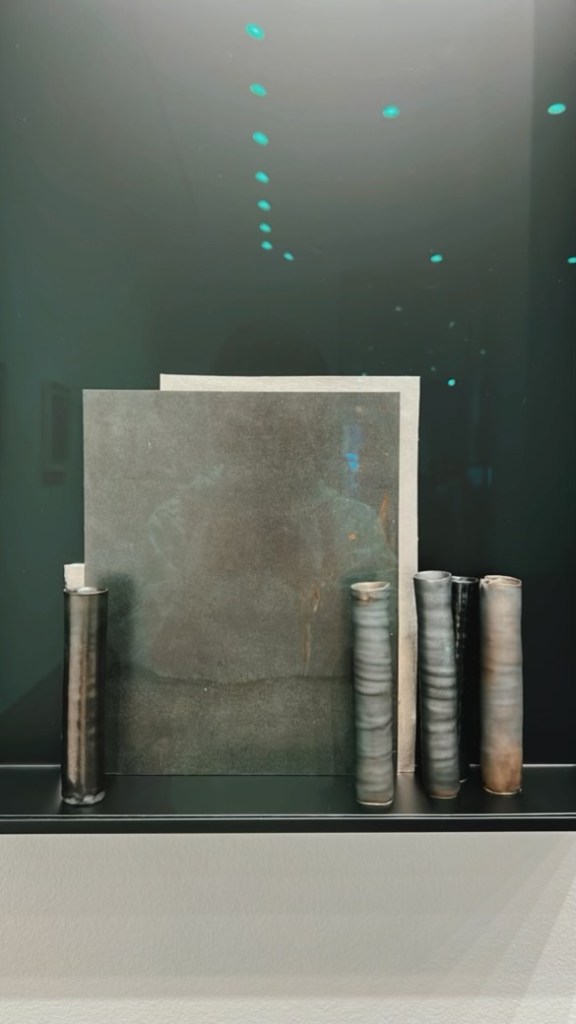
Informed by their mutual fascination with material transformation and themes of elegy and historical reckoning, the work shows de Waal’s sculpture featuring porcelain, silver and blacks of Cor-Ten steel, and Mann’s tintypes and platinum prints. The name of the show was inspired by The spry arms of the wind (c.1866), a poem by Emily Dickinson written onto an envelope.
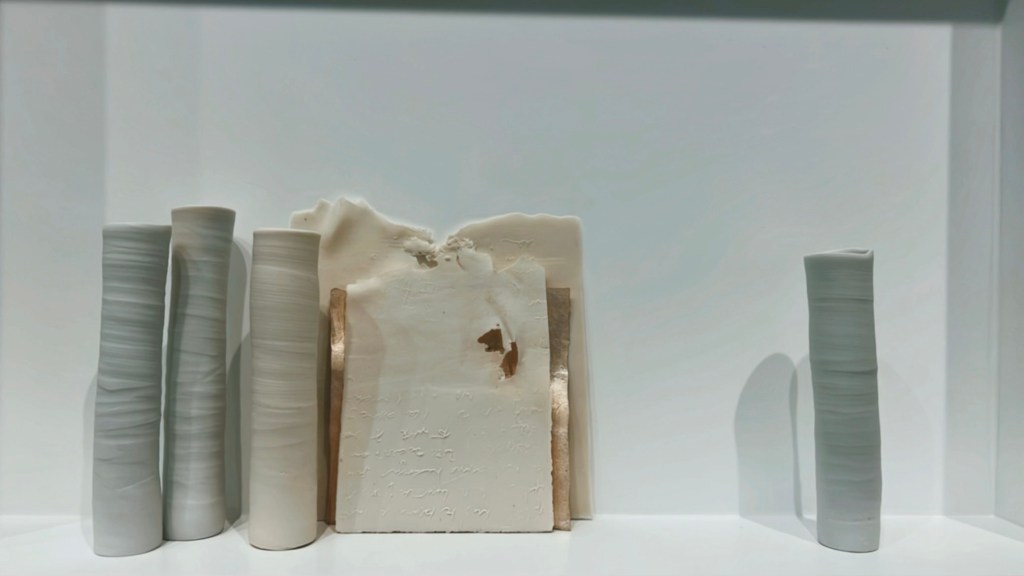

I “read” the art of harmony through their extraordinary aesthetic by the juxtaposition of each piece of porcelain, silver, aluminum, and glass. I stayed there longer than expected to “listen” to a profound exchange of ideas, resonating beauty of elegy, inspired from their practices, friendship, fragments, and the ceramics that they chose, embracing a beautiful artistic journey of two artists in a small space, a timeline, and mainly, a state of mind, a push and pull between the materiality and the immateriality of thoughts, all elements were echoing behind me.
I gave insight into de Waal and Mann’s collaboration, my heart asked pleasure, belonging as much to the past as to the present.

A deep appreciation for master-craftsmen’s ethos and works
Les Ateliers Courbet, the master craftsmen’s gallery, is a New York based design gallery focused on a master-craftsman ethos and the sharing of art that embodies artisanal dexterity, cultural heritage and know-how. I crossed the threshold and connected with it immediately, from its aesthetic of design to each timeless value of piece, recognized every piece is inspired by the geological transformation of natural materials and crafted by hand through time-honored techniques, carefully curated into a space, awaiting the right audience to appreciate its value.
The most recent series “Topographic Memories” is created by Paris-based designer Raphael Navot and the craftsmen of Ateliers Saint-Jacques outside of Paris, France. I surrounded and glimpsed into his cohesive body of work: tables made of travertine replicate the beautiful ripples of petrified wood, and a series of light fixtures illuminates the essence of bronze. I caught the impeccable textured detail and converted different angles with curiosity to observe carefully the sculpture table Archetype II, to see the approach and unencumbered philosophy the designer led – a combination of hot fire flames and cold-water jet, fascinating by the way time shapes and sculpts land.
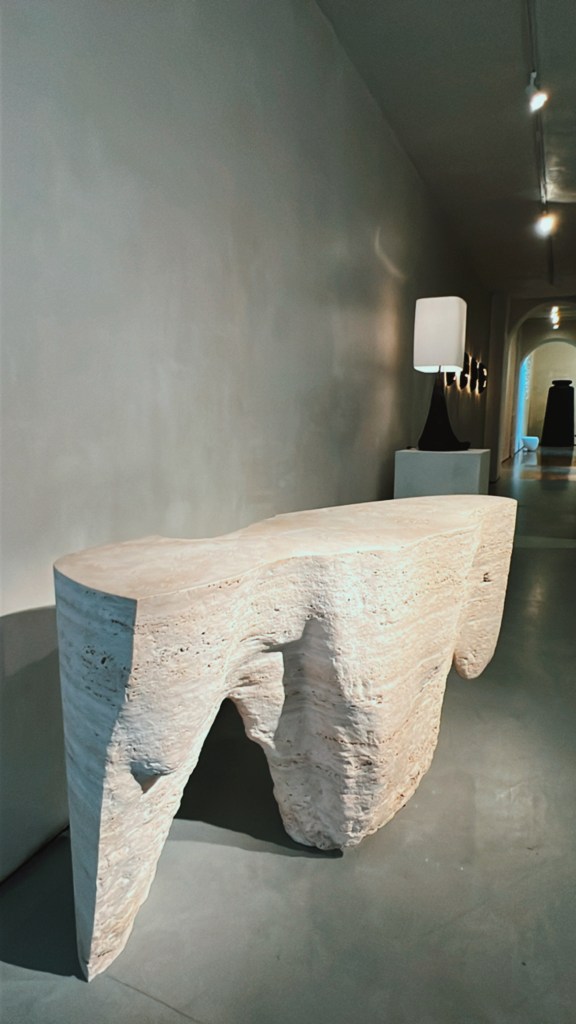
Such a singular aesthetic vision, his work is very much context-specific, and as such, respect the original features and enhance them through unique time-honored techniques. It is an inner reflection seeking to manifest itself in our landscape, as Navot said, “whether man-made or nature-made topography tells a story of craft in direct relation to the land’s origin and cultural characteristics”.
With an eye for design, I was obsessed with his elegance Monk Eyes Ceiling Lights, inlaid with humble materials such as cast bronze, hand rubbed patina. I found a refined balance of hard raw materials and soft feeling within. I took a closer look for the lights to discover its uniqueness, the master craftsmanship through seemingly elegant forms and aesthetic movements. They are not just the sophisticated lights, and indeed they display a depth of dialogue between nature, crafts, cultural heritage and artistic education to me.

The master craftsmanship sets the tone in each corner, beyond the gallery itself, the delight is in the details, worth lingering a moment.

It always is an enormous pleasure to investigate and appreciate the expressive qualities of ceramics by South African artist Katherine Glenday. Each of her pieces defies the materiality of the porcelain, stretching the matter to its thinnest, the translucent skin enthralls the natural light, while the free-form silhouettes evoke the artist’s gesture as embodying a movement. Color and light interact through and around the curves of each physical form and surface takes the work to a new height.


I met someone who shares with me a similar perspective toward design. We discussed and shared the similarity and difference of ceramic work between French ceramist Ludmilla Balkis and Katherine Glenday, making a profound connection from both. I enjoy learning from other art fellows.
Embarking on the ceramic journey with French artist Ludmilla Balkis
There are a few artworks left by Ludmilla Balkis from the last exhibition at Guild Gallery, NYC. It draws me back again! Balkis endeavors and contacts with the earth and nature creative rhythms for her work, the natural imperfections and unequivocal devotion to minimalism remains throughout her signature practice, features in manipulating clay like fabric, cutting, twisting, folding, and extracting from it a balance of delicacy and strength.
I cannot take my eyes off her unique sculptural vessels, in a range of naturally colored and France’s Basque clay. Black sanded stoneware stands on an elegant table, I walked along the full circle, uneven “blooming flower” like shape to glimpse her hand-formed sensuous and raw rough texture, embracing the beauty of irregular and imperfect creation. My mind transported to nature – the world I like to live in – stillness and perpetual movement, defining simplicity and timelessness. The art has the final word.
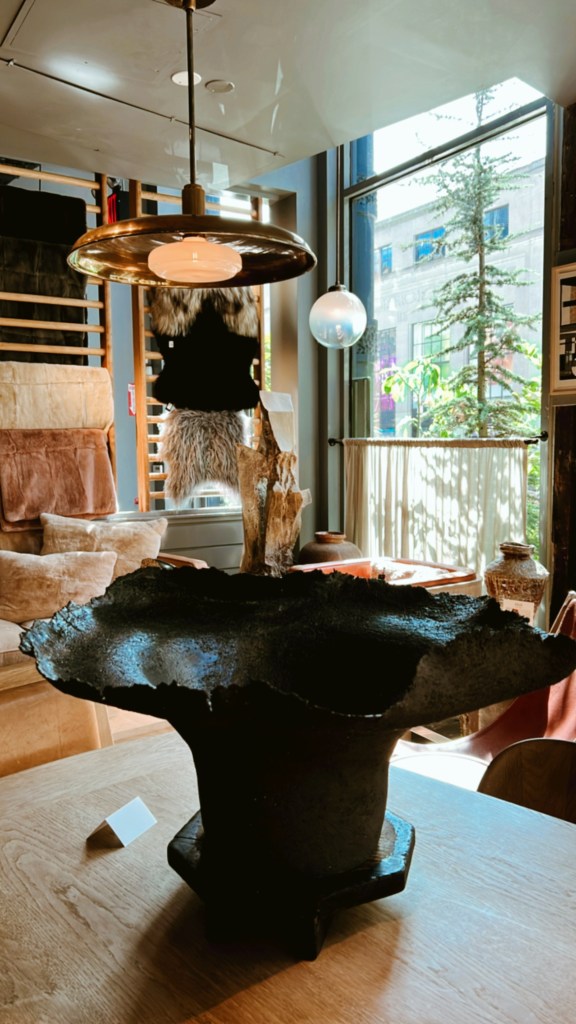
I sit on a bench silently and transmit the profound intimacy with the natural world, as well the meditative and grounding nature of her practice, we connected, simple and natural. Balkis often fires her work in a Japanese wood anagama kiln, creating different colors and allowing the fames to paint the surface of the finished work. I believe learning about the process of creativity can extend not just to the artwork itself but also allows us to understand the artist’s space and practice fully. Let the art to speak for itself.
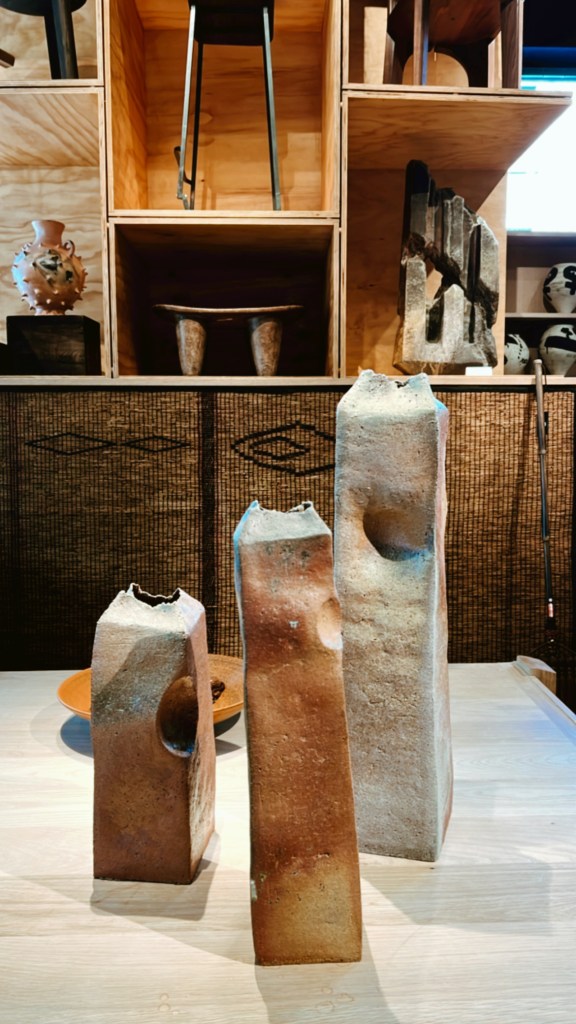

I reached such as point of perfection, putting in everything every touch with such freedom, and the harmony in nature and chaos developing. I forgot everything in my joy with them, till emptiness. I know I will collect Balkis’ pieces for my home someday.
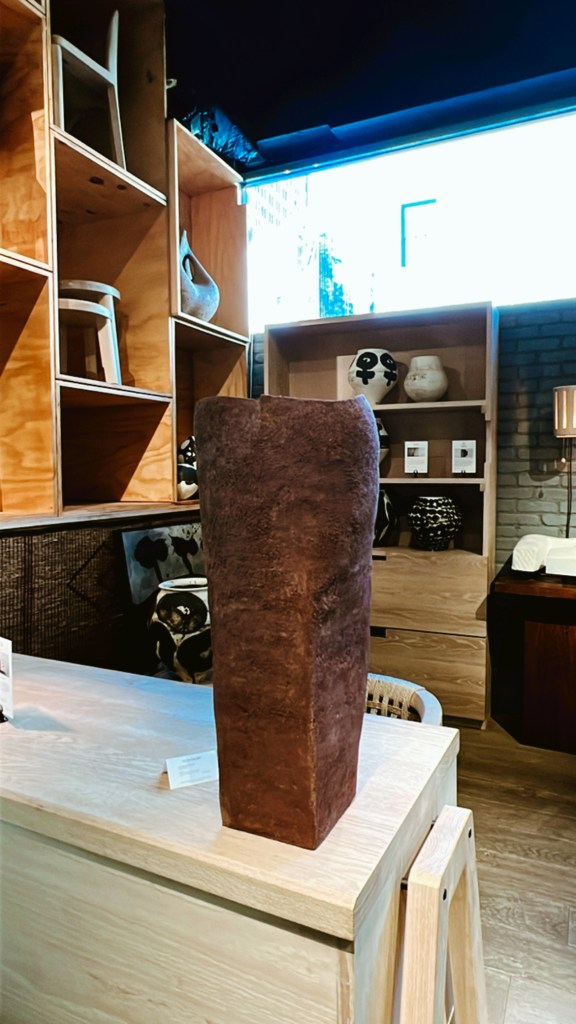

The ceramics are truly a welcome addition to my aesthetic of sumptuous simplifies. I quickly lose all sense of the outside world, entering a richly layered scene, finding a pureness within the chaos, also learning from the artisans’ influences and inspirations deeply, when quality and design trumped fads, fashion and value-engineering. It is an evolving dialogue between the region’s ceramic tradition, artist legacy, culture heritage and natural surroundings.
I like to use this interesting analogy: art is more like “mating”, the artist, gallery and audience need to be right. When three of them are right and are interested in each other, it opens a meaningful conversation and builds a connection. Design influences life, art influences design, art has objective values but as well has emotional values. It is a very personal choice, of our own unique, individual taste. I am fortunate to discover early that art draws out my emotions and feelings.
Art can be discovered anywhere, such as in museums, at auctions, on street walls, workshops, also in a designer’s mind. I never want to define where I could discover and expect it, but when I see it, I feel and recognize it immediately. It is a joyful and positive journey – the way I find it – is also very instinctive, and yet eclectic.
This is ode to life!
 STEPHY